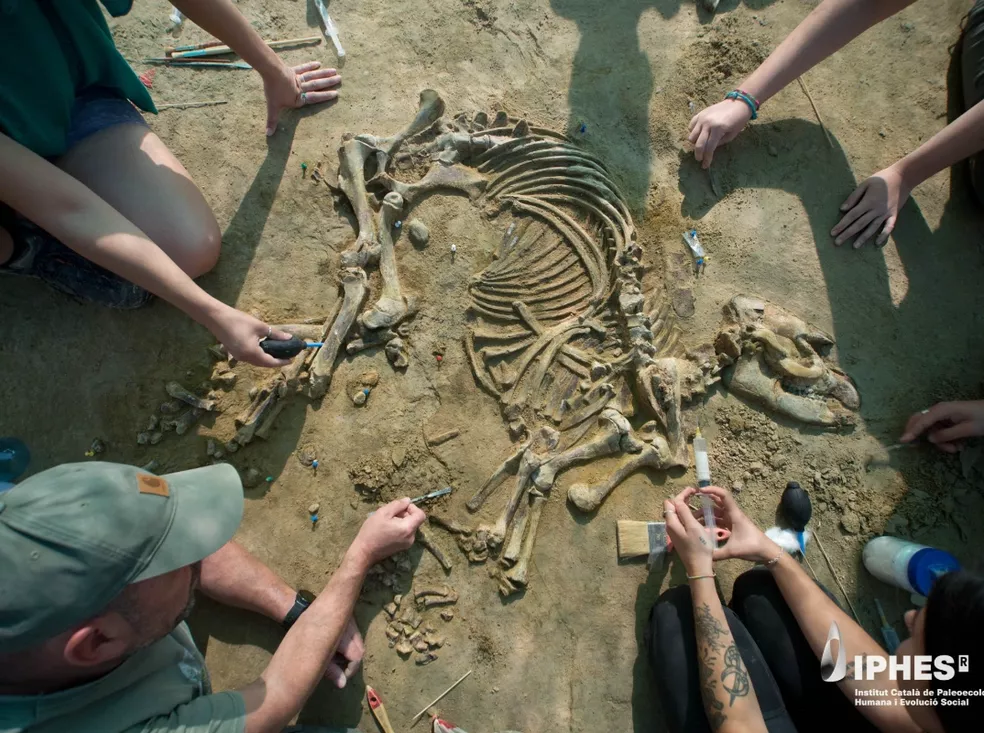
The prehistoric baby was only about one year old when it died. Its fossilised skeleton is the most complete juvenile tapir skeleton ever discovered in Europe.
The amazing find could help scientists discover how prehistoric tapirs grew, developed and lived millions of years ago – as well as revealing more about what Europe was like at this point in history.
Where was the prehistoric tapir discovered?
The fossil was discovered at Camp dels Ninots near Girona in northeastern Spain.
This area is packed with fossils from the pliocene epoch and seven tapir skeletons have been found there so far. Scientists can tell that around four million years ago, this area looked very different to today. A warm, humid forest grew around an ancient volcanic lake, and large prehistoric tapirs lived near the water alongside many other plants and animals.
Over millions of years, special conditions at the bottom of the lake helped preserve the remains of animals that died there. “Camp dels Ninots functions as a genuine time capsule,” explains Dr. Oriol Oms, from the Universitat Autònoma de Barcelona. “The geological and chemical conditions of the volcanic paleolake have allowed entire skeletons to be preserved with a level of detail that is highly unusual in paleontology,”
What did scientists discover?
Researchers uncovered the skeleton of a young tapir that was around one year old when it died. Finding such a young animal is extremely unusual.
Even more excitingly, much of its skeleton was still arranged in the same positions as when the animal died.
At many fossil sites, scientists find individual bones that have been scattered, damaged or moved by scavengers. At Camp dels Ninots, researchers have discovered several whole or nearly complete tapir skeletons.
Why is this baby tapir fossil so important?
The newly discovered skeleton is the most complete juvenile tapir ever found in Europe.
Scientists have now discovered the remains of seven tapirs at Camp dels Ninots, including animals of different ages and sexes.
This gives researchers an unusual opportunity.
By comparing the skeletons of young and adult tapirs, scientists can investigate how these extinct animals changed as they grew.
They hope to answer questions such as:
- How quickly did prehistoric tapirs grow?
- How did their skeletons change as they became adults?
- Were young tapirs shaped differently from their parents?
- What can their bones tell us about how they lived?
Finding fossils from different stages of an animal’s life could help scientists reconstruct the life cycle of this extinct species.
What did prehistoric tapirs look like?
The tapirs discovered at Camp dels Ninots belonged to an extinct species called Tapirus arvernensis.
They were large, strong herbivores with bodies similar to tapirs alive today.
Modern tapirs have rounded bodies, short legs and wonderfully flexible noses. Their closest living relatives include horses and rhinoceroses.
Scientists think the prehistoric tapirs living in Spain may have been closely related to modern Asian tapirs.
Why was the skeleton so well preserved?
Camp dels Ninots lies inside an ancient volcanic crater that once contained a lake.
Over time, layers of sediment collected at the bottom of the lake.
The geological and chemical conditions helped preserve animal skeletons in extraordinary detail.
Scientists have even suggested that some animals may have died suddenly near the lake, possibly because of gases linked to volcanic activity.
Instead of being eaten by scavengers or having their bones scattered, some of the animals sank into the lake sediments and remained there for millions of years.
How do scientists remove a four-million-year-old fossil?
Very carefully!
Researchers first uncover and document every bone.
They use high-precision recording and 3D scanning technology to record exactly where each part of the skeleton was found.
Experts also work to protect and strengthen the fragile fossils before moving them.
The young tapir skeleton will then be transported to the laboratory, where scientists can continue studying it.
Are there still tapirs alive today?
Yes! There are four living species of tapir. They are found in Central and South America and Southeast Asia.
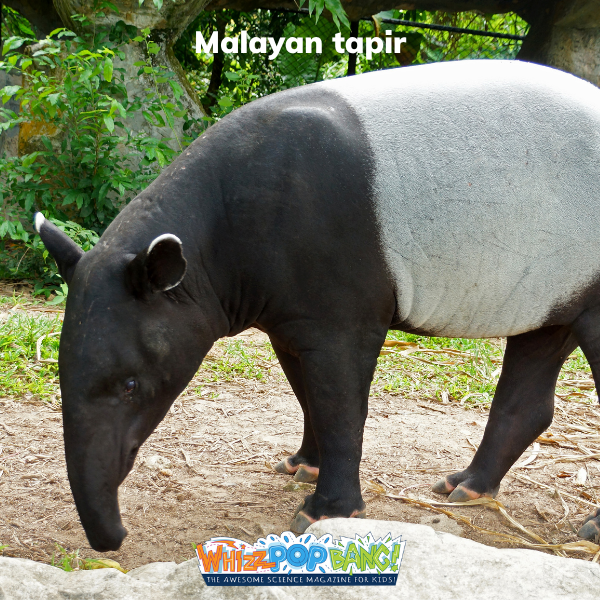
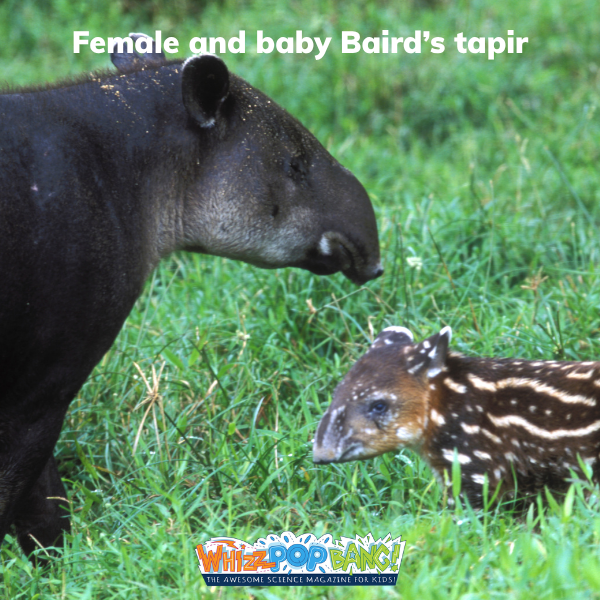
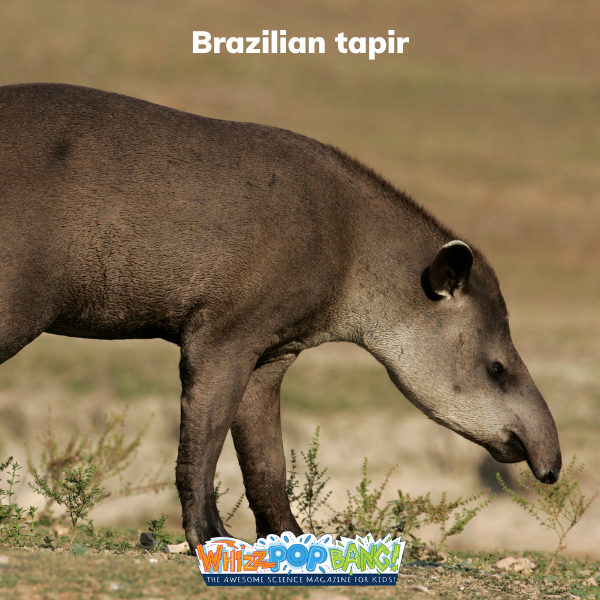
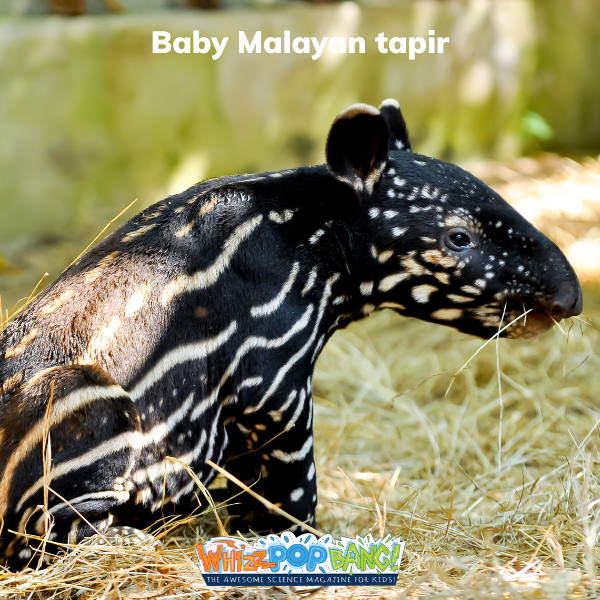
Tapirs play an important role in forests because they eat fruit and spread seeds in their poo as they travel.
Sadly, all four living tapir species are threatened with extinction.
Discoveries like the Camp dels Ninots fossils help scientists understand the long history of these extraordinary animals and how they have changed over millions of years.
Amazing tapir facts for kids
🦴 Tapirs have lived on Earth for millions of years.
🐴 Their closest living relatives are horses and rhinoceroses.
👃 A tapir’s nose and upper lip form a short, flexible trunk.
🌱 Tapirs are herbivores and eat leaves, fruit and other plants.
🌳 By spreading seeds in their poo, tapirs can help forests grow.
🔎 Scientists have now discovered seven prehistoric tapirs at Camp dels Ninots.
What can this fossil teach us?
A single fossil can tell scientists something about an animal.
But finding several animals of the same species at different ages is much more unusual.
The extraordinary collection of prehistoric tapirs at Camp dels Ninots could allow scientists to piece together the story of how these animals were born, grew up and changed throughout their lives.
Four million years after this young tapir lived beside a volcanic lake, its skeleton is giving scientists a remarkable glimpse into Europe’s prehistoric past.
Inspire your young scientist with Whizz Pop Bang!
Whizz Pop Bang is the award-winning science magazine for curious kids aged 6–12.
Every month, young scientists can discover incredible science stories, try hands-on experiments, meet real scientists and explore the amazing world around them.
Packed with facts, activities, puzzles and competitions, Whizz Pop Bang makes science exciting, accessible and fun.
Subscribe to Whizz Pop Bang and give your child a new science adventure every month!