Imagine going back to work after a few weeks away, only to discover that thousands of wasps have moved into your office!
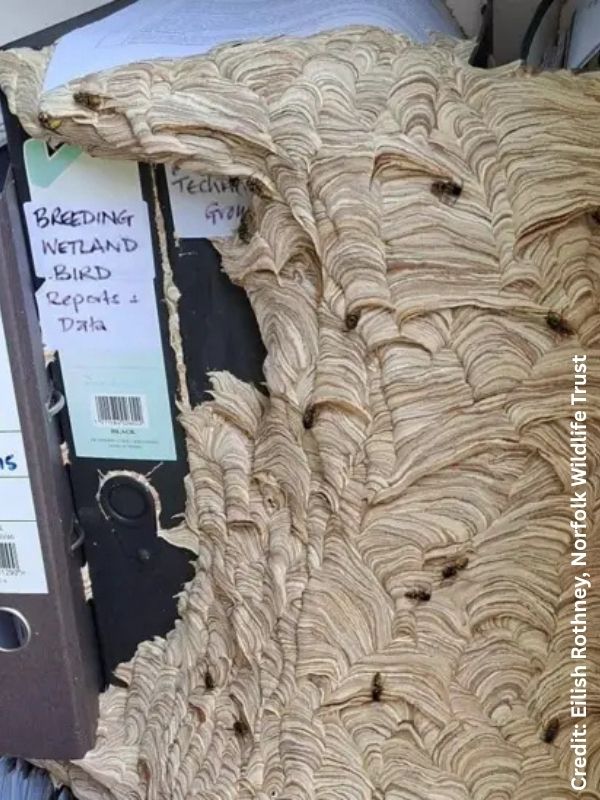
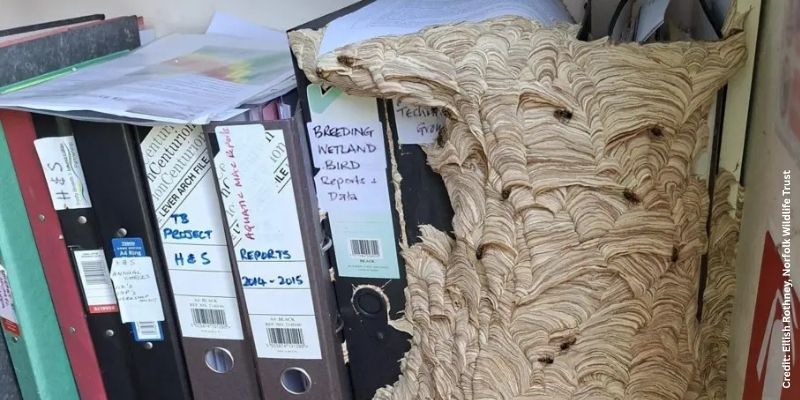
That’s exactly what happened to Eilish Rothney, a nature reserve manager at the Norfolk Wildlife Trust. While she was busy carrying out wildlife surveys, a colony of wasps quietly built an enormous nest around a bookshelf inside her office.
By the time she returned, the nest had grown to around one metre tall and wrapped itself around boxes, shelves and ring binders.
Instead of trying to destroy it, Eilish decided to let the wasps carry on with their important work.
The Norfolk Wildlife Trust protects wildlife and wild places across Norfolk while helping people discover and enjoy nature.
If you’d like to explore more incredible wildlife stories, visit the Norfolk Wildlife Trust website and discover why every creature — even wasps — has an important role to play.
Curious about nature?
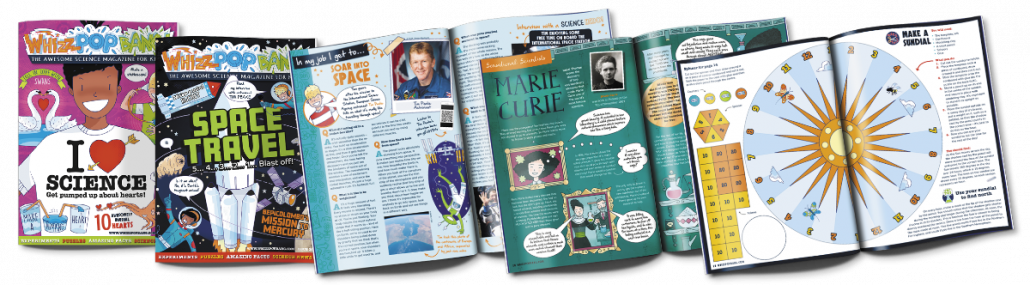
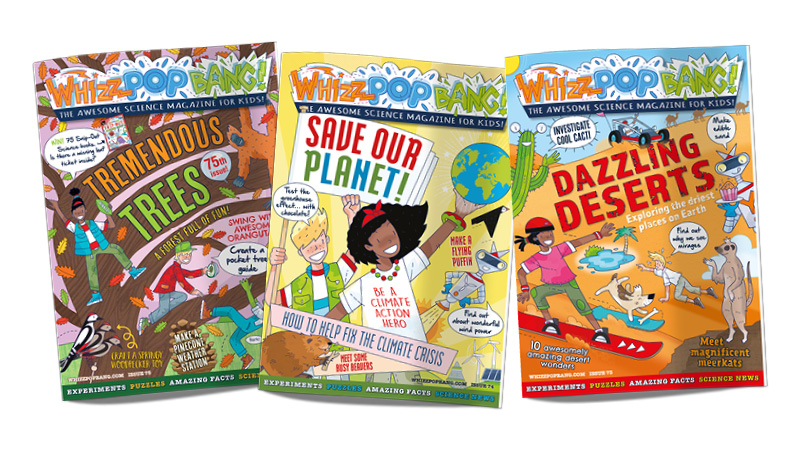
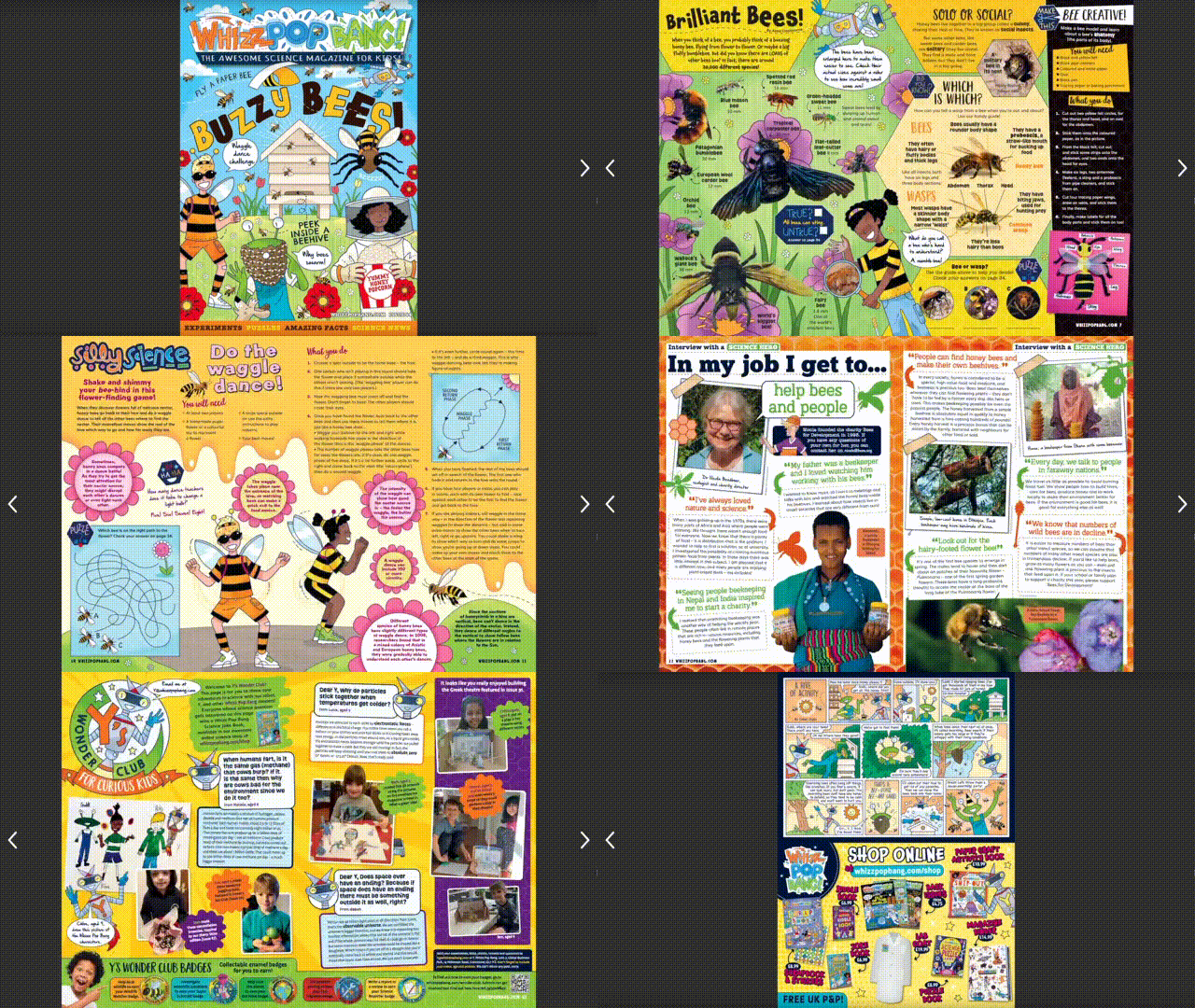
Whizz Pop Bang is the award-winning magazine for curious children aged 6–12. Every month it’s packed with amazing science news, experiments, wildlife, engineering, space, puzzles and hands-on activities to inspire the next generation of scientists.
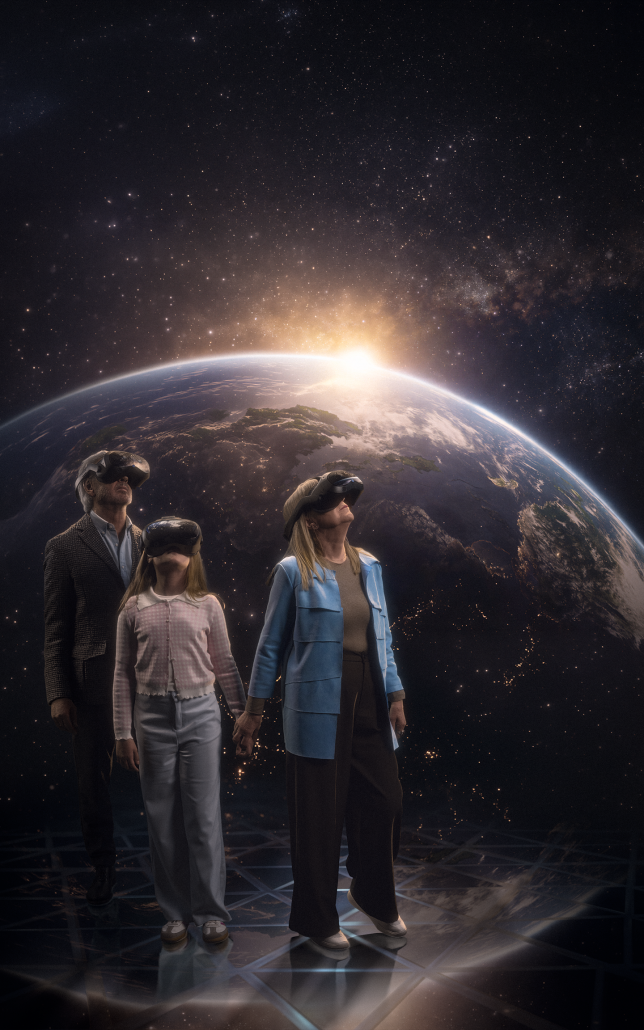
Calling all space fans! If your child dreams of exploring space, this brand-new immersive experience should be high on your family’s summer holiday list.
Credit: Smithsonian Institution & Fever
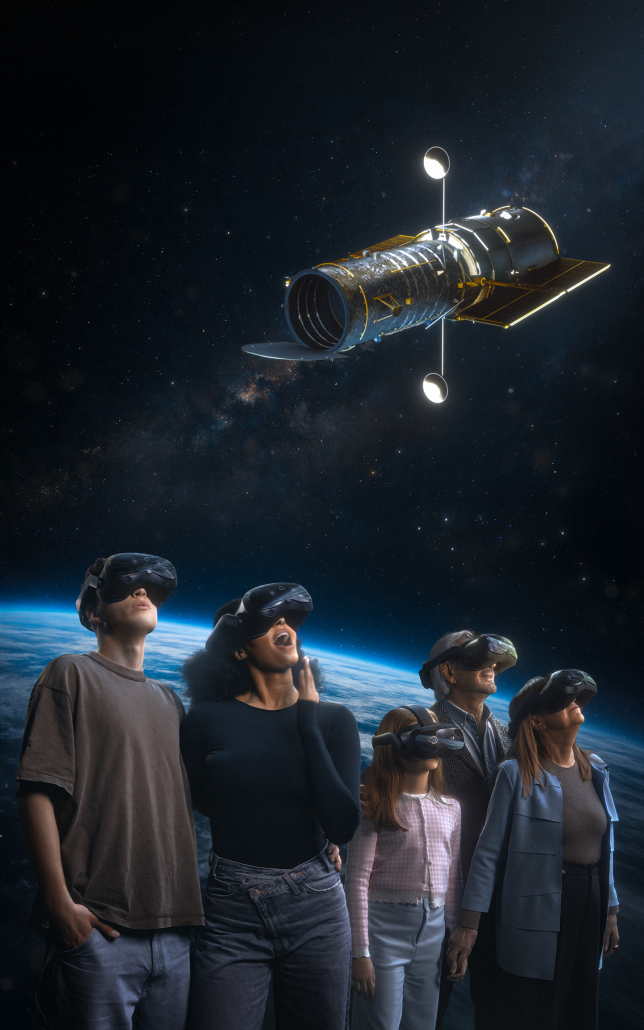
This summer, there’s an awesome new immersive experience at London’s Science Museum. Using virtual reality (VR) technology, ‘Starstruck’ takes you on a journey through the universe, exploring stars, black holes and galaxies.
Credit: Smithsonian Institution & Fever
Whizz Pop Bang went along for a sneak preview before the exhibition opened and we can confirm that it really is out of this world!
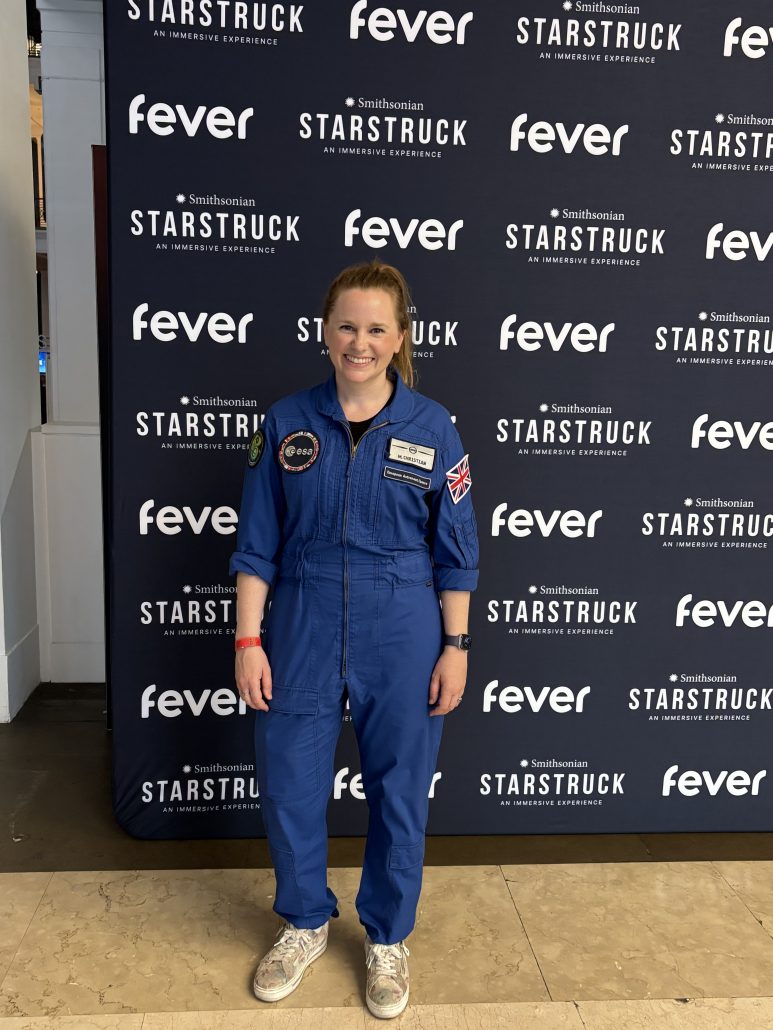
We also got to meet awesome ESA astronaut Meganne Christian and discuss black holes with Cambridge University’s astronomy professor and black hole expert Sera Markoff!
Planning a trip to London this summer? If your family loves space, science and immersive experiences, Starstruck looks like a fantastic way to explore the universe together.
Book your tickets and prepare for an unforgettable journey among the stars.
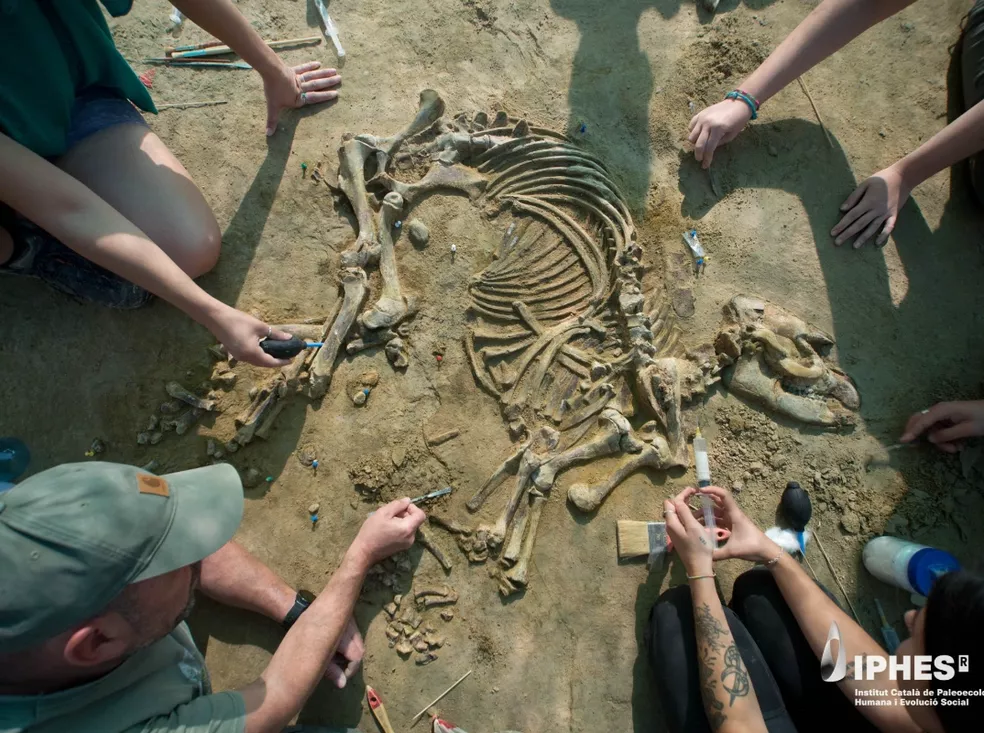
The prehistoric baby was only about one year old when it died. Its fossilised skeleton is the most complete juvenile tapir skeleton ever discovered in Europe.
The amazing find could help scientists discover how prehistoric tapirs grew, developed and lived millions of years ago – as well as revealing more about what Europe was like at this point in history.
Where was the prehistoric tapir discovered?
The fossil was discovered at Camp dels Ninots near Girona in northeastern Spain.
This area is packed with fossils from the pliocene epoch and seven tapir skeletons have been found there so far. Scientists can tell that around four million years ago, this area looked very different to today. A warm, humid forest grew around an ancient volcanic lake, and large prehistoric tapirs lived near the water alongside many other plants and animals.
Over millions of years, special conditions at the bottom of the lake helped preserve the remains of animals that died there. “Camp dels Ninots functions as a genuine time capsule,” explains Dr. Oriol Oms, from the Universitat Autònoma de Barcelona. “The geological and chemical conditions of the volcanic paleolake have allowed entire skeletons to be preserved with a level of detail that is highly unusual in paleontology,”
What did scientists discover?
Researchers uncovered the skeleton of a young tapir that was around one year old when it died. Finding such a young animal is extremely unusual.
Even more excitingly, much of its skeleton was still arranged in the same positions as when the animal died.
At many fossil sites, scientists find individual bones that have been scattered, damaged or moved by scavengers. At Camp dels Ninots, researchers have discovered several whole or nearly complete tapir skeletons.
Why is this baby tapir fossil so important?
The newly discovered skeleton is the most complete juvenile tapir ever found in Europe.
Scientists have now discovered the remains of seven tapirs at Camp dels Ninots, including animals of different ages and sexes.
This gives researchers an unusual opportunity.
By comparing the skeletons of young and adult tapirs, scientists can investigate how these extinct animals changed as they grew.
They hope to answer questions such as:
How quickly did prehistoric tapirs grow?
How did their skeletons change as they became adults?
Were young tapirs shaped differently from their parents?
What can their bones tell us about how they lived?
Finding fossils from different stages of an animal’s life could help scientists reconstruct the life cycle of this extinct species.
What did prehistoric tapirs look like?
The tapirs discovered at Camp dels Ninots belonged to an extinct species called Tapirus arvernensis.
They were large, strong herbivores with bodies similar to tapirs alive today.
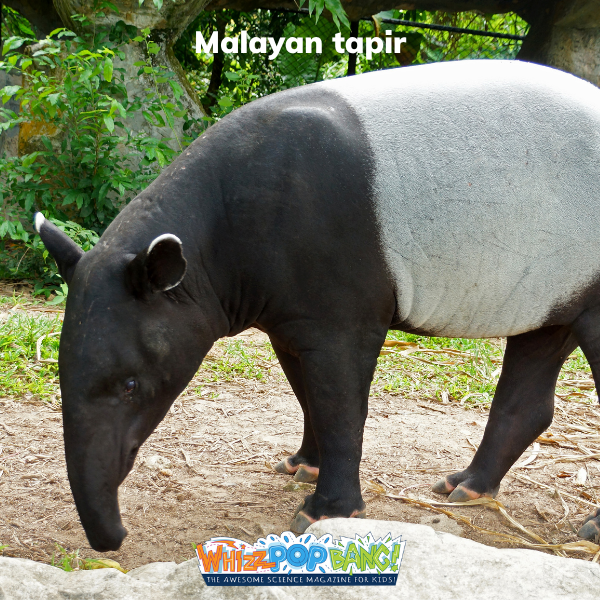
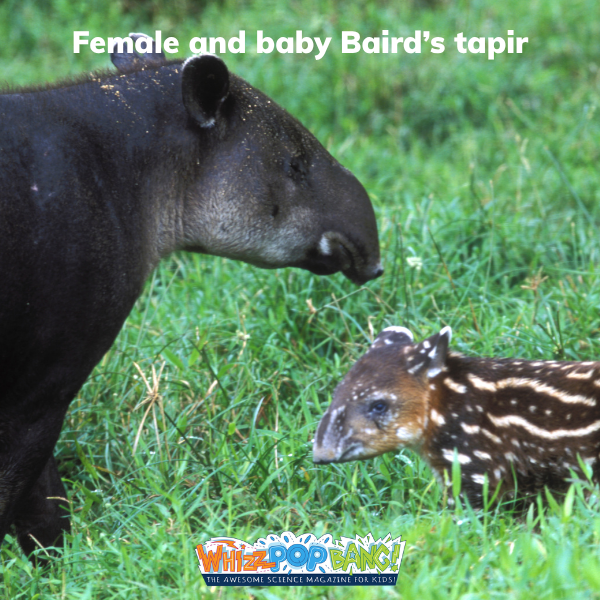
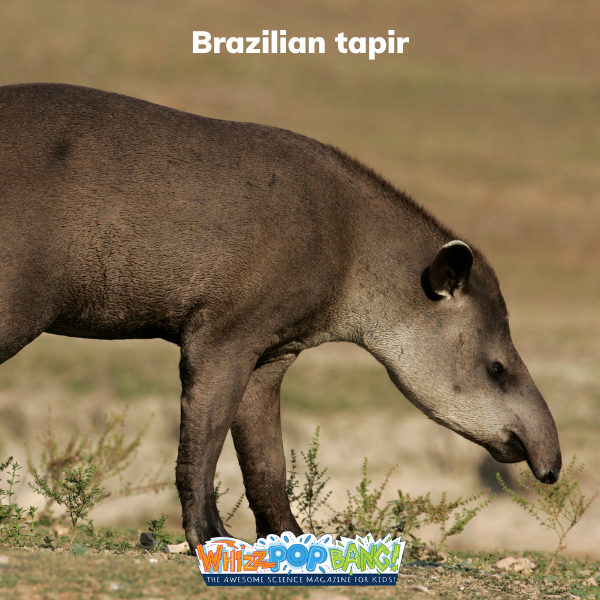
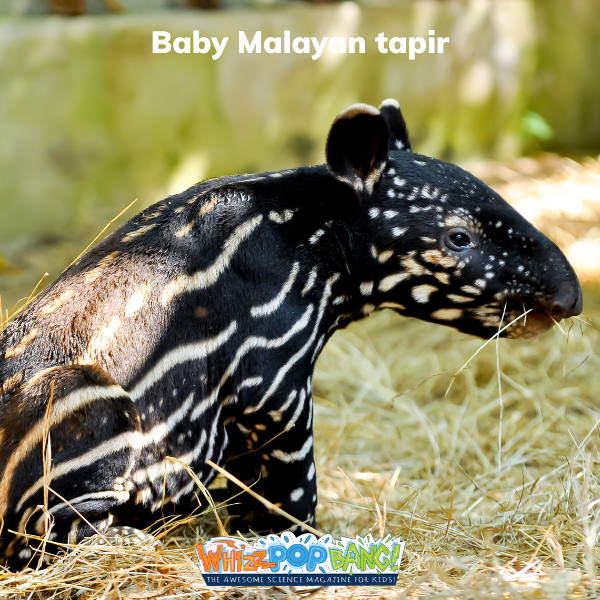
Modern tapirs have rounded bodies, short legs and wonderfully flexible noses. Their closest living relatives include horses and rhinoceroses.
Scientists think the prehistoric tapirs living in Spain may have been closely related to modern Asian tapirs.
Why was the skeleton so well preserved?
Camp dels Ninots lies inside an ancient volcanic crater that once contained a lake.
Over time, layers of sediment collected at the bottom of the lake.
The geological and chemical conditions helped preserve animal skeletons in extraordinary detail.
Scientists have even suggested that some animals may have died suddenly near the lake, possibly because of gases linked to volcanic activity.
Instead of being eaten by scavengers or having their bones scattered, some of the animals sank into the lake sediments and remained there for millions of years.
How do scientists remove a four-million-year-old fossil?
Very carefully!
Researchers first uncover and document every bone.
They use high-precision recording and 3D scanning technology to record exactly where each part of the skeleton was found.
Experts also work to protect and strengthen the fragile fossils before moving them.
The young tapir skeleton will then be transported to the laboratory, where scientists can continue studying it.
Are there still tapirs alive today?
Yes! There are four living species of tapir. They are found in Central and South America and Southeast Asia.
Tapirs play an important role in forests because they eat fruit and spread seeds in their poo as they travel.
Sadly, all four living tapir species are threatened with extinction.
Discoveries like the Camp dels Ninots fossils help scientists understand the long history of these extraordinary animals and how they have changed over millions of years.
Amazing tapir facts for kids
🦴 Tapirs have lived on Earth for millions of years.
🐴 Their closest living relatives are horses and rhinoceroses.
👃 A tapir’s nose and upper lip form a short, flexible trunk.
🌱 Tapirs are herbivores and eat leaves, fruit and other plants.
🌳 By spreading seeds in their poo, tapirs can help forests grow.
🔎 Scientists have now discovered seven prehistoric tapirs at Camp dels Ninots.
What can this fossil teach us?
A single fossil can tell scientists something about an animal.
But finding several animals of the same species at different ages is much more unusual.
The extraordinary collection of prehistoric tapirs at Camp dels Ninots could allow scientists to piece together the story of how these animals were born, grew up and changed throughout their lives.
Four million years after this young tapir lived beside a volcanic lake, its skeleton is giving scientists a remarkable glimpse into Europe’s prehistoric past.
Inspire your young scientist with Whizz Pop Bang!
Whizz Pop Bang is the award-winning science magazine for curious kids aged 6–12.
Every month, young scientists can discover incredible science stories, try hands-on experiments, meet real scientists and explore the amazing world around them.
Packed with facts, activities, puzzles and competitions, Whizz Pop Bang makes science exciting, accessible and fun.
Subscribe to Whizz Pop Bang and give your child a new science adventure every month!
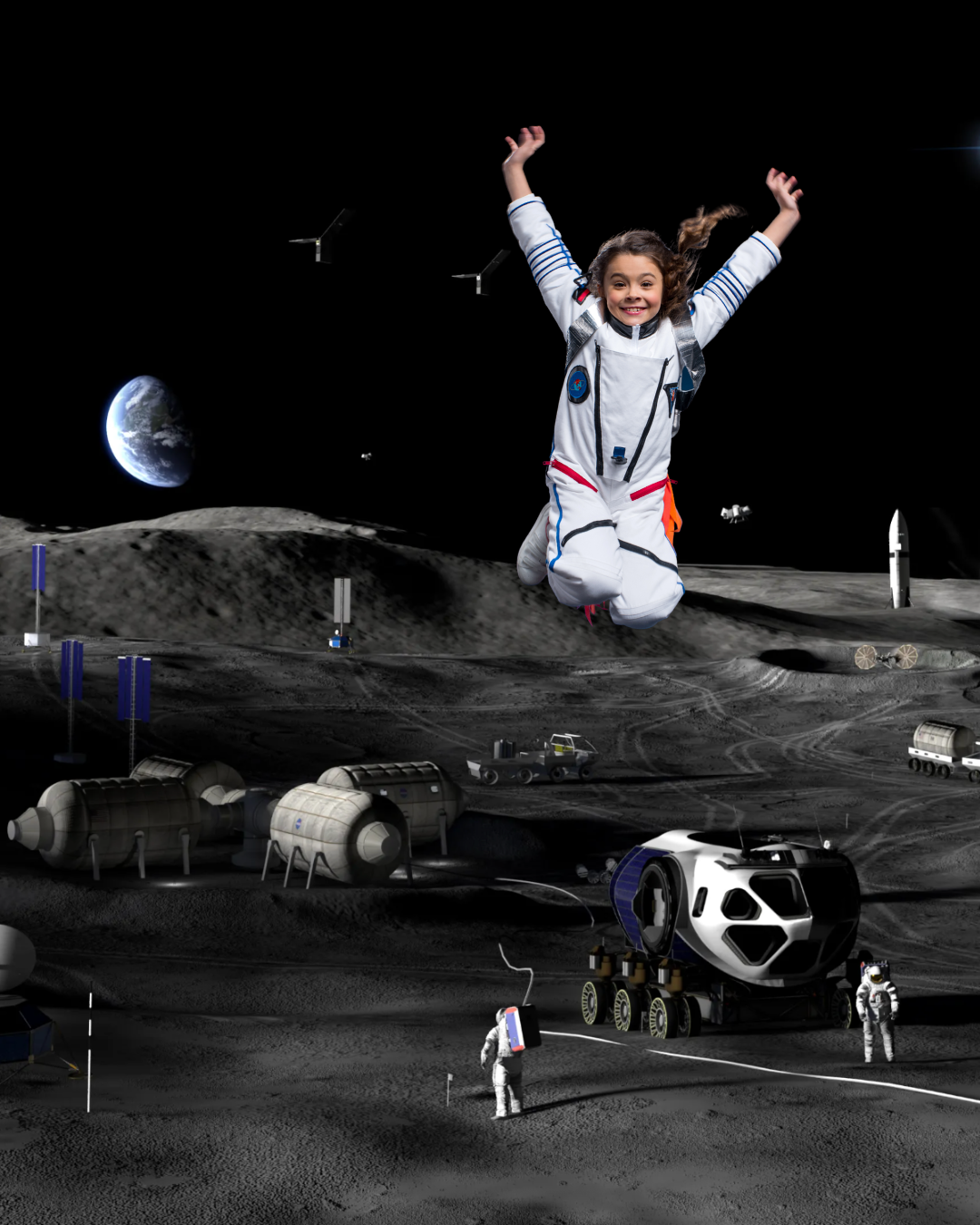
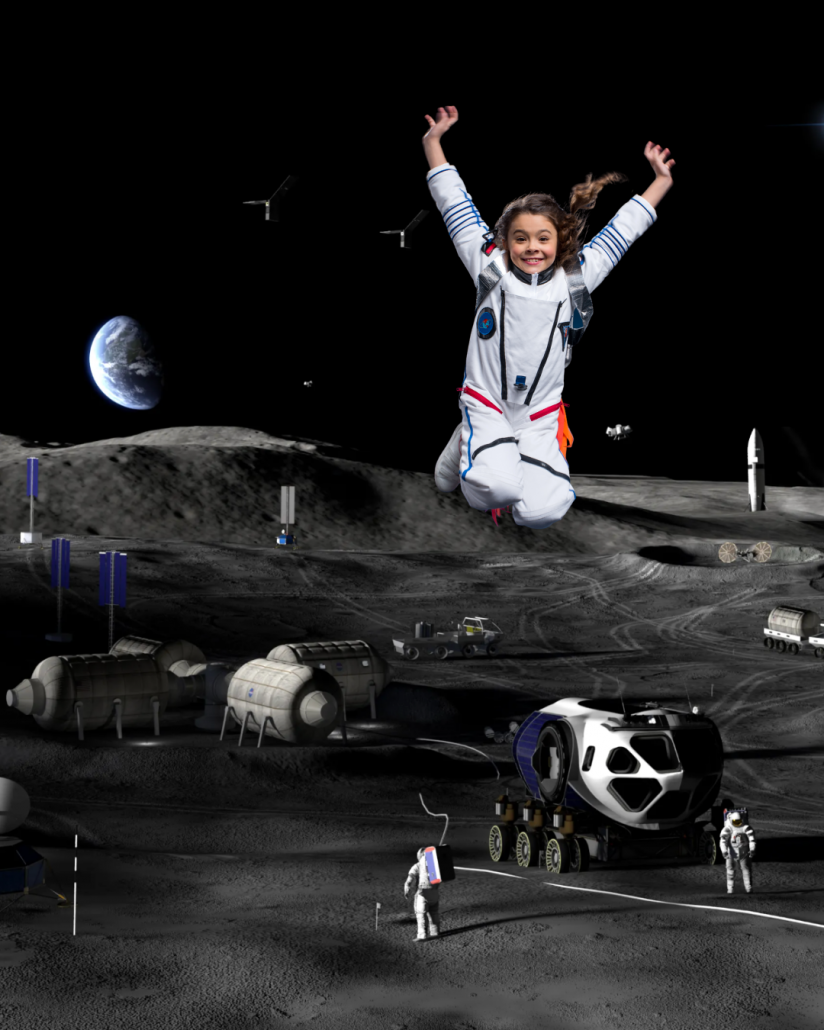
Imagine looking up at the Moon and knowing that people are living there!
NASA has revealed exciting plans for a huge lunar base where astronauts could live, work and explore. The Moon base could cover hundreds of square kilometres and help scientists prepare for future missions to Mars.
Although a permanent Moon base is still many years away, engineers and scientists are already working out how it could become a reality.
Want more kids science news? Try Whizz Pop Bang magazine!
Whizz Pop Bang is the award-winning science magazine for curious kids aged 6–12. Every month, young scientists discover fascinating facts, try hands-on experiments, meet real scientists and explore the incredible world around them.
Packed with screen-free activities, puzzles, competitions and amazing science news, it’s designed to inspire a lifelong love of STEM subjects while having lots of fun along the way.
A Moon base is a place where astronauts could live for long periods of time on the lunar surface.
Just like research stations in Antarctica, a lunar base would provide shelter, food, water and equipment for scientists exploring an extreme environment.
Future Moon bases might include places to live, research laboratories, power stations and even greenhouses where food could be grown.
Why does NASA want a base on the Moon?
NASA hopes that living on the Moon will help humans learn how to survive on other worlds.
The Moon is much closer than Mars, making it the perfect place to test new technology and learn how astronauts can stay healthy during long space missions.
Scientists could also study the Moon’s rocks, history and hidden resources.
How would astronauts survive on the Moon?
Living on the Moon would be very different from living on Earth.
Astronauts would need protection from:
Extreme temperatures
Dangerous space radiation
Tiny sharp Moon dust
Meteorite impacts
Future Moon bases could be built underground or covered with lunar soil for extra protection.
Scientists are also exploring ways to create oxygen, water and fuel using materials already found on the Moon.
Could children ever live on the Moon?
Nobody knows for sure, but it could happen one day.
NASA’s plans are part of a long-term effort to establish a permanent human presence beyond Earth. If future Moon bases become successful, children growing up on the Moon may not just belong in science fiction stories.
Could the first child to live on the Moon be reading Whizz Pop Bang right now?
Amazing Moon Facts
🌕 The Moon is about 384,400 kilometres from Earth.
🚀 It takes about three days for astronauts to travel there.
👨🚀 Twelve people have walked on the Moon so far.
🌑 The Moon has no air that humans can breathe.
🦘 Because gravity is weaker on the Moon, astronauts can jump much higher than on Earth.
Want more space science?
If you love rockets, astronauts and incredible discoveries, check out Whizz Pop Bang magazine – it’s packed with hands-on activities, fascinating facts and out-of-this-world science fun!
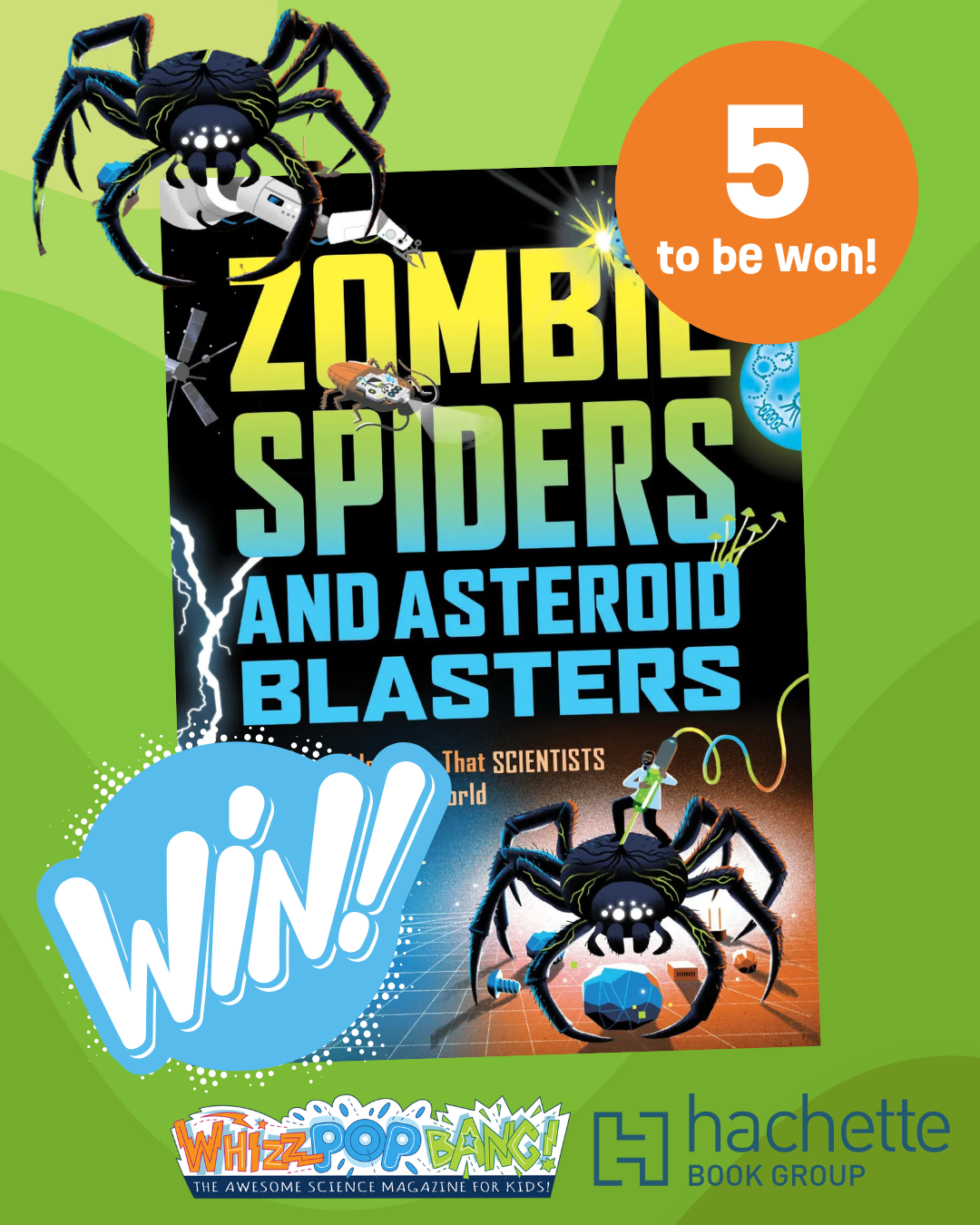
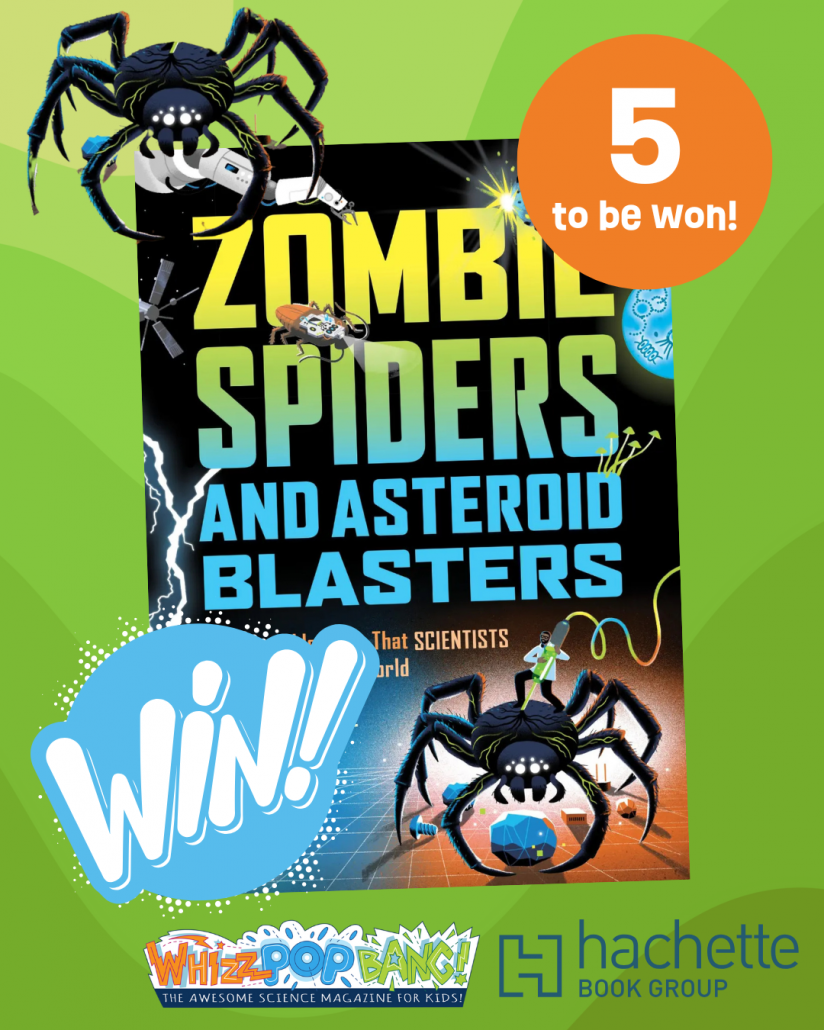
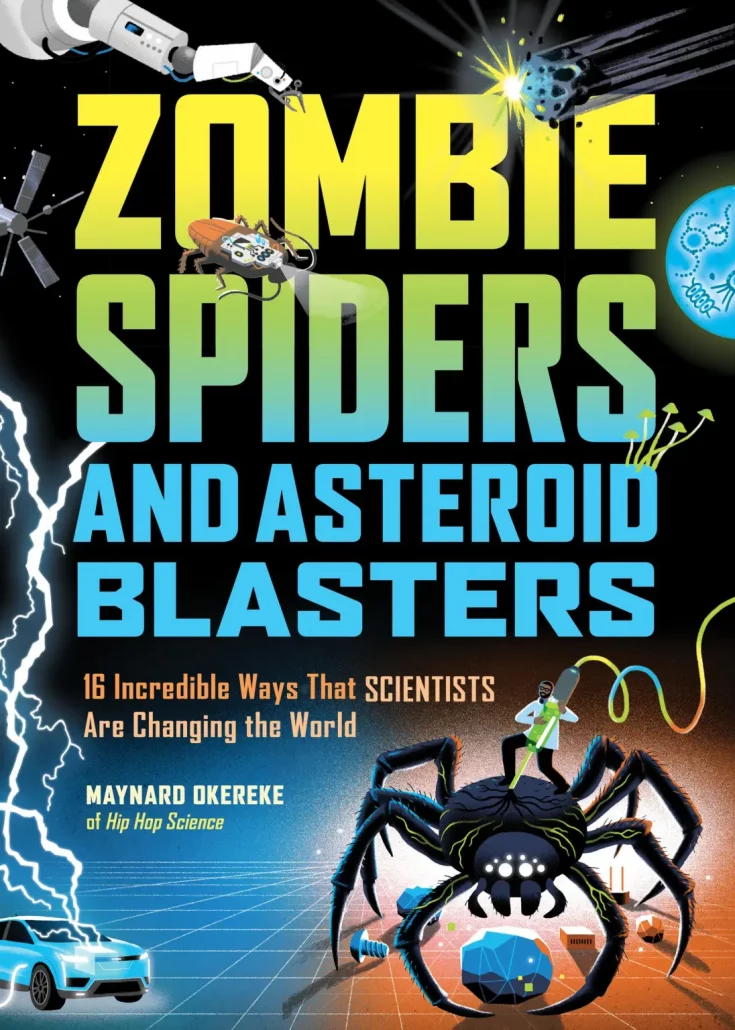
Looking for a children’s science book giveaway packed with curiosity, humour and real STEM ideas? We’re giving Whizz Pop Bang readers the chance to win one of five copies of Zombie Spiders and Asteroid Blasters – a fun, fact-filled science book that uses wild “what if?” questions to explain real physics, biology and space science to curious children aged 8–12.
What’s Zombie Spiders and Asteroid Blasters all about?
Written by science communicator Maynard Okereke, this brilliantly bonkers book takes ideas that sound impossible and explores them using real science.
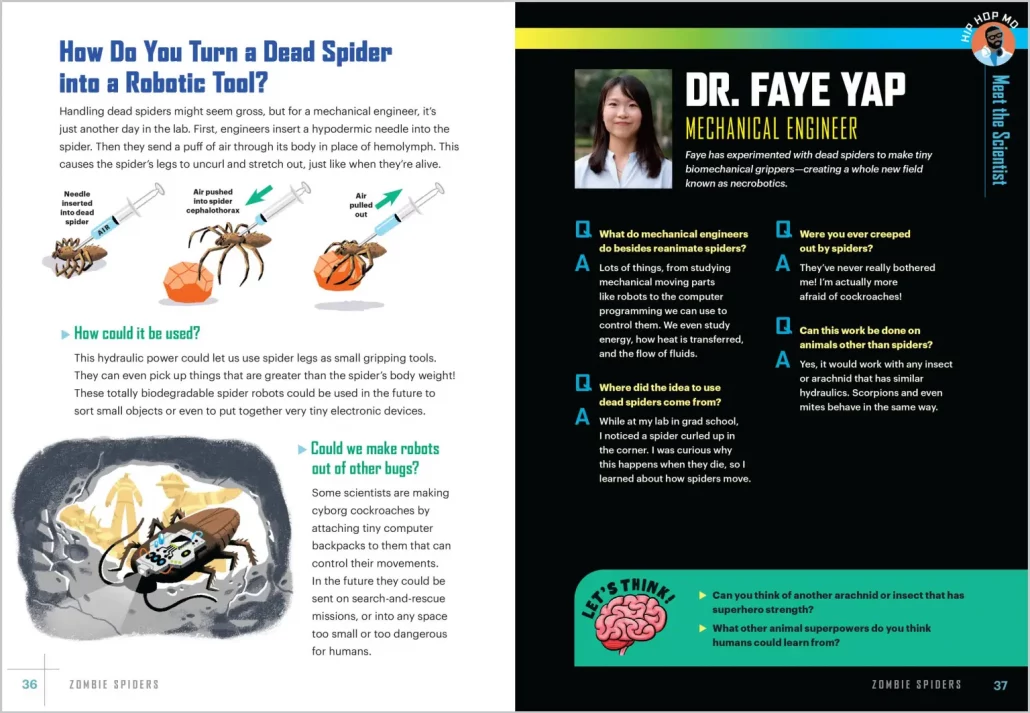
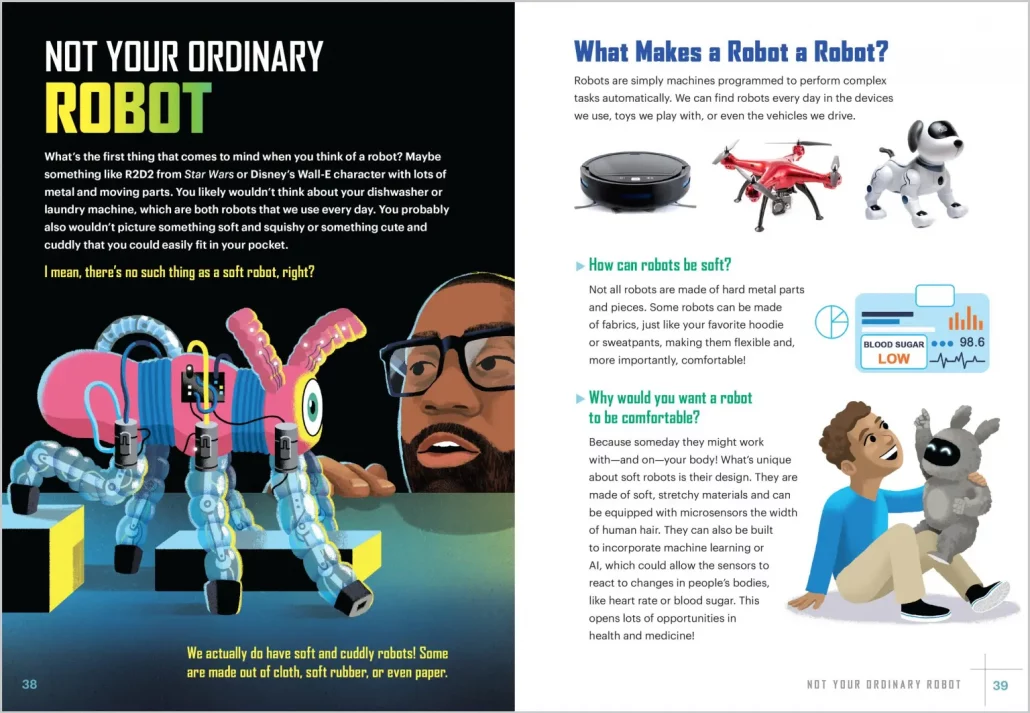
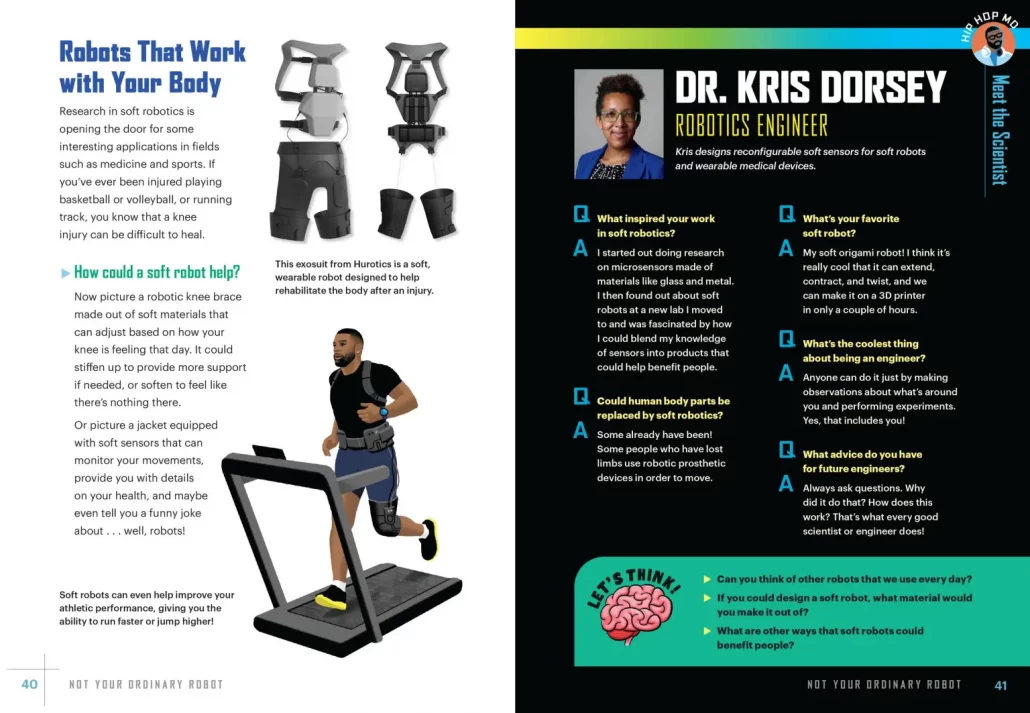
Inside, readers will discover:
🧠 Whether zombies could ever exist
🕷️ What it would really take to create giant spiders
☄️ How scientists might stop an asteroid hitting Earth
🚀 The science behind sci-fi films, games and comics
Each chapter starts with a big, imaginative question and breaks it down using clear explanations, humour and evidence, helping children think like real scientists.
Why Whizz Pop Bang readers will love it
This is exactly the kind of book that appeals to curious Whizz Pop Bang fans:
🔬 A fun science book for kids who love asking “how does that work?”
📖 Easy to dip into – perfect for reluctant readers and confident readers alike
🤯 Encourages critical thinking and problem-solving
🎮 Ideal for fans of sci-fi, gaming and STEM
It’s a fantastic example of a STEM book for children that makes big ideas exciting and accessible.
How to enter this children’s science book giveaway
To be in with a chance of winning one of 5 copies, simply answer this question in the comments:
Which of these is a real type of spider?
A) Black belt spider B) Hairy toed spider C) Happy-bum spider
Who is this book suitable for? This book is ideal for curious children aged around 8–12 who enjoy science, sci-fi and asking big questions.
Do I need to be a Whizz Pop Bang subscriber to enter? No – the competition is open to all Whizz Pop Bang readers.
Is this competition open internationally? No, this giveaway is open to UK entries only.
Good luck!
We love sharing science books for kids that spark curiosity, stretch imaginations and show how exciting real science can be. Good luck to everyone entering – and keep asking brilliant (and slightly bonkers) questions! 💥🔍
British Science Week 2025 is an exciting annual celebration of science, technology, engineering, and mathematics (STEM) in the UK. Taking place from 7th to 16th March 2025, this nationwide event features a variety of science activities, workshops, and events for children and adults alike. Whether you’re a budding scientist or simply curious about the world around you, there are plenty of ways to engage with science during this week-long festival.
How to Take Part in British Science Week 2025
Getting involved in British Science Week doesn’t have to be complicated. Here are some easy and fun ways to explore science:
Try kitchen science experiments at home
Visit a science museum or exhibition
Attend a science talk or fair
Join a citizen science project
Enter the British Science Week poster competition
The goal of British Science Week is to spark curiosity and excitement about STEM subjects, making science accessible and enjoyable for all ages.
You don’t need a high-tech lab to explore science—many exciting hands-on experiments can be done using everyday household items. Simple ingredients like vinegar, baking soda, and food coloring can lead to fascinating discoveries.
Science museums and exhibitions are packed with interactive displays and hands-on experiments, making them a great way to engage kids with science. During British Science Week, many museums and venues host special STEM events, workshops, and science shows. Find your local science centre here!
Looking for science events near you? Check out the What’s On in Science Week listings to find both in-person and virtual science activities happening from 7th-16th March.
The British Science Week poster competition is a fun challenge for children aged 3-18 years old. This year’s theme is “Change and Adapt”, and young scientists can submit creative posters for a chance to win all sorts of science prizes.
Submission deadline: 3rd April 2025
Encourage your child to showcase their creativity and love for science by entering the competition. Find out more here.
From DIY science experiments to museum visits and STEM competitions, there are so many ways to celebrate British Science Week 2025. Whether you explore science at home, attend an event, or take part in a citizen science project, it’s a fantastic opportunity to learn, discover, and have fun with science.
Fill your child with science wonder with a subscription to Whizz Pop Bang, the award-winning magazine for 6 to 12-year-olds. Watch their face light up with glee when their very own magazine zooms through the letterbox! Packed full of hands-on science awesomeness, it’s the gift that keeps of delighting, month after month.
Here’s a record-breaking journey that needs to be seen to be believed!
In 2016, Luke Aikins set a record for skydiving 7,6000 metres without a parachute! While travelling at 193 km/h, he steered his way to a safe landing on a bouncy net.
It wasn’t just people on Earth who were glued to the Paris 2024 Olympics and Paralympics – astronauts on the ISS were inspired by the athletes, too! They added elements of Olympic sports to their training programmes (and it looks like they had a lot of fun doing it, too!)
Watch the astronauts who were inspired by the Olympics here!