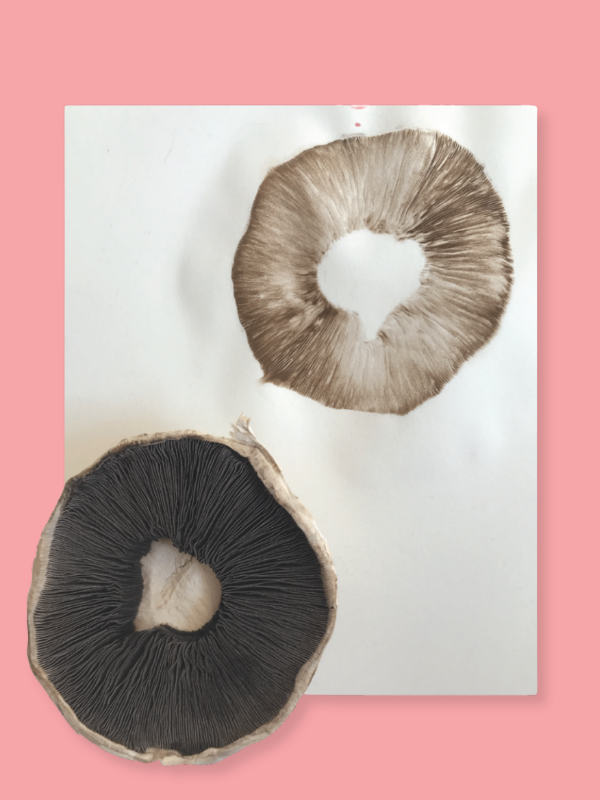
Did you know that mushrooms can make their own amazing patterns on paper? With just a mushroom and a few things from around the house, you can create a beautiful spore print and discover some fascinating fungi science!
This easy science experiment is perfect for curious kids who love exploring nature.
Watch: How to make a mushroom spore print
You will need:
A flat mushroom (use one bought from a food shop)
Plain white paper
A sprinkle of water
How to make your mushroom spore print
Carefully remove the stalk from your mushroom to expose the gills underneath.
Lay your mushroom, gill side down, onto the paper.
Sprinkle with a bit of water
Cover it with a bowl to stop the mushroom drying out or being disturbed.
Leave it undisturbed for two days.
Remove the bowl carefully then lift the mushroom off the paper to reveal your spore print!
Here’s the science…
Did you know that fungi and mushrooms don’t have seeds? Instead, they release tiny spores that look like powder or dust. The cap of the mushroom opens up and releases them from its gills. The spores blow away in the wind to grow into new fungi. In this experiment, you can catch those spores and turn them into a beautiful print.
Keep the science adventures coming…
…with a subscription to Whizz Pop Bang, the award-winning science magazine for children aged 6 to 12. Every issue is packed with experiments, discoveries and activities to try at home.
Get ready for some sky high science! Whizz Pop Bang Issue 135: Flying High is packed with hands-on activities that explore the science of flight for kids. Make a parachute, fly stunt planes and explore aeroplanes, drones, pterosaurs and amazing flying animals.
To help your child get stuck into the experiments as soon as their magazine arrives, we’ve put together this handy science of flight experiment kit list. Gather these few simple supplies in advance and your young scientist will be ready to go as soon as the magazine hits the doormat.
We haven’t included everyday basics such as scissors and paper.
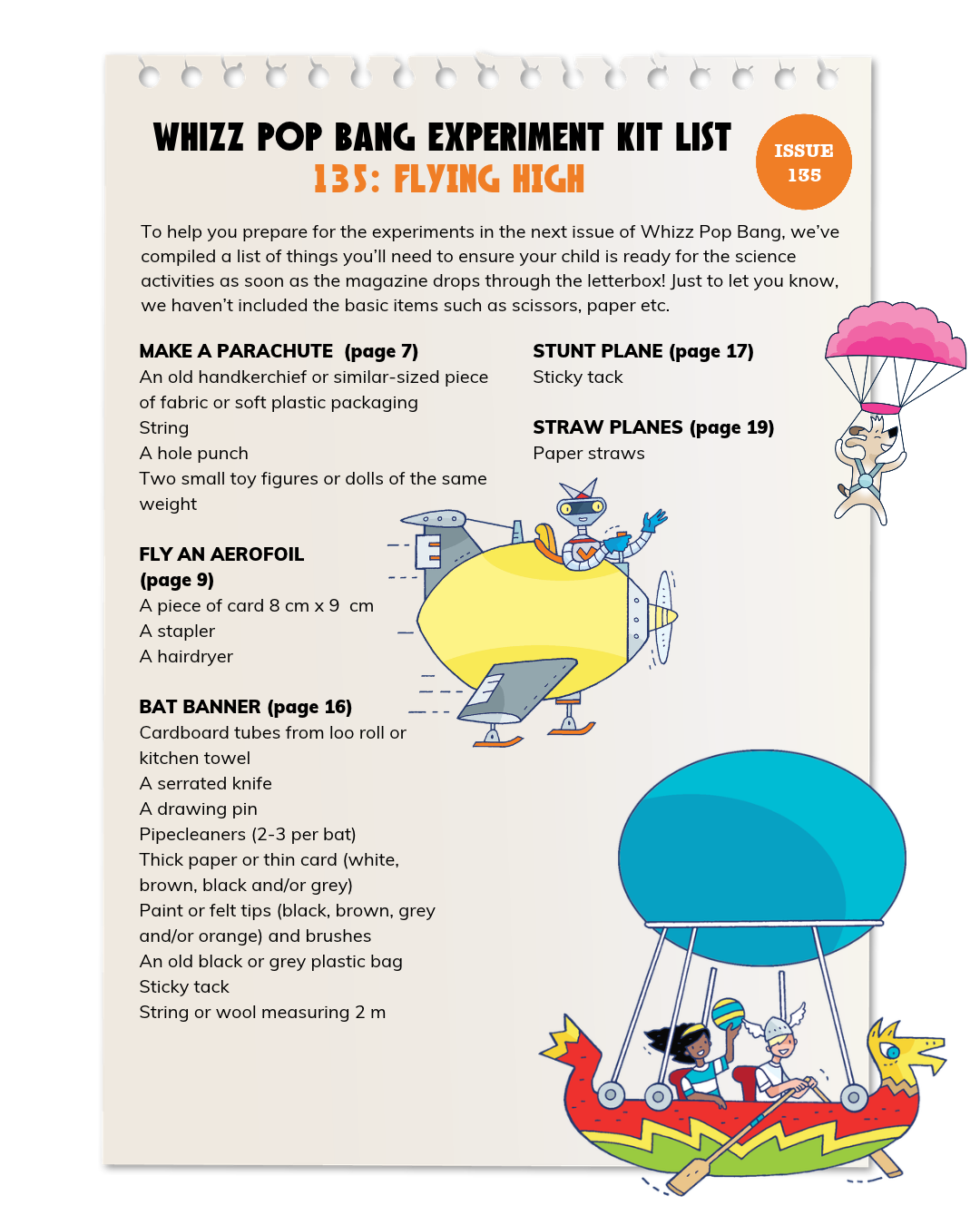
What you’ll need for the experiments in issue 135: Flying High:
There’s much more than experiments inside Whizz Pop Bang Issue 135: Flying High. Find out how aeroplanes overcome gravity, why wings create lift and how everything from helicopters and hot-air balloons to birds and pterosaurs take to the skies. Investigate gravity and air resistance by making a parachute, experiment with an aerofoil then make a fly your own stunt planes.
Want to join in with the Science of Flight fun?
Subscribe to Whizz Pop Bang and your child can enjoy a new science adventure delivered through the letterbox every month.
Learn how to make dirty coins shine with this easy chemistry experiment for kids! Using vinegar and salt, discover the science of oxidation in just a few minutes.
Have you ever wondered why old coins lose their shine?
With just vinegar, salt and a few grubby coins, your child can become a mini chemist and discover the science behind oxidation in just a few minutes.
This quick experiment is perfect for curious children and uses everyday kitchen ingredients to reveal an amazing chemical reaction.
Watch the experiment
Watch our short video below to see the gleaming coins experiment in action.
You’ll need
A glass jar
200ml white vinegar
1 teaspoon of salt
Some grubby 1p or 2p coins
Paper towels
Running water
What happens?
When copper coins are exposed to air over time, they react with oxygen to form a dull layer called copper oxide.
Mixing vinegar (a weak acid) with salt creates a solution that dissolves this oxide layer, revealing the shiny copper underneath.
It’s a brilliant way to introduce children to the idea that chemistry is happening all around us—even on the loose change in your pocket!
The science behind it
Copper naturally reacts with oxygen in the air.
This reaction forms a coating called copper oxide, which makes the coin look brown and dull.
The acetic acid in vinegar helps loosen this layer, while the salt speeds up the reaction. Once the oxide has dissolved away, the shiny copper beneath is revealed.
Although it looks like magic, it’s actually chemistry!
Questions to ask your young scientist
Can you predict which coin will become the shiniest?
Why do you think older coins look dirtier than newer ones?
What happens if you leave the cleaned coin out in the air again?
Can you think of any other metal objects that change colour over time?
Safety
This experiment should be carried out with adult supervision.
Wash hands after handling coins and avoid drinking the vinegar solution.
Keep the science going!
If your child loved this experiment, they’ll love Whizz Pop Bang magazine.
Every month is packed with exciting experiments, fascinating facts, puzzles and hands-on STEM activities designed for children aged 6–12.
On Wednesday 12th August 2026, people across the UK will witness the biggest solar eclipse visible here since 1999. Depending on where you are, the Moon will cover around 90–96% of the Sun, creating an unforgettable sight.
If you’ve left it too late to buy eclipse glasses, don’t panic! There are still plenty of brilliant (and completely safe) ways to enjoy this spectacular event.
The most important thing to remember is this:
Never look directly at the Sun without proper eye protection.
Even when most of the Sun is covered by the Moon, its remaining light is still powerful enough to cause permanent eye damage. Unlike a total eclipse, there is never a safe moment to look directly at the Sun during the UK’s partial eclipse.
Here are our favourite safe ways to enjoy eclipse day.
1. Use Certified Eclipse Glasses ⭐
If you’ve already got a pair, check they’re genuine before using them.
Safe eclipse glasses should:
Meet the ISO 12312-2:2015 international safety standard
Be free from scratches, tears or damage
Come from a reputable supplier
Remember:
❌ Regular sunglasses are not safe.
❌ 3D cinema glasses are not safe.
❌ Homemade tinted plastic or smoked glass are not safe.
If your glasses are damaged or you’re unsure whether they’re genuine, don’t risk using them.
2. Make a Simple Pinhole Projector
One of the easiest (and most fun) ways to watch the eclipse is to project an image of the Sun instead of looking at it.
You’ll need:
Two sheets of white paper or card
A pin
Simply make a tiny hole in one sheet of card, stand with your back to the Sun and let the sunlight shine through onto the second sheet.
You’ll see a tiny image of the Sun—and as the eclipse progresses, you’ll notice a little “bite” appearing in it!
It’s a fantastic science activity for children too.
3. Grab a Colander from the Kitchen
Yes, really!
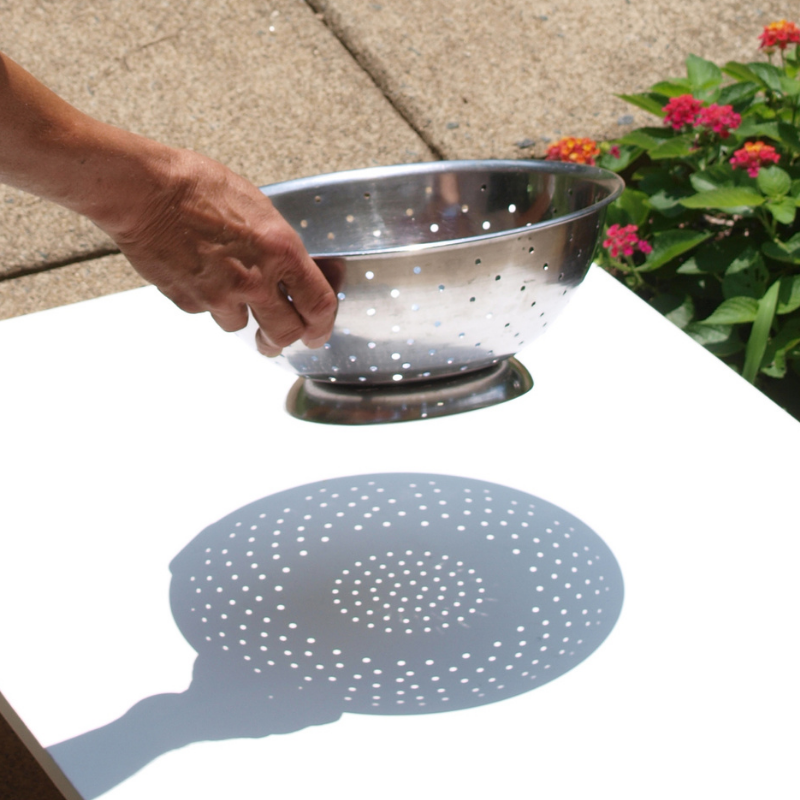
The hundreds of tiny holes in a kitchen colander act like lots of miniature pinhole projectors.
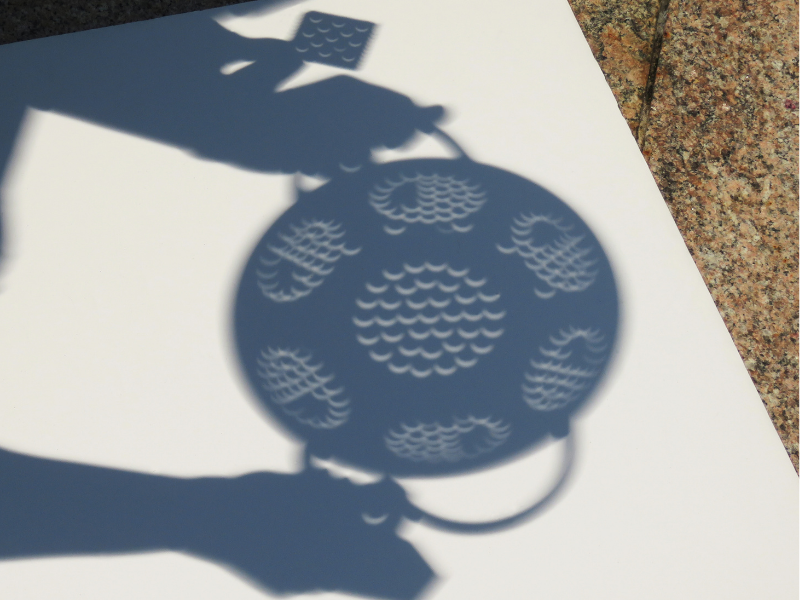
Hold the colander so sunlight shines through onto the ground or a sheet of paper and you’ll see dozens of tiny Suns projected underneath.
As the Moon moves across the Sun, every little image changes shape.
It’s one of the easiest ways to view the eclipse (and bonus – there’s no complicated crafting required!)
4. Look Beneath the Trees
Nature has already made thousands of pinhole projectors.
The tiny gaps between leaves allow sunlight through, creating hundreds of miniature images of the Sun on the ground.
During a solar eclipse those little circles transform into tiny crescents.
Take a walk beneath a leafy tree during the eclipse and have a look—you might be surprised by what you find!
5. Watch a Live Stream
Cloudy skies? No problem.
The Royal Observatory Greenwich will be broadcasting the eclipse live online using professional solar telescopes, with astronomers explaining exactly what’s happening as the Moon passes across the Sun.
It’s completely free and a brilliant option if the British weather doesn’t cooperate.
6. Visit a Local Astronomy Group
Many local astronomy clubs and observatories hold public viewing events during eclipses.
They often provide:
Special solar telescopes
Expert guidance
Safe viewing equipment
Family-friendly activities
It’s a fantastic opportunity to learn more about our nearest star while seeing the eclipse through equipment that’s specially designed for observing the Sun safely.
7. Can’t Wait? Watch a Solar Eclipse Simulation
This video is a realistic 3D simulation of a solar eclipse – no glasses, no special weather conditions and absolutely no patience required! This could be the perfect solution if the eclipse is a little too late, subtle or slow for a young child who wants to see what happens during a solar eclipse.
Things You Should Never Do
However tempting it might be, never:
❌ Look directly at the Sun without proper protection
❌ Use sunglasses instead of eclipse glasses
❌ Look through binoculars or a telescope without a certified solar filter fitted to the front of the instrument
❌ Look through a camera lens while wearing eclipse glasses
These can all cause serious, permanent eye damage.
Make It a Family Science Challenge
Why not turn eclipse day into a mini science investigation?
Try comparing:
Which method gives the clearest image?
Does a metal colander work better than a plastic one?
How does the projected image change every 10 minutes?
Can you spot crescent-shaped patches of light beneath different trees?
It’s a wonderful opportunity to combine astronomy, observation and a little scientific curiosity.
Whether you’re using eclipse glasses, a homemade projector or simply watching online, there are plenty of safe ways to experience one of nature’s most spectacular shows.
Let’s keep our fingers crossed for clear skies! 🌞🌙
The Eurasian curlew is one of the UK’s most rapidly declining breeding birds. Numbers have fallen by more than 65% since the 1970s, placing it on the Red List of birds of conservation concern. The species requires an estimated 10,000 additional chicks to fledge each year simply to stabilise the UK population.
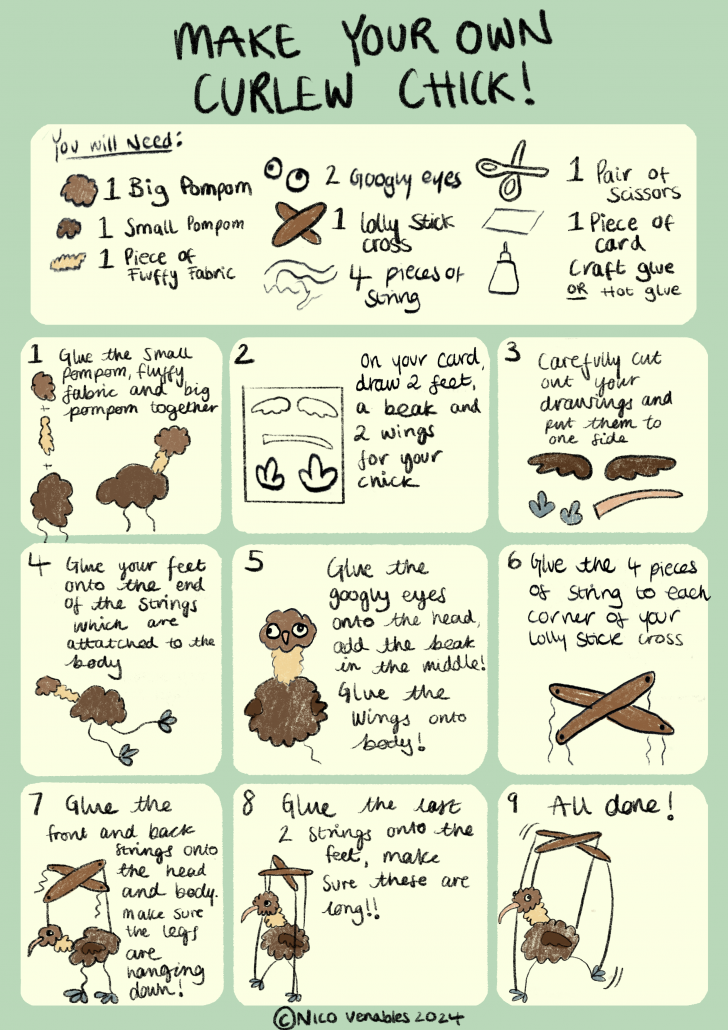
1 big pompom 1 small pompom 1 piece of fluffy fabric 2 googly eyes 2 lolly sticks glued together in a cross shape String 1 pair of scissors 1 piece of card Craft glue or hot glue
What to do:
Glue the small pompom (head), fluffy fabric (neck) and big pompom (body) together.
On your card, draw 2 feet, a beak and 2 wings for your chick.
Carefully cut out your drawings.
Glue your feet onto some pieces of string and tie them round the body.
Glue the google eyes and beak onto the head. Glue the wings onto the body.
Cut four pieces of string measuring about 30 cm each. You will need to trim these to the right lengths as you attach them to your puppet in steps 7 and 8. Glue a piece of string onto each end of the lolly stick cross.
Glue one string to the top of the head and the opposite string to the back of the body.
Glue one of the other strings to one foot, and the final string to the other foot.
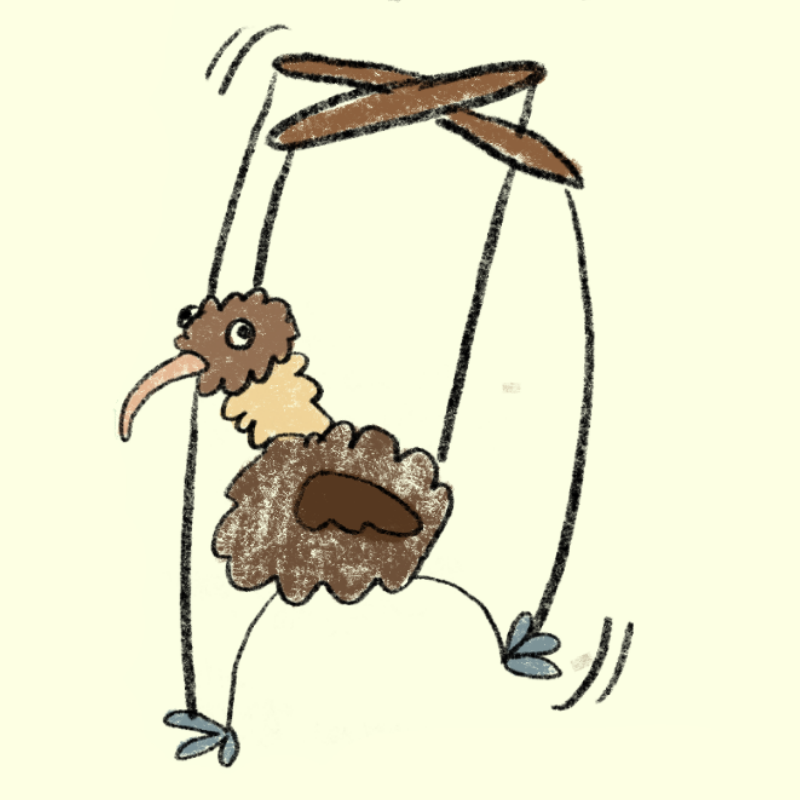
All done! Your curlew chick puppet is ready to creep, stalk and dance!
Help protect real curlews
Curlews are disappearing from the UK countryside, but families and children can help. Find out why these amazing birds are in danger, meet the giant curlews taking on the Yorkshire Three Peaks and discover simple ways to help protect them.
The Easter holidays are a wonderful time for family adventures, but they can also bring the familiar challenge of two whole weeks to fill with activities.
Parents often find themselves searching for Easter holiday activities for kids that are fun, educational and easy to set up. And when the weather turns rainy (as it often does in the UK!), screen-free activities become even more valuable.
If you’re looking for creative, science-inspired ways to keep children entertained this Easter, we’ve put together some brilliant ideas.
Why Screen-Free Activities Matter During the Holidays
School holidays often lead to a big increase in screen time. While digital entertainment can be useful in small doses, many families prefer to balance this with activities that encourage:
creativity
curiosity
problem-solving
family interaction
Hands-on activities, like experiments, crafts and puzzles, help children learn while they play. They also create moments families can enjoy together.
If you’re looking for an Easter gift idea that lasts longer than chocolate, the Whizz Pop Bang Family Activity Bundle is designed to keep children entertained throughout the holidays.
This special bundle includes four fantastic books and magazines packed with science, creativity and laughter.
Discover Whizz Pop Bang’s new family activity bundle
Inside you’ll find:
Whizz Pop Bang: Amazing Grazing
A fascinating science magazine exploring the surprising world of grasses. Children can investigate plant science, try hands-on experiments and discover amazing facts about nature.
Perfect for curious readers aged 6 to 12.
Hoopla: Deep Blue Sea
Our sister magazine Hoopla is designed for younger explorers aged 4 to 9.
In this ocean-themed issue, children can enjoy pirate games, creative crafts and fun ocean activities.
The Whizz Pop Bang Science Joke Book
With 200+ science jokes, this book is perfect for car journeys, rainy afternoons and family giggles around the table.
The Whizz Pop Bang Snip-Out Science Book
A hands-on activity book with 30 creative projects to cut, stick and build, from flying machines to moving skeletons.
Why Families Love the Family Activity Bundle
Many families have children of different ages, which can make it tricky to find activities everyone enjoys. This bundle is designed with that in mind. It includes:
✔ Something for older children ✔ Something for younger siblings ✔ Science-based and creative activities to do together ✔ Jokes and puzzles the whole family can enjoy
It’s a wonderful way to bring science, creativity and laughter into the Easter holidays.
A Perfect Alternative to Chocolate Easter Gifts
Chocolate eggs are a classic Easter tradition – but they tend to disappear quickly! Many parents and grandparents are now looking for Easter gifts that inspire creativity and curiosity.
Give the gift of curiosity
A magazine or activity book can provide hours of discovery, making this bundle a thoughtful and lasting Easter surprise.
Easy Easter Holiday Activities to Try at Home
If you’re planning some simple Easter holiday activities, here are a few ideas to try with children:
Plant some seeds and watch them grow – it’s one of the easiest ways to see science in action in your own home or garden. Discover how to grow a grass pet here!
What are some screen-free Easter holiday activities for kids?
Hands-on activities such as science experiments, crafts, puzzles and creative projects are great screen-free options. Magazines and activity books can also provide structured activities children can enjoy independently or with family.
What is a good Easter gift for children besides chocolate?
Many families choose educational gifts like science magazines, activity books or craft kits. These gifts encourage curiosity and creativity while providing entertainment throughout the holidays.
What age is Whizz Pop Bang magazine for?
Whizz Pop Bang is designed for children aged 6–12 and is packed with experiments, puzzles and science stories.
What age is Hoopla magazine for?
Hoopla magazine is aimed at younger children aged 4–9 and focuses on creativity, crafts, nature and mindful activities.
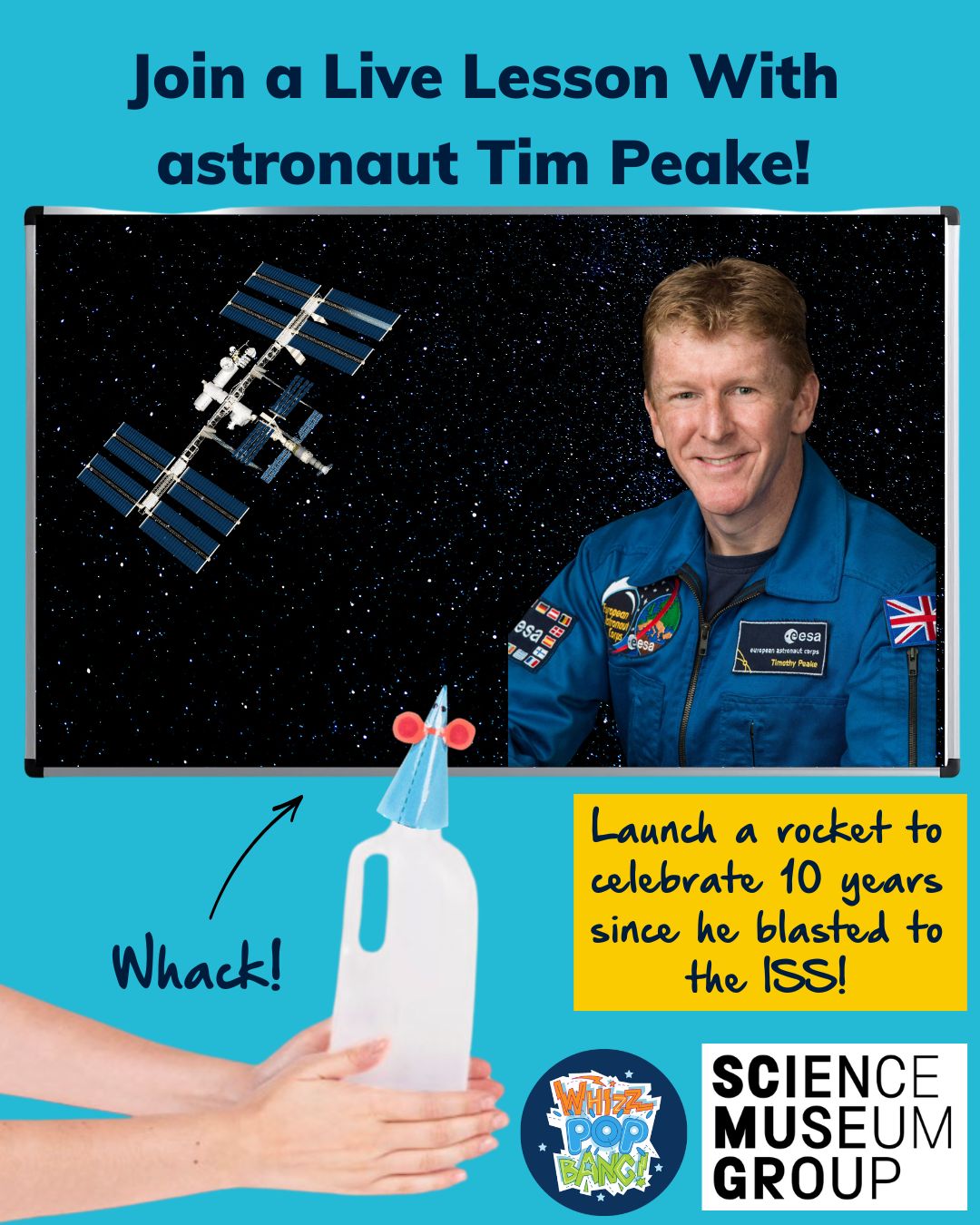
It’s 10 years since astronaut Tim Peake’s mission to the International Space Station launched…
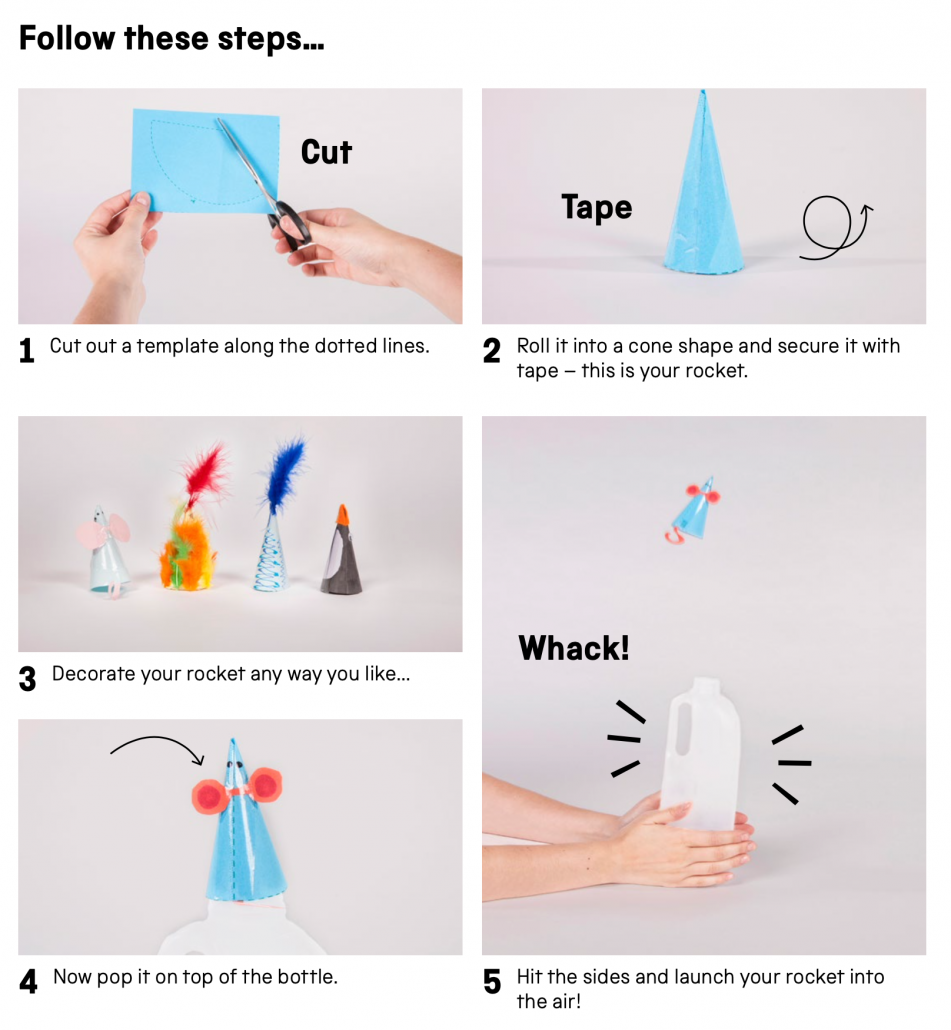
To celebrate, kids across the UK are invited to join in a lesson with Tim. Broadcast live from the Science Museum at 10:20 am on the 15th of December, it will feature a mass paper rocket launch to mark the exact moment (at 11:03) that Tim blasted off into space a decade ago! Ask your teacher or parent to sign up here.
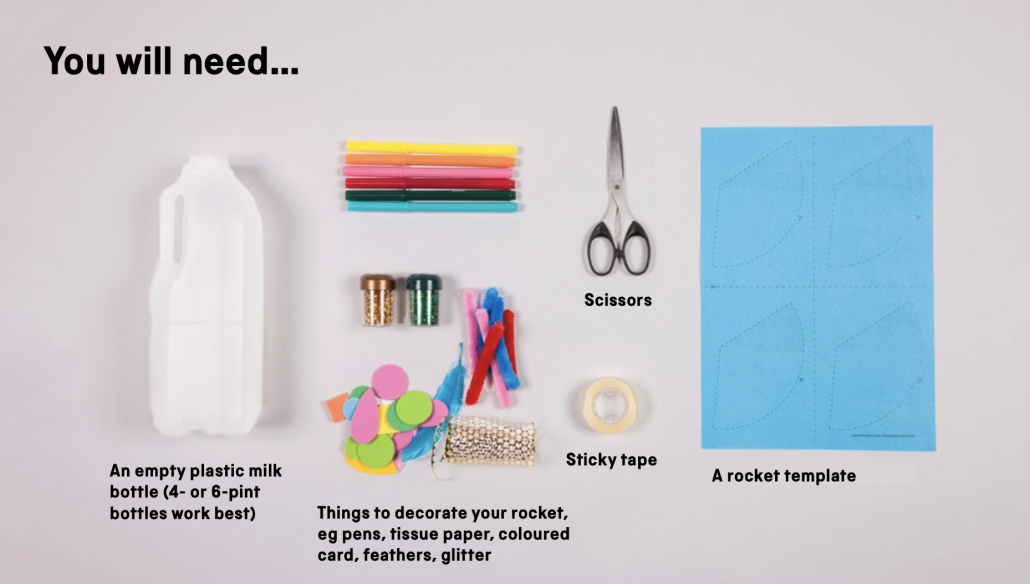
or read the information and instructions here, then download the templates only afterwards.
Overview for adults
There’s an old saying: what goes up must come down. This activity is a perfect chance to challenge that idea, shooting a rocket high into the air by rapidly squashing a plastic bottle launcher. You’ll never get this rocket into space – but some real rockets do go fast enough to prove the saying wrong.
What’s the science?
The bottle used as the rocket launcher is not really empty: there is air inside it. Air is elastic (squashy), and when you compress it, it pushes back and the pressure inside increases. In the activity, the sudden increase in air pressure inside the bottle pushes hard on the bottom of the rocket, sending it flying high into the air. There are also two other forces acting on the rocket: air resistance and gravity. Air resistance always pushes in the opposite direction to the rocket’s movement, and its strength depends on the rocket’s shape and its speed. Gravity always pulls downwards, slowing the rocket’s climb but speeding up its descent.
Science in your world
Just as increasing the air pressure in the bottle sends the rocket flying, you use air pressure when you squeeze shampoo or ketchup from a plastic bottle. It’s not usually as exciting as watching the rocket shoot into the air in the activity… unless you’re having a food fight!
Did you know…?
In order to keep going straight upwards and never fall down again, a rocket must reach a speed called escape velocity, which is 11.2 kilometres per second.
Think and talk about…
• What makes your rocket fly? • What makes it come down again? • How do you think a real rocket works?
Investigate…
• How could you make your rocket travel higher? • How could you make your rocket go more slowly? • Can you make your rocket spin as it falls?
Science in your world
Just as increasing the air pressure in the bottle sends the rocket flying, you use air pressure when you squeeze shampoo or ketchup from a plastic bottle.
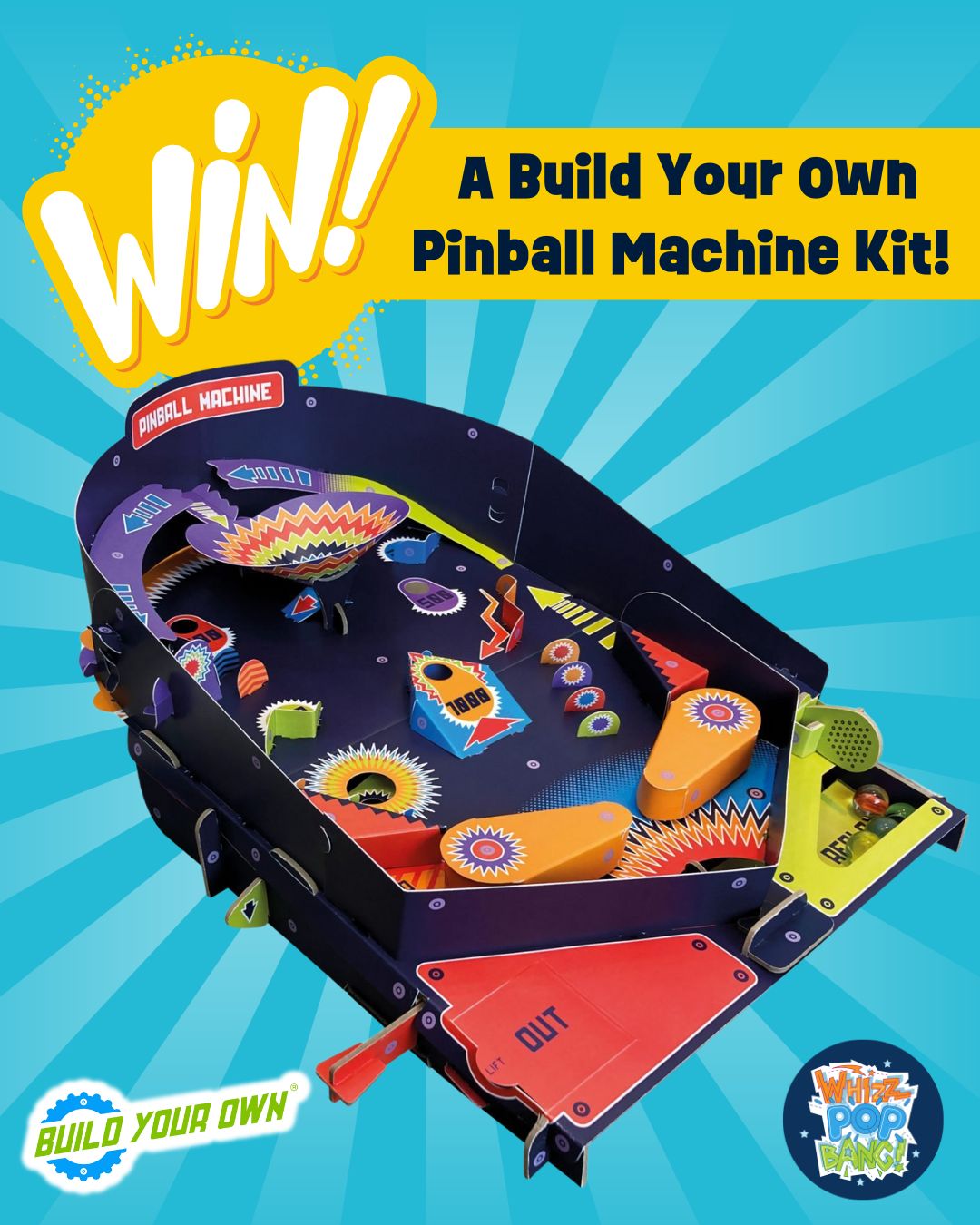
The fun begins as soon as you open the box. Press out then slot together 61 cardboard parts (no glue required!), add two elastic bands and you’ll soon have one fully working pinball machine. The build should take around 60 minutes and is suitable for engineers-in-training aged 8 and up.
Once it’s ready, load up the five swirly glass marbles and see if you can make them fly up the ramp, through the bumpers and round the vortex cone! Challenge your family to see who can get a high score on your very own DIY pinball machine!
This eco-friendly STEM kit is: ✅ Designed for ages 8+ ✅ Mess-free and fun to build ✅ Perfect for developing dexterity and reflex skills ✅ Made in the UK using high-quality sustainable cardboard
Whether you’re building it as a family project or battling it out for the best score, you’ll love every minute.
How to enter
To be in with a chance of winning one Build Your Own Pinball Machine kit, simply answer this question in the comments below:
Which of the below is a category of energy?
a) Kimchi b) Kindred c) Kinetic
This competition closes at midnight on 30th September 2025. One lucky winner will be chosen at random from all correct entries. For full terms and conditions, click here.
Are you looking for fun and simple British Science Week activities to celebrate this year’s theme, “Change and Adapt”? We’ve got you covered with a FREE science resource pack filled with hands-on experiments that your class will love!
Why ‘Change and Adapt’ is a Brilliant Theme
This year’s British Science Week theme encourages children to explore how things change in the world around them—whether through chemical reactions, forces, materials, or biological adaptation. It’s a fantastic opportunity to tie science into your curriculum in a way that’s engaging and memorable.
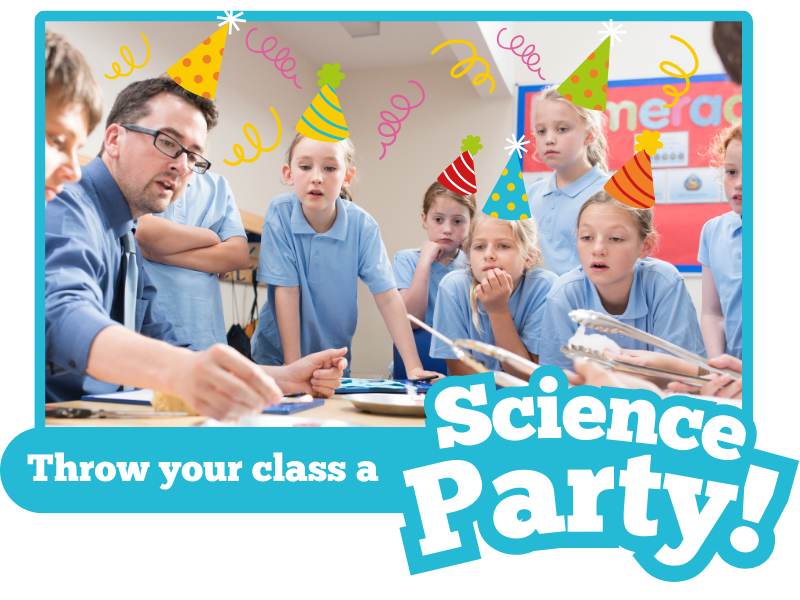
Free School Resources Pack – Throw A Science Party In Your Classroom!
To help you plan a curiousity-awakening, exciting (and most importantly, stress-free) British Science Week, we’ve got an amazing science freebie for you: a FREE ‘Science Party’ pack packed with six exciting experiments designed for KS1 and KS2. These hands-on activities will spark curiosity, encourage problem-solving, and bring science to life!
Each experiment explores the “Change and Adapt” theme through fun, interactive investigations that are easy to set up:
🟢 Making Chromatography Decorations – Explore how colours separate and create beautiful patterns! A perfect mix of art and science.
🔵 Bed of Pins Balloon Experiment – Discover how forces work by testing whether a balloon can survive being pressed against a bed of pins!
🟠 Fizz Pop Bang Edible Powder – Experience chemical reactions that you can taste!
🟣 Static Slime – Investigate static electricity while making an ooey-gooey slime that moves with an electric charge!
🟡 Magic Colour-Changing Icing – Learn about acid-base indicators in a fun and edible experiment that will leave your class amazed!
⚪ Incredible Invisible Ink – Uncover secret messages using simple kitchen ingredients—just like a real scientist (or spy)!
Each activity is easy to set up with minimal resources, making it perfect for busy teachers who want maximum impact with minimal prep!
Like all of Whizz Pop Bang’s science teaching resources, the science behind each activity is explained in simple, age-appropriate language, making planning and teaching these fun lessons an absolute breeze.
PLUS Here’s an Amazing Offer on School Subscriptions and Downloadable Resources!
Save 20% on our school subscriptions and downloadable resources for the first year as well as our school bundles. Simply add code SCIWEEK25 at check out.
British Science Week is the perfect opportunity to ignite a love for STEM in your classroom. Whether your pupils are experimenting with chemical changes, forces, or electricity, our Science Party Pack will keep them engaged and excited.
British Science Week 2025 is an exciting annual celebration of science, technology, engineering, and mathematics (STEM) in the UK. Taking place from 7th to 16th March 2025, this nationwide event features a variety of science activities, workshops, and events for children and adults alike. Whether you’re a budding scientist or simply curious about the world around you, there are plenty of ways to engage with science during this week-long festival.
How to Take Part in British Science Week 2025
Getting involved in British Science Week doesn’t have to be complicated. Here are some easy and fun ways to explore science:
Try kitchen science experiments at home
Visit a science museum or exhibition
Attend a science talk or fair
Join a citizen science project
Enter the British Science Week poster competition
The goal of British Science Week is to spark curiosity and excitement about STEM subjects, making science accessible and enjoyable for all ages.
You don’t need a high-tech lab to explore science—many exciting hands-on experiments can be done using everyday household items. Simple ingredients like vinegar, baking soda, and food coloring can lead to fascinating discoveries.
Science museums and exhibitions are packed with interactive displays and hands-on experiments, making them a great way to engage kids with science. During British Science Week, many museums and venues host special STEM events, workshops, and science shows. Find your local science centre here!
Looking for science events near you? Check out the What’s On in Science Week listings to find both in-person and virtual science activities happening from 7th-16th March.
The British Science Week poster competition is a fun challenge for children aged 3-18 years old. This year’s theme is “Change and Adapt”, and young scientists can submit creative posters for a chance to win all sorts of science prizes.
Submission deadline: 3rd April 2025
Encourage your child to showcase their creativity and love for science by entering the competition. Find out more here.
From DIY science experiments to museum visits and STEM competitions, there are so many ways to celebrate British Science Week 2025. Whether you explore science at home, attend an event, or take part in a citizen science project, it’s a fantastic opportunity to learn, discover, and have fun with science.
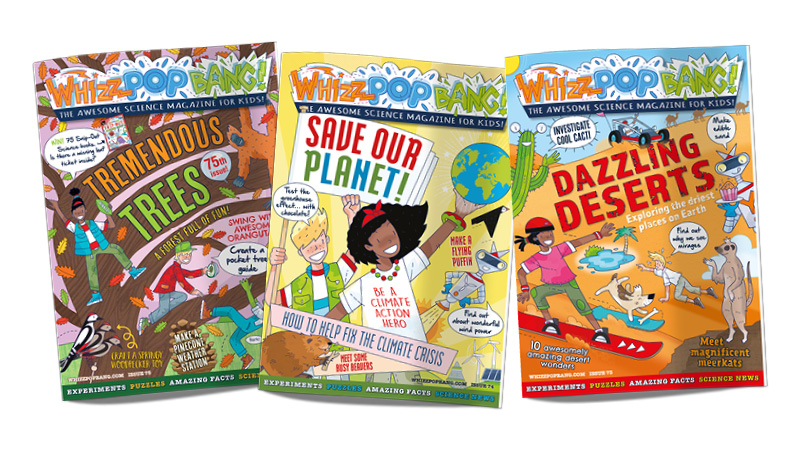
Fill your child with science wonder with a subscription to Whizz Pop Bang, the award-winning magazine for 6 to 12-year-olds. Watch their face light up with glee when their very own magazine zooms through the letterbox! Packed full of hands-on science awesomeness, it’s the gift that keeps of delighting, month after month.