
If you’ve got a 6–12 year old who’s always asking, “Why?”, this one’s for you!
This experiment explains exactly why some eruptions are so much more dangerous than others. Watch the reel to see it in action and hear an explanation of the science of magma. Save this for your home-education science lessons or for when you run out of ideas at the weekend!
Why do some volcanoes produce spectacular explosions, while others have rivers of lava flowing down their sides? The answer has a lot to do with what’s happening deep inside the volcano!
With this simple volcano science experiment for kids, you can investigate how different types of magma affect volcanic eruptions. All you need are a few everyday household materials – no complicated equipment required!
Watch our volcano experiment in action! 🎥
Bubble Trouble: A volcano science experiment
Some volcanoes contain magma that is runny and some contain much more viscous (gloopy) magma. Find out how different magmas affect volcanic eruptions.
You will need
- A small glass half-filled with water
- A small glass half-filled with golden syrup, honey or other viscous (gloopy) liquid
- An outdoor space or plastic sheeting
- Two straws
- Safety goggles
What you do
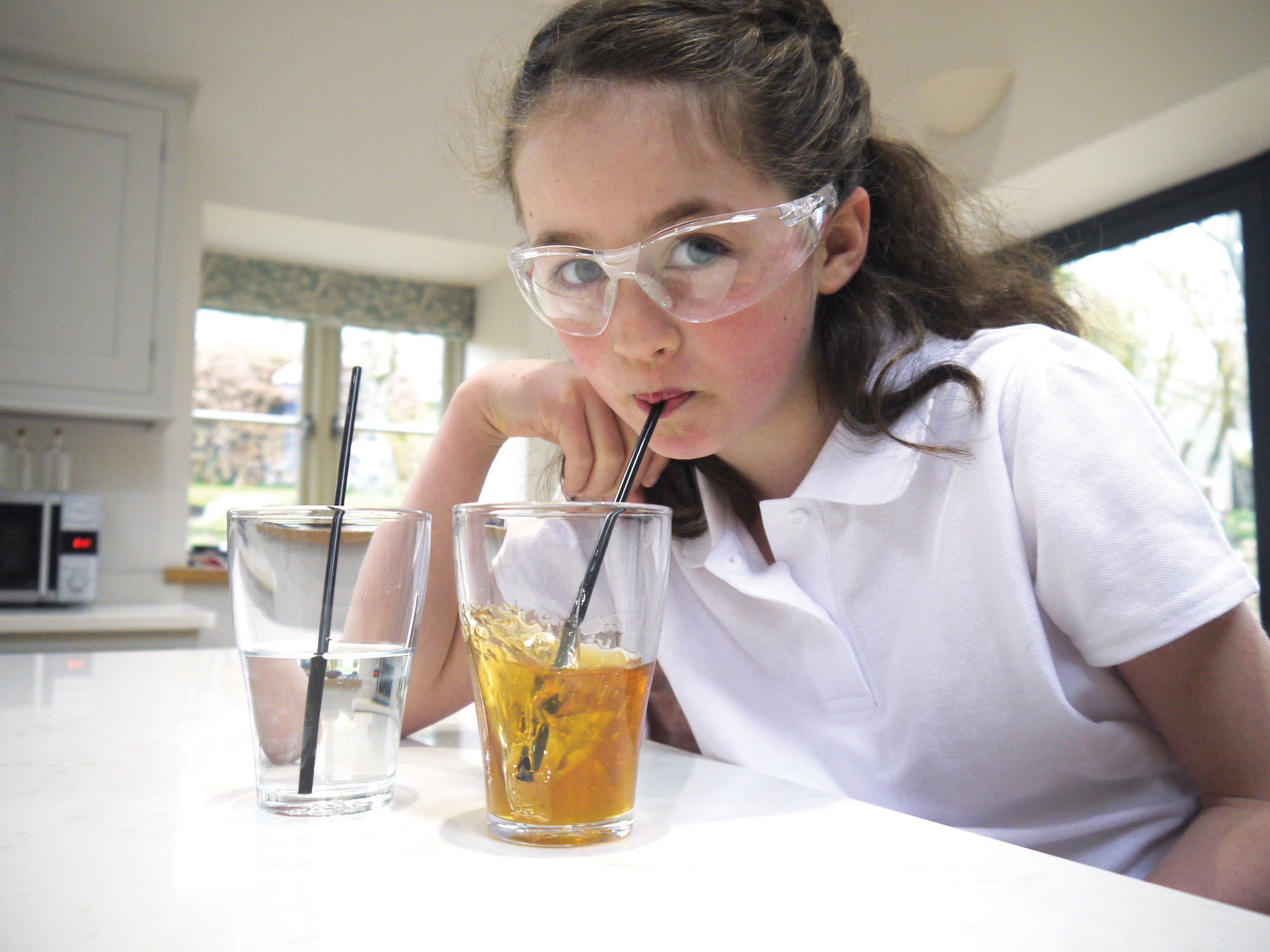
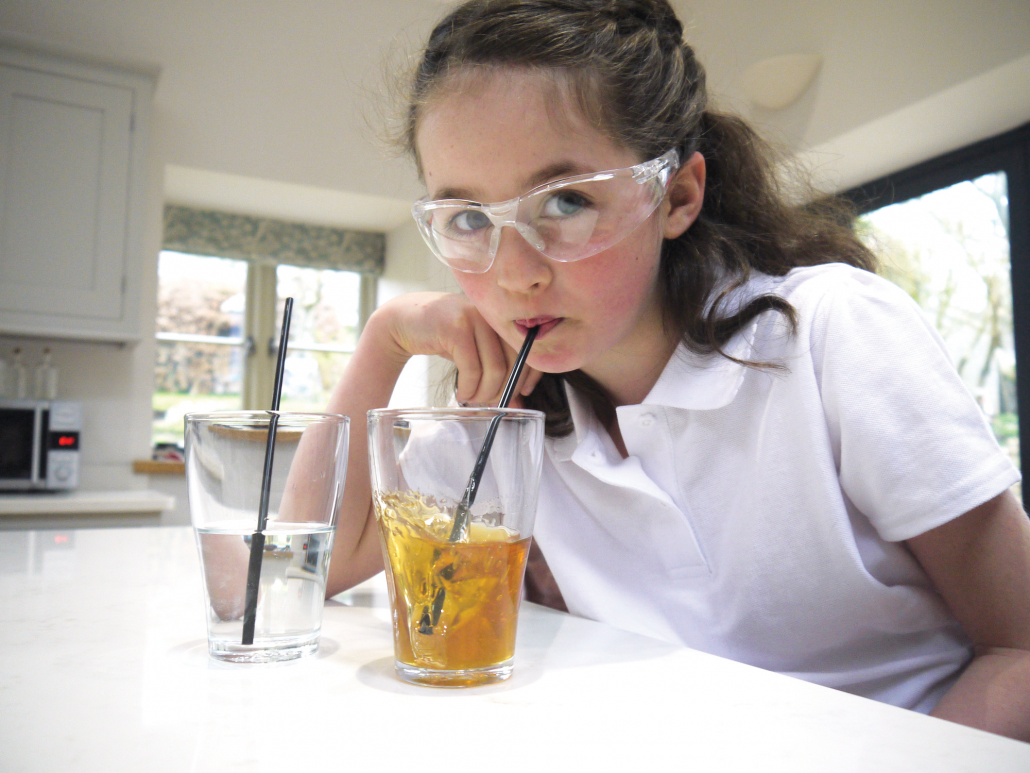
- Protect your work surface and put on your safety goggles so your eyes don’t get splashed with spewing lava!
- Imagine that the water is runny magma below the surface of the Earth and that the gloopy liquid is viscous (thick) magma.
- Put a straw into each cup of lava and gently blow bubbles – first into runny magma (the water) and then into viscous magma (the gloopy liquid). Which is easier to blow into?
- Now try blowing really hard into each type of magma. What happens?
What’s the science behind it? 🔬
It’s hard to blow bubbles into the viscous magma; the bubbles come to the surface much more easily in the runny magma (water).
When you blow bubbles into the runny magma, you create lots of small bubbles that quickly and easily rise to the surface.
When you blow bubbles into the viscous magma, a large bubble builds up below the surface and then suddenly erupts, taking the gloopy magma up with it.
Similarly, real volcanoes that contain viscous magma erupt much more violently – and are so much more dangerous – than volcanoes that contain runny magma.
What makes a volcano erupt?
Deep beneath the Earth’s surface, molten rock called magma contains trapped gases.
As magma rises towards the surface, the pressure around it decreases and gas bubbles can form and grow.
If the magma is runny, the gases can escape relatively easily. But when magma is thick and sticky, gases can become trapped, building up pressure that can lead to an explosive eruption!
Did you know? When magma reaches the Earth’s surface, it’s called lava!
More amazing volcano science for curious kids!
Love volcanoes, eruptions and explosive science experiments?
Discover the fiery world of volcanoes in Whizz Pop Bang: Volcano Alert! It’s packed with fascinating facts, hands-on experiments and activities for children aged 6–12.
Find out what happens deep beneath the Earth’s surface, discover some of the world’s most extraordinary volcanoes and try even more volcanic science at home.
Or keep the discoveries coming with a Whizz Pop Bang subscription! Every month, our award-winning children’s science magazine brings exciting experiments, fascinating facts and hands-on activities straight through your letterbox.