Magic Science Experiments for Kids – Whizz Pop Bang Issue 137 Kit List

Prepare to amaze your friends and family with some seriously spellbinding science!

Whizz Pop Bang Issue 137: Marvellous Magic Tricks is packed with easy magic tricks for kids, hands-on science experiments and mind-boggling optical illusions. Make water appear to disappear, make a coin jump, create a gravity-defying illusion and discover how to make a hole appear in your hand!

Best of all? These aren’t really magic tricks – they’re clever science experiments, perfect for curious kids aged 6–12 who love discovering something amazing!

Subscribe by 4th December 2026 to start your subscription with Marvellous Magic Tricks AND get a free science joke book + personalised goodies when you start a new 6- or 12-month subscription!

Easy magic tricks and science experiments to try at home

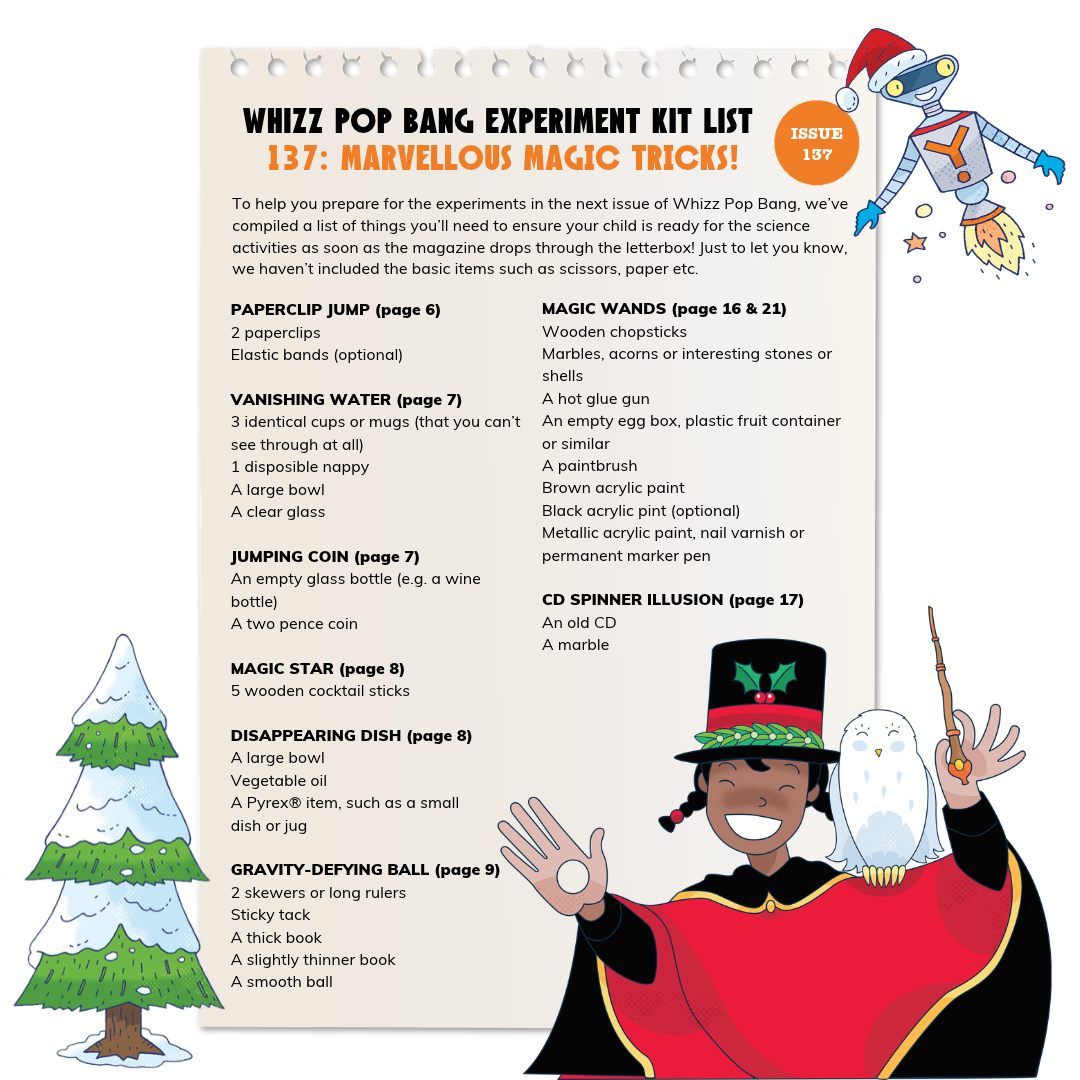
To help your child get stuck into the magical science as soon as their magazine arrives, we’ve put together this handy science magic experiment kit list.

Hopefully, you’ll have a lot of the equipment needed in your house already. We haven’t included basic stationery such as scissors, pencils and paper. Let the science show begin!
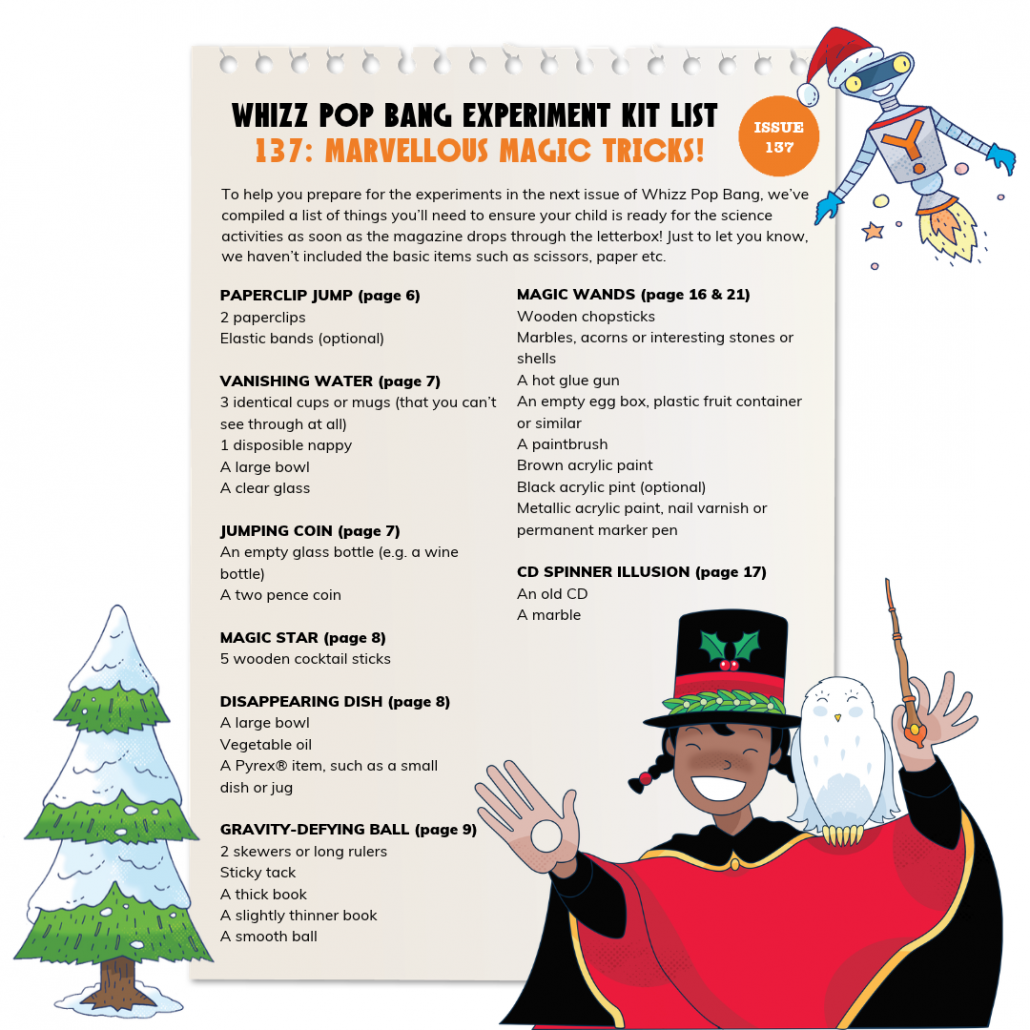
Want a printable version of this list to stick on your fridge? Click here!

What you’ll need for the experiments in Issue 137: Marvellous Magic Tricks!

🪄 Marvellous Magic – science tricks to amaze your friends (pages 6–11)

📎 Paperclip Jump – make paperclips magically link together

  • 2 paperclips
  • Elastic bands (optional)

💧 Vanishing Water – make water disappear into thin air

  • 3 identical opaque cups or mugs
  • 1 disposable nappy
  • A large bowl
  • A clear glass
  • A tablespoon

🪙 Jumping Coin – make a coin move

  • An empty wine bottle or similar-sized glass bottle
  • A two pence piece

⭐ Magic Star – conjure up a Christmas star

  • A plate
  • 5 wooden cocktail sticks

🫥 Disappearing Dish – make a glass dish seem to vanish

  • A large bowl
  • Vegetable oil
  • A Pyrex® item, such as a small dish or jug

⚽ Gravity-Defying Ball – make a ball appear to roll uphill

  • 2 skewers or long rulers
  • Sticky tack
  • A thick book
  • A slightly thinner book
  • A smooth ball

🌿 Emmi’s Eco Club (pages 16 and 21)

✨ Make Magic Wands

  • Wooden chopsticks
  • Marbles, acorns or interesting stones or shells
  • A hot glue gun
  • An empty egg box, plastic fruit container or similar
  • A paintbrush
  • Brown acrylic paint
  • Black acrylic pint (optional)
  • Metallic acrylic paint, nail varnish or permanent marker pen

💿 CD Spinner Illusion (page 17)

  • An old CD
  • A marble

There’s even more hands-on fun in this issue! Draw a 3D hand, make a mysterious möbius strip, see a hole appear in your own hand, amaze your family with mind-reading maths and much more.

Want more fun science activities for kids?

Every issue of Whizz Pop Bang is packed with exciting science experiments, fascinating facts, puzzles and creative activities to inspire curious children aged 6–12.

Subscribe to Whizz Pop Bang and your child can enjoy a completely new science adventure delivered through their letterbox every month!

Subscribe by 4th December 2026 to start with Marvellous Magic Tricks – and get a FREE Science Joke Book plus personalised Christmas goodies with a new 6- or 12-month gift subscription!

Download your free printable magic science experiment kit list

Want to get everything ready before the magazine arrives? Download our handy printable checklist and tick off the supplies as you collect them.

Don’t miss your chance to receive a FREE science joke book and personalised goodies when you purchase a 6- or 12-month subscription starting with Marvellous Magic Tricks!

Subscribe by 4th December 2026 and use the code XMAS26 to redeem this offer!


Post Comment

Why do some volcanoes explode? Try this easy volcano science experiment! 🌋

If you’ve got a 6–12 year old who’s always asking, “Why?”, this one’s for you!

This experiment explains exactly why some eruptions are so much more dangerous than others. Watch the reel to see it in action and hear an explanation of the science of magma. Save this for your home-education science lessons or for when you run out of ideas at the weekend! ​

Why do some volcanoes produce spectacular explosions, while others have rivers of lava flowing down their sides? The answer has a lot to do with what’s happening deep inside the volcano!

With this simple volcano science experiment for kids, you can investigate how different types of magma affect volcanic eruptions. All you need are a few everyday household materials – no complicated equipment required!

Watch our volcano experiment in action! 🎥

Bubble Trouble: A volcano science experiment

Some volcanoes contain magma that is runny and some contain much more viscous (gloopy) magma. Find out how different magmas affect volcanic eruptions.

You will need

  • A small glass half-filled with water
  • A small glass half-filled with golden syrup, honey or other viscous (gloopy) liquid
  • An outdoor space or plastic sheeting
  • Two straws
  • Safety goggles

What you do

  1. Protect your work surface and put on your safety goggles so your eyes don’t get splashed with spewing lava!
  2. Imagine that the water is runny magma below the surface of the Earth and that the gloopy liquid is viscous (thick) magma.
  3. Put a straw into each cup of lava and gently blow bubbles – first into runny magma (the water) and then into viscous magma (the gloopy liquid). Which is easier to blow into?
  4. Now try blowing really hard into each type of magma. What happens?

What’s the science behind it? 🔬

It’s hard to blow bubbles into the viscous magma; the bubbles come to the surface much more easily in the runny magma (water).

When you blow bubbles into the runny magma, you create lots of small bubbles that quickly and easily rise to the surface.

When you blow bubbles into the viscous magma, a large bubble builds up below the surface and then suddenly erupts, taking the gloopy magma up with it.

Similarly, real volcanoes that contain viscous magma erupt much more violently – and are so much more dangerous – than volcanoes that contain runny magma.

What makes a volcano erupt?

Deep beneath the Earth’s surface, molten rock called magma contains trapped gases.

As magma rises towards the surface, the pressure around it decreases and gas bubbles can form and grow.

If the magma is runny, the gases can escape relatively easily. But when magma is thick and sticky, gases can become trapped, building up pressure that can lead to an explosive eruption!

Did you know? When magma reaches the Earth’s surface, it’s called lava!

More amazing volcano science for curious kids!

Love volcanoes, eruptions and explosive science experiments?

Discover the fiery world of volcanoes in Whizz Pop Bang: Volcano Alert! It’s packed with fascinating facts, hands-on experiments and activities for children aged 6–12.

Find out what happens deep beneath the Earth’s surface, discover some of the world’s most extraordinary volcanoes and try even more volcanic science at home.

Or keep the discoveries coming with a Whizz Pop Bang subscription! Every month, our award-winning children’s science magazine brings exciting experiments, fascinating facts and hands-on activities straight through your letterbox.


Post Comment

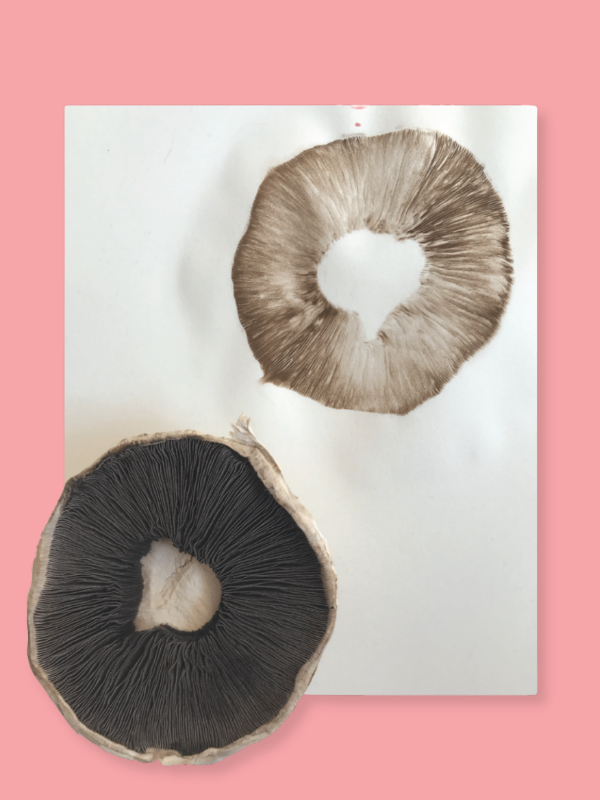
How to create a mushroom spore print

Did you know that mushrooms can make their own amazing patterns on paper? With just a mushroom and a few things from around the house, you can create a beautiful spore print and discover some fascinating fungi science!

This easy science experiment is perfect for curious kids who love exploring nature.

Watch: How to make a mushroom spore print

You will need:

  • A flat mushroom (use one bought from a food shop)
  • Plain white paper
  • A sprinkle of water

How to make your mushroom spore print

  1. Carefully remove the stalk from your mushroom to expose the gills underneath.
  2. Lay your mushroom, gill side down, onto the paper.
  3. Sprinkle with a bit of water
  4. Cover it with a bowl to stop the mushroom drying out or being disturbed.
  5. Leave it undisturbed for two days.
  6. Remove the bowl carefully then lift the mushroom off the paper to reveal your spore print!

Here’s the science…

Did you know that fungi and mushrooms don’t have seeds? Instead, they release tiny spores that look like powder or dust. The cap of the mushroom opens up and releases them from its gills. The spores blow away in the wind to grow into new fungi. In this experiment, you can catch those spores and turn them into a beautiful print.

Keep the science adventures coming…

…with a subscription to Whizz Pop Bang, the award-winning science magazine for children aged 6 to 12. Every issue is packed with experiments, discoveries and activities to try at home.

Subscribe to Whizz Pop Bang


Post Comment

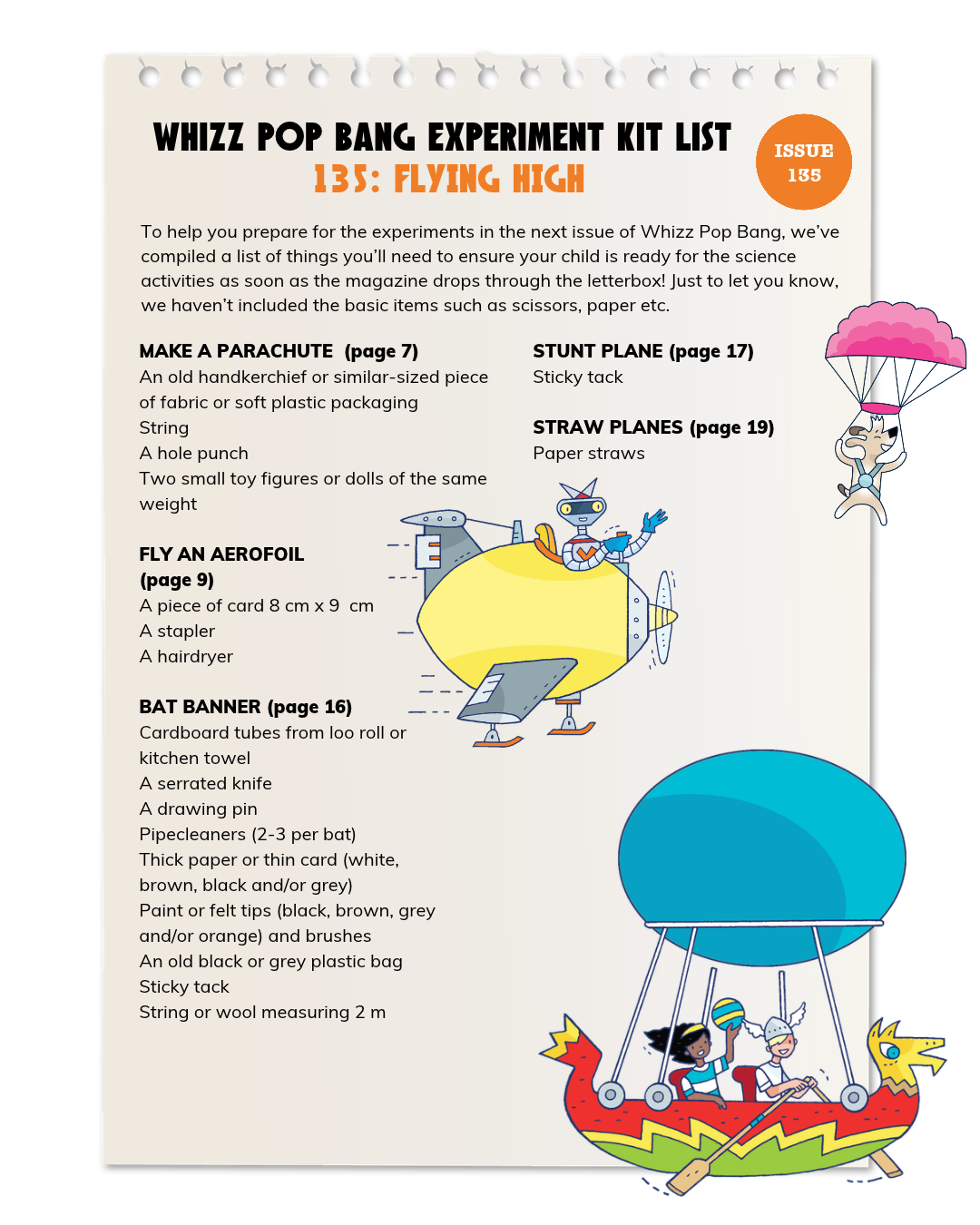
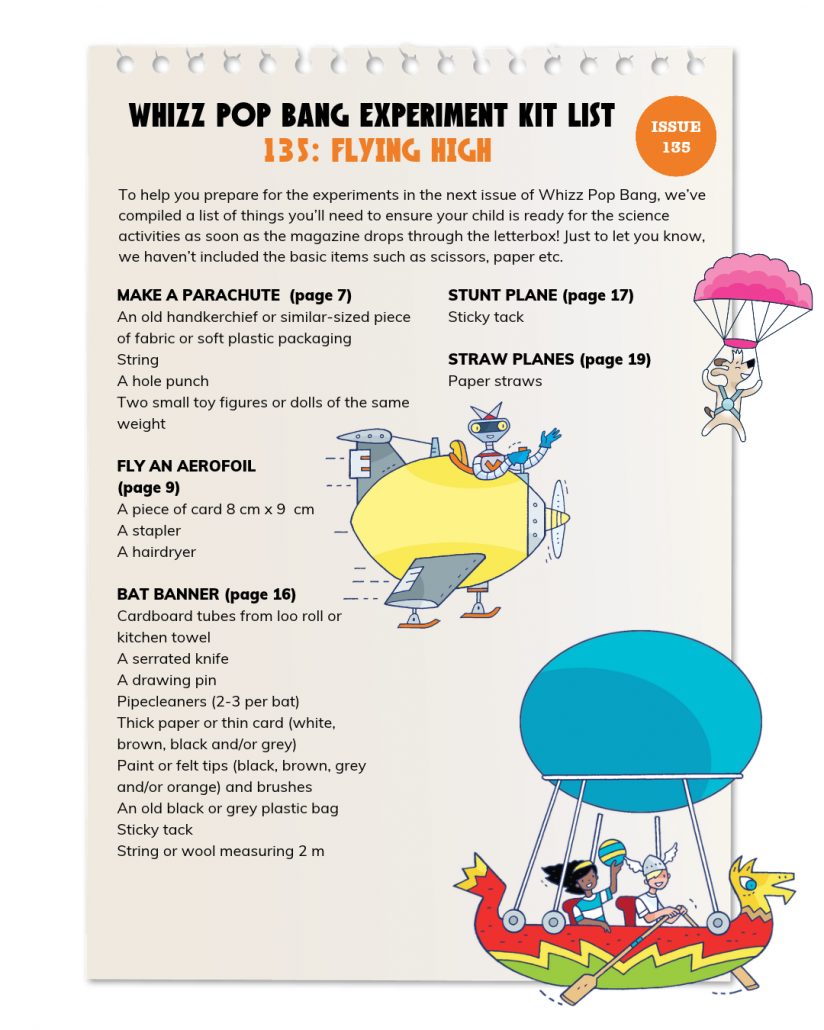
Science of Flight Experiments for Kids – Whizz Pop Bang Issue 135 Kit List

Get ready for some sky high science! Whizz Pop Bang Issue 135: Flying High is packed with hands-on activities that explore the science of flight for kids. Make a parachute, fly stunt planes and explore aeroplanes, drones, pterosaurs and amazing flying animals.

To help your child get stuck into the experiments as soon as their magazine arrives, we’ve put together this handy science of flight experiment kit list. Gather these few simple supplies in advance and your young scientist will be ready to go as soon as the magazine hits the doormat.

We haven’t included everyday basics such as scissors and paper.

What you’ll need for the experiments in issue 135: Flying High:

Want a printable version of this list to stick on your fridge? Click here!

Discover the amazing science of flight

There’s much more than experiments inside Whizz Pop Bang Issue 135: Flying High. Find out how aeroplanes overcome gravity, why wings create lift and how everything from helicopters and hot-air balloons to birds and pterosaurs take to the skies. Investigate gravity and air resistance by making a parachute, experiment with an aerofoil then make a fly your own stunt planes.

Want to join in with the Science of Flight fun?

Subscribe to Whizz Pop Bang and your child can enjoy a new science adventure delivered through the letterbox every month.

Subscribe by 4th October 2026 to start your subscription with Whizz Pop Bang: Flying HIgh AND get a freebie when you start a new subscription!

Here’s a printable version of this kit list…


Post Comment

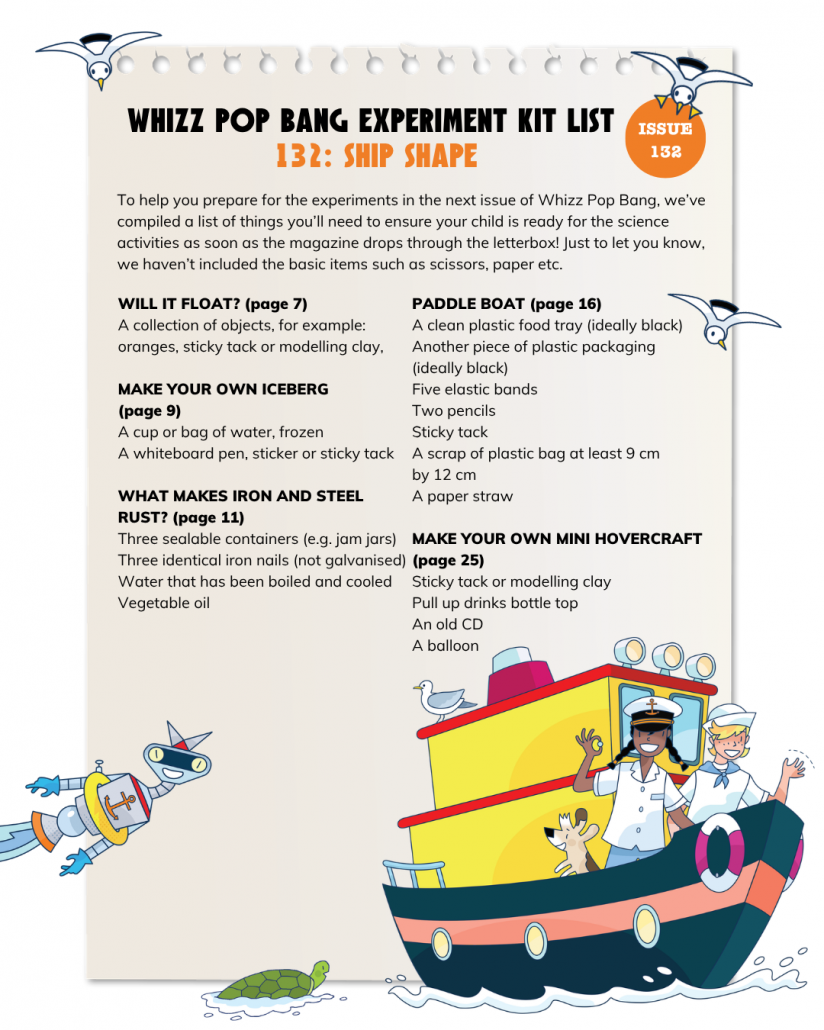
Whizz Pop Bang 132: Ship Shape

Here’s a kit list to help you get ready for Whizz Pop Bang 132 (which you can find in our shop now).

Here’s the list of bits and pieces you need to complete the activities this month. As ever, there’s so much science fun to be had, even if you don’t have every single thing on the list.

WILL IT FLOAT? (page 7)
❏ A collection of objects, for example: oranges, sticky tack or modelling clay

MAKE YOUR OWN ICEBERG (page 9)
❏ A cup or bag of water, frozen
❏ A whiteboard pen, sticker or sticky tack

WHAT MAKES IRON AND STEEL RUST? (page 11)
❏ Three sealable containers (e.g. jam jars)
❏ Three identical iron nails (not galvanised)
❏ Water that has been boiled and cooled
❏ Vegetable oil

PADDLE BOAT (page 16)
❏ A clean plastic food tray (ideally black)
❏ Another piece of plastic packaging (ideally black)
❏ Five elastic bands
❏ Two pencils
❏ Sticky tack
❏ A scrap of plastic bag at least 9 cm by 12 cm
❏ A paper straw

MAKE YOUR OWN MINI HOVERCRAFT (page 25)

❏ Sticky tack or modelling clay
❏ Pull up drinks bottle top
❏ An old CD
❏ A balloon

Download a printable version of this kit list to stick on your fridge right here ⬇️


Post Comment

Easter Holiday Activities for Kids: Screen-Free Fun for the Whole Family

The Easter holidays are a wonderful time for family adventures, but they can also bring the familiar challenge of two whole weeks to fill with activities.

Parents often find themselves searching for Easter holiday activities for kids that are fun, educational and easy to set up. And when the weather turns rainy (as it often does in the UK!), screen-free activities become even more valuable.

If you’re looking for creative, science-inspired ways to keep children entertained this Easter, we’ve put together some brilliant ideas.

Why Screen-Free Activities Matter During the Holidays

School holidays often lead to a big increase in screen time. While digital entertainment can be useful in small doses, many families prefer to balance this with activities that encourage:

  • creativity
  • curiosity
  • problem-solving
  • family interaction

Hands-on activities, like experiments, crafts and puzzles, help children learn while they play. They also create moments families can enjoy together.

That’s exactly why we created the Whizz Pop Bang Family Activity Bundle.


A Brilliant Easter Gift for Curious Kids

If you’re looking for an Easter gift idea that lasts longer than chocolate, the Whizz Pop Bang Family Activity Bundle is designed to keep children entertained throughout the holidays.

This special bundle includes four fantastic books and magazines packed with science, creativity and laughter.

Discover Whizz Pop Bang’s new family activity bundle

Inside you’ll find:

Whizz Pop Bang: Amazing Grazing

A fascinating science magazine exploring the surprising world of grasses. Children can investigate plant science, try hands-on experiments and discover amazing facts about nature.

Perfect for curious readers aged 6 to 12.

Hoopla: Deep Blue Sea

Our sister magazine Hoopla is designed for younger explorers aged 4 to 9.

In this ocean-themed issue, children can enjoy pirate games, creative crafts and fun ocean activities.

The Whizz Pop Bang Science Joke Book

With 200+ science jokes, this book is perfect for car journeys, rainy afternoons and family giggles around the table.

The Whizz Pop Bang Snip-Out Science Book

A hands-on activity book with 30 creative projects to cut, stick and build, from flying machines to moving skeletons.


Why Families Love the Family Activity Bundle

Many families have children of different ages, which can make it tricky to find activities everyone enjoys. This bundle is designed with that in mind. It includes:

✔ Something for older children
✔ Something for younger siblings
✔ Science-based and creative activities to do together
✔ Jokes and puzzles the whole family can enjoy

It’s a wonderful way to bring science, creativity and laughter into the Easter holidays.


A Perfect Alternative to Chocolate Easter Gifts

Chocolate eggs are a classic Easter tradition – but they tend to disappear quickly! Many parents and grandparents are now looking for Easter gifts that inspire creativity and curiosity.

Easter holiday activities for kids science experiments
Give the gift of curiosity

A magazine or activity book can provide hours of discovery, making this bundle a thoughtful and lasting Easter surprise.


Easy Easter Holiday Activities to Try at Home

If you’re planning some simple Easter holiday activities, here are a few ideas to try with children:

Activities like these help children develop a love of learning and discovery.


Where to Get the Family Activity Bundle

The Whizz Pop Bang Family Activity Bundle is available now from our shop.

It’s a wonderful Easter gift for:

  • siblings of different ages
  • grandchildren
  • curious kids who love science
  • families who enjoy learning together

👉 Explore the Family Activity Bundle here


FAQ

What are some screen-free Easter holiday activities for kids?

Hands-on activities such as science experiments, crafts, puzzles and creative projects are great screen-free options. Magazines and activity books can also provide structured activities children can enjoy independently or with family.


What is a good Easter gift for children besides chocolate?

Many families choose educational gifts like science magazines, activity books or craft kits. These gifts encourage curiosity and creativity while providing entertainment throughout the holidays.


What age is Whizz Pop Bang magazine for?

Whizz Pop Bang is designed for children aged 6–12 and is packed with experiments, puzzles and science stories.


What age is Hoopla magazine for?

Hoopla magazine is aimed at younger children aged 4–9 and focuses on creativity, crafts, nature and mindful activities.


Post Comment

FREE primary school resources to celebrate British Science Week 2025!

Are you looking for fun and simple British Science Week activities to celebrate this year’s theme, “Change and Adapt”? We’ve got you covered with a FREE science resource pack filled with hands-on experiments that your class will love!

Why ‘Change and Adapt’ is a Brilliant Theme

This year’s British Science Week theme encourages children to explore how things change in the world around them—whether through chemical reactions, forces, materials, or biological adaptation. It’s a fantastic opportunity to tie science into your curriculum in a way that’s engaging and memorable.

Free School Resources Pack – Throw A Science Party In Your Classroom!

To help you plan a curiousity-awakening, exciting (and most importantly, stress-free) British Science Week, we’ve got an amazing science freebie for you: a FREE ‘Science Party’ pack packed with six exciting experiments designed for KS1 and KS2. These hands-on activities will spark curiosity, encourage problem-solving, and bring science to life!

What’s Inside the Science Party Pack? 🎉

Each experiment explores the “Change and Adapt” theme through fun, interactive investigations that are easy to set up:

🟢 Making Chromatography Decorations – Explore how colours separate and create beautiful patterns! A perfect mix of art and science.

🔵 Bed of Pins Balloon Experiment – Discover how forces work by testing whether a balloon can survive being pressed against a bed of pins!

🟠 Fizz Pop Bang Edible Powder – Experience chemical reactions that you can taste!

🟣 Static Slime – Investigate static electricity while making an ooey-gooey slime that moves with an electric charge!

🟡 Magic Colour-Changing Icing – Learn about acid-base indicators in a fun and edible experiment that will leave your class amazed!

⚪ Incredible Invisible Ink – Uncover secret messages using simple kitchen ingredients—just like a real scientist (or spy)!

Each activity is easy to set up with minimal resources, making it perfect for busy teachers who want maximum impact with minimal prep!

Like all of Whizz Pop Bang’s science teaching resources, the science behind each activity is explained in simple, age-appropriate language, making planning and teaching these fun lessons an absolute breeze.

PLUS Here’s an Amazing Offer on School Subscriptions and Downloadable Resources!

Save 20% on our school subscriptions and downloadable resources for the first year as well as our school bundles. Simply add code SCIWEEK25 at check out.

How to Make British Science Week Unforgettable

British Science Week is the perfect opportunity to ignite a love for STEM in your classroom. Whether your pupils are experimenting with chemical changes, forces, or electricity, our Science Party Pack will keep them engaged and excited.

Discover more ideas for how to make British Science Week go with a bang in 2025!

Let’s make British Science Week 2025 a celebration of curiosity, discovery, and fun! 🚀


Post Comment

British Science Week 2025: Fun Ways to Get Involved

British Science Week 2025 is an exciting annual celebration of science, technology, engineering, and mathematics (STEM) in the UK. Taking place from 7th to 16th March 2025, this nationwide event features a variety of science activities, workshops, and events for children and adults alike. Whether you’re a budding scientist or simply curious about the world around you, there are plenty of ways to engage with science during this week-long festival.

How to Take Part in British Science Week 2025

Getting involved in British Science Week doesn’t have to be complicated. Here are some easy and fun ways to explore science:

  • Try kitchen science experiments at home
  • Visit a science museum or exhibition
  • Attend a science talk or fair
  • Join a citizen science project
  • Enter the British Science Week poster competition

The goal of British Science Week is to spark curiosity and excitement about STEM subjects, making science accessible and enjoyable for all ages.

1. Try Fun Kitchen Science Experiments

You don’t need a high-tech lab to explore science—many exciting hands-on experiments can be done using everyday household items. Simple ingredients like vinegar, baking soda, and food coloring can lead to fascinating discoveries.

If you’re looking for easy science experiments for kids, check out these free home science activities or grab a copy of Whizz Pop Bang magazine for more ideas.

2. Visit a Science Museum or Event

Science museums and exhibitions are packed with interactive displays and hands-on experiments, making them a great way to engage kids with science. During British Science Week, many museums and venues host special STEM events, workshops, and science shows. Find your local science centre here!

Looking for science events near you? Check out the What’s On in Science Week listings to find both in-person and virtual science activities happening from 7th-16th March.

3. Download FREE British Science Week Activity Packs

The official British Science Week 2025 activity packs are now available! These free downloadable packs are designed for different age groups:

  • Early Years Pack (for preschoolers)
  • Primary Pack (for younger children)
  • Secondary Pack (for teens)
  • Community Pack (for group activities)

Each pack is filled with STEM activities, fun experiments, and planning tips for science events.

4. Get Involved in a Citizen Science Project

Citizen science projects allow anyone to contribute to real scientific research. Many projects are perfect for families, such as:

  • Birdwatching and counting garden wildlife
  • Tracking stars and planets
  • Identifying plants and animals in your local area

You can join a citizen science project online and participate from home.

5. Enter the British Science Week 2025 Poster Competition

The British Science Week poster competition is a fun challenge for children aged 3-18 years old. This year’s theme is “Change and Adapt”, and young scientists can submit creative posters for a chance to win all sorts of science prizes.

Submission deadline: 3rd April 2025

Encourage your child to showcase their creativity and love for science by entering the competition. Find out more here.

Make Science Fun This British Science Week!

From DIY science experiments to museum visits and STEM competitions, there are so many ways to celebrate British Science Week 2025. Whether you explore science at home, attend an event, or take part in a citizen science project, it’s a fantastic opportunity to learn, discover, and have fun with science.

Fill your child with science wonder with a subscription to Whizz Pop Bang, the award-winning magazine for 6 to 12-year-olds. Watch their face light up with glee when their very own magazine zooms through the letterbox! Packed full of hands-on science awesomeness, it’s the gift that keeps of delighting, month after month.


Post Comment

Watch dancing cornflour!

When cornflour is mixed with water, it becomes a goo that flows like a liquid until it is hit or pressed – then it acts like a solid. Watch the video below to find out what happens if cornflour is placed on a speaker that is vibrating and making sound waves.

The cornflour goo is getting continually hit by the vibrating speaker, making these weird and wonderful dancing cornflour figures!

This cornflour and water mixture is sometimes called oobleck, and you should definitely try playing with it at home! Here’s a recipe for how to make this slime-like substance…

You will need:
Mixing bowl
Spoon
Cornflour or custard powder
Water
Food colouring (optional)

What you do:
1. Place four heaped tablespoons of cornflour or custard powder into a bowl.
2. Add a splash of water and stir the mixture. Keep adding water a little at a time, until the mixture is about the same consistency as honey.
3. If you add too much water, add some more cornflour or custard powder.
4. Add a little food colouring if you like and mix it in.

Watch the video to find out more about the strange properties of this special substance.


Post Comment

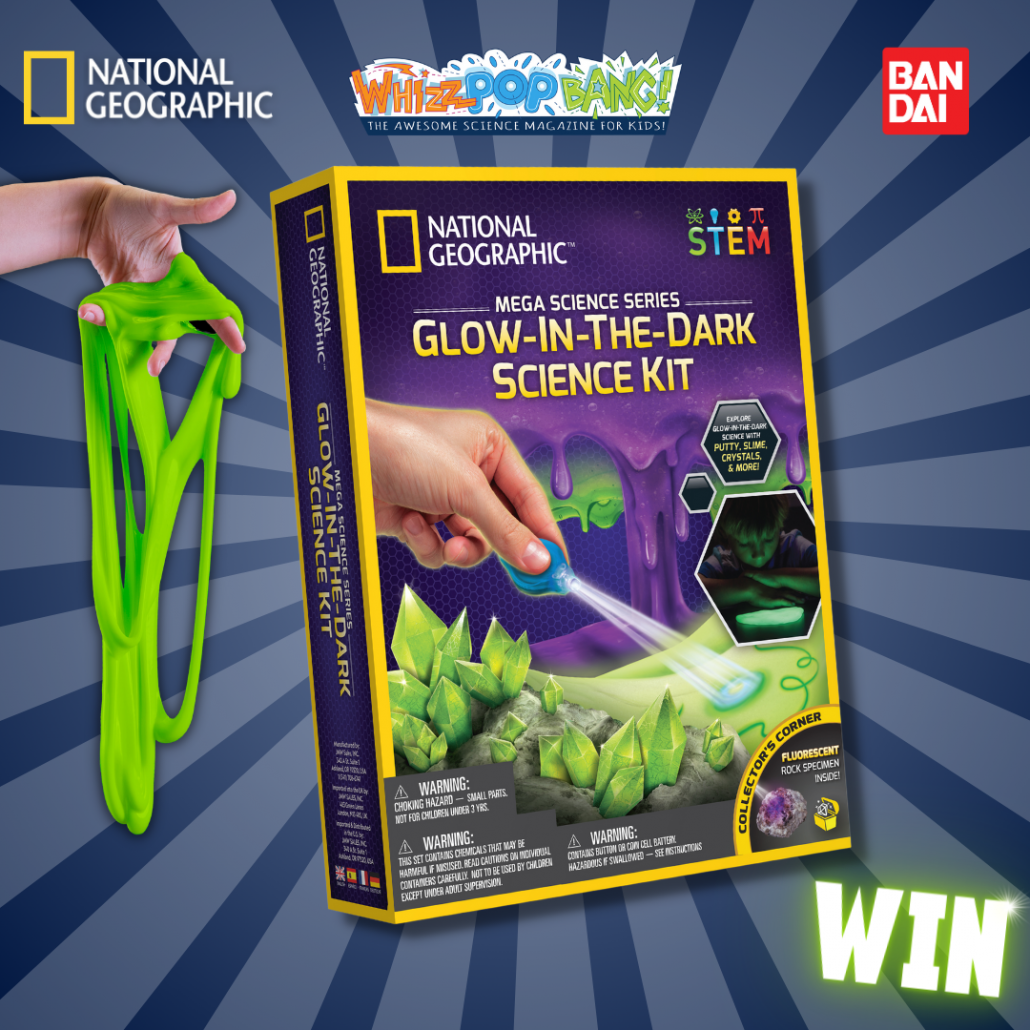
COMPETITION CLOSED – WIN a National Geographic Glow-in-the-Dark Mega Science Kit!

We’ve got three Glow-In-The-Dark sets from National Geographic to give away! Scroll down to find out how to enter.

Explore glow-in-the-dark science with PUTTY, SLIME, CRYSTALS AND MORE!

Inquisitive minds will love discovering the world of glow-in-the-dark by making glowing slime and growing their own crystals!

The National Geographic Glow-in-the-Dark Mega Science Kit is an astounding collection of experiments and activities that all glow when the lights are out!

There is so much included in this Mega Kit: one glowing crystal seed, two DIY slime powders in glowing green and glowing purple, two slime containers, one glowing putty in a storage tin, one wernerite rock, one UV light, and a full-colour learning guide that takes you through each experiment step by step. Don’t worry, if you’re not a lucky winner, this kit is also available to buy from Amazon, perfect for Christmas presents!

To win one of THREE kits, answer this question in the comments:

How do most fungi reproduce?

A) Seeds

B) Pollen

C) Spores

This competition closes at midnight on 31st October 2023 and is open for UK residents only. For full terms and conditions visit whizzpopbang.com/terms-and-conditions

Thanks to Bandai, National Geographic and Playtime PR for this brilliant prize!


Post Comment