Awesomely honest reviews for Whizz Pop Bang…

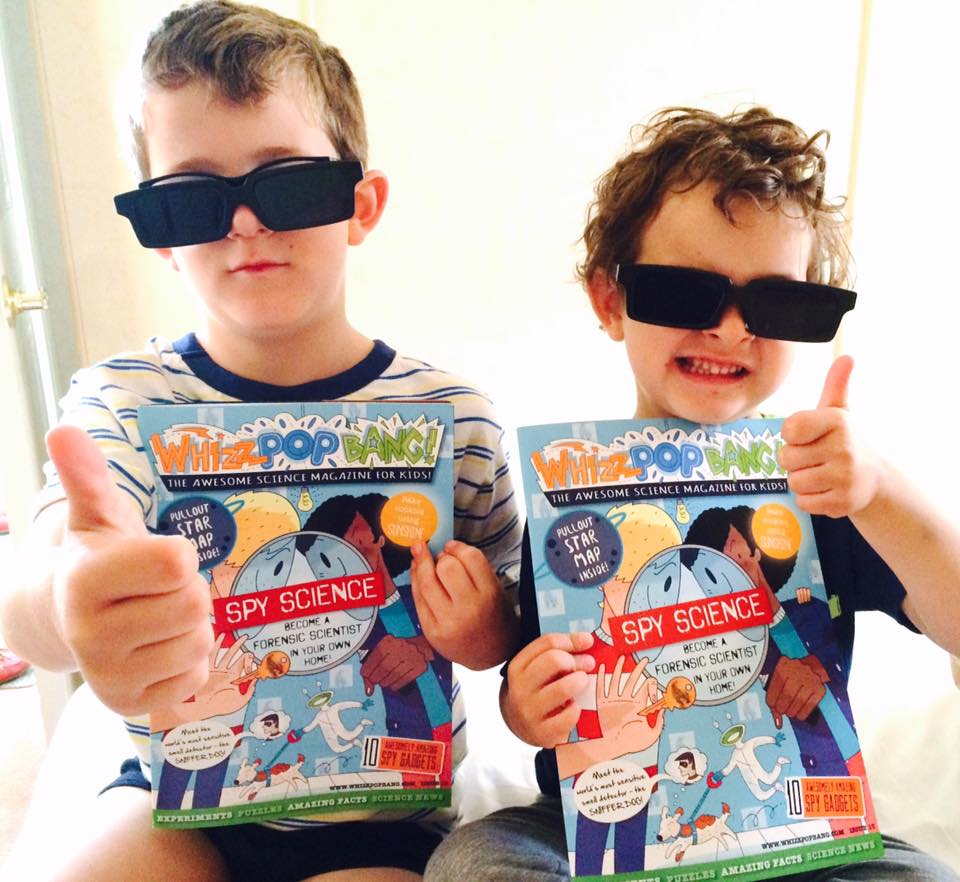
Boys with their SPY issue of Whizz Pop Bang science magazine for kids

Your reviews and feedback mean the world to us, so thank you to all these families who have taken the time to share their thoughts on Whizz Pop Bang, the awesomely amazing science magazine for kids!

“My 9yr old daughter has received her first copy and is thrilled with it. Excellent magazine. Word of warning though, I do unfortunately appear to have inadvertently learned stuff too due to her constant verbal updates whilst reading it. Be warned, it could happen to you!” 🤯
Gemma Dodgson

“I love the fact that women engineers and scientists feature so prominently. I hadn’t realised this was the case when I first subscribed, and originally subscribed simply because it looked like a fun way to get a greater exposure to science, but it really stands out for me. I also love the use of proper scientific terminology because it familiarises children to this language and makes science more accessible.”
Cat

“My daughter starts asking a week before it pops through our letterbox when will it be here. Best birthday present she’s ever received.”
Nicky Doyle

“My son said “Whizz Pop Bang is the best magazine ever, I love the jokes especially”
Ella Weaver

“My son reads it cover to cover! More than once! He even refers back to back copies. (The pile on the bed is huge!)”
Ed Bickerstaffe

“Fantastic magazine and helps so much with our daughters love of science”
Tracey Cook

“My daughter loves the magazine. She is really excited every month when it arrives. She wants to be a scientist when she grows up so that she can ‘change the world’ and that says it all really!”
Anna Hodgin

“We are a home educating family and I choose not to use the discount because I believe that it is already great value for money. We (age range from 34 – 5) all get excited when Whizz Pop Bang comes through the door. It gives us the opportunity to explore things/people that we may not have heard of before in a style that all of us can understand and use as a base to explore articles further. I personally enjoy ‘Animal antics’, ‘Interview with a science hero’, ‘how stuff works’, Ten awesomely amazing’ and Sensational scientists.”
Leech family

“It is an awesome magazine. As a mum I like that you email me a supply list before the magazine arrives. All three of my children love it ages 6, 13 and 15.”
Michelle

“I’m also a Childminder so I’ve kept all the copies so they can access all the back issues when topics arise at school. I imagine that the babies I mind will look at these in the years to come as well as my grandchildren.”
Caroline Francis

“My child took a copy to school and the teacher was so delighted he said he’d buy W.P.B too! 😁”
E. Yates

“I have been very impressed with WPB. My boys love receiving their own post (in such vibrant and environmentally friendly packaging) each month and can’t wait to open it. The experiments and articles are pitched at the perfect level and inspire them to think about topics that they might not otherwise come across. I will be continuing the subscription for their little sister when she is old enough, too.”
Rebecca Wale

“Whizz Pop Bang is an excellent resource that I have recommended to several parents and teachers. My kids look forward to receiving the magazine every month, and my son is currently reading this month’s out loud to me. Please keep up the good work!”
Cathy Campbell

“I’m an archaeological scientist. I want my son to understand why I love what I do; that science can be beautiful, and awe-inspiring, and fun. Your magazine forms a central part of this nefarious propaganda machine, so … thank you!”
Chloe Duckworth

“I love the accessible feel and the range of topics covered each month. I really appreciate the advance warning emails so I can prepare for forthcoming experiments”
Jo Jenks

“Our daughter loves receiving Whizz Pop Bang looks forward to it each month. She’s excited about science and a passionate feminist so it’s great that the magazine provides role models of women in STEM. We’re also impressed with the decision to use paper envelopes rather than plastic wrappers. Thank you.”
Sarah Giles
Post Comment

10 Awesomely Amazing Musical Instruments!

Inside the Christmas Jingle Bell Rock issue of Whizz Pop Bang magazine, we discover 10 awesomely amazing musical instruments; from the bizarre instruments made of fruit and vegetables, to this rather magical instrument that is played without even touching it… the theremin.

The theremin is a musical instrument that is played without being touched. Err, what? How does that work?! The electronic instrument uses an electromagnetic field around two antenna, and the musician disrupts this field with their hands to create a spooky sound. Watch this video of Ennio Morricone to discover the mysterious sounds this instrument can make 👇🏾

To see all the weird and wonderful musical instruments featured in this issue of Whizz Pop Bang magazine, order from our online shop. Magazines cost just £4.75 with FREE UK delivery.


Post Comment

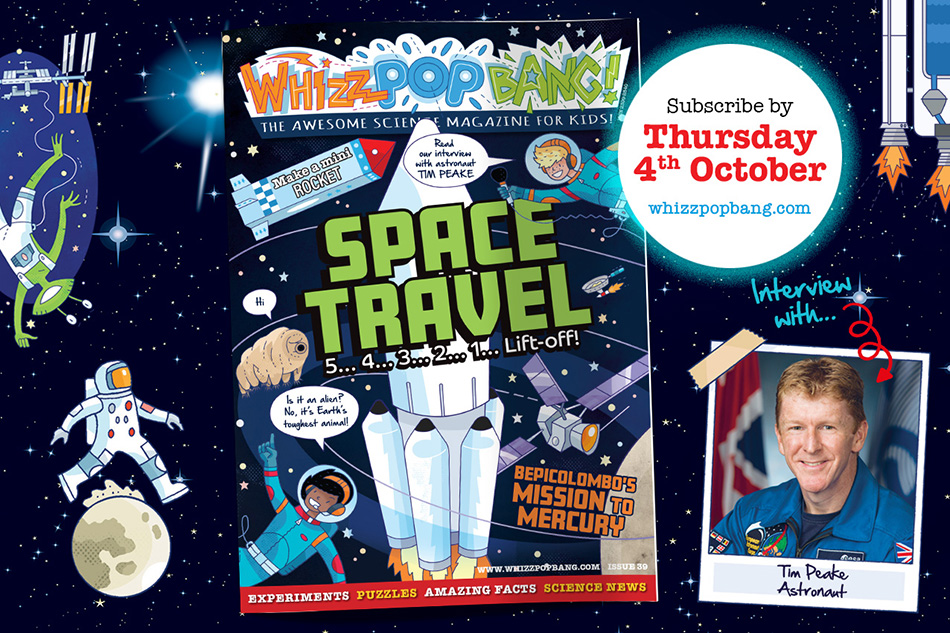
Get ready for out of this world SPACE TRAVEL with Whizz Pop Bang!

What’s inside the next awesome issue of Whizz Pop Bang science magazine? We’ve got an awesome interview with ESA astronaut Tim Peake to read and listen to, in-depth news of BepiColombo’s mission to Mercury AND build your own rockets! 🚀

Subscribe by Thursday 4th October for your mini rocket scientist here.

Whizz Pop Bang science magazine for kids SPACE TRAVEL


Post Comment

JOIN THE KIDS’ MAGAZINE REVOLUTION!

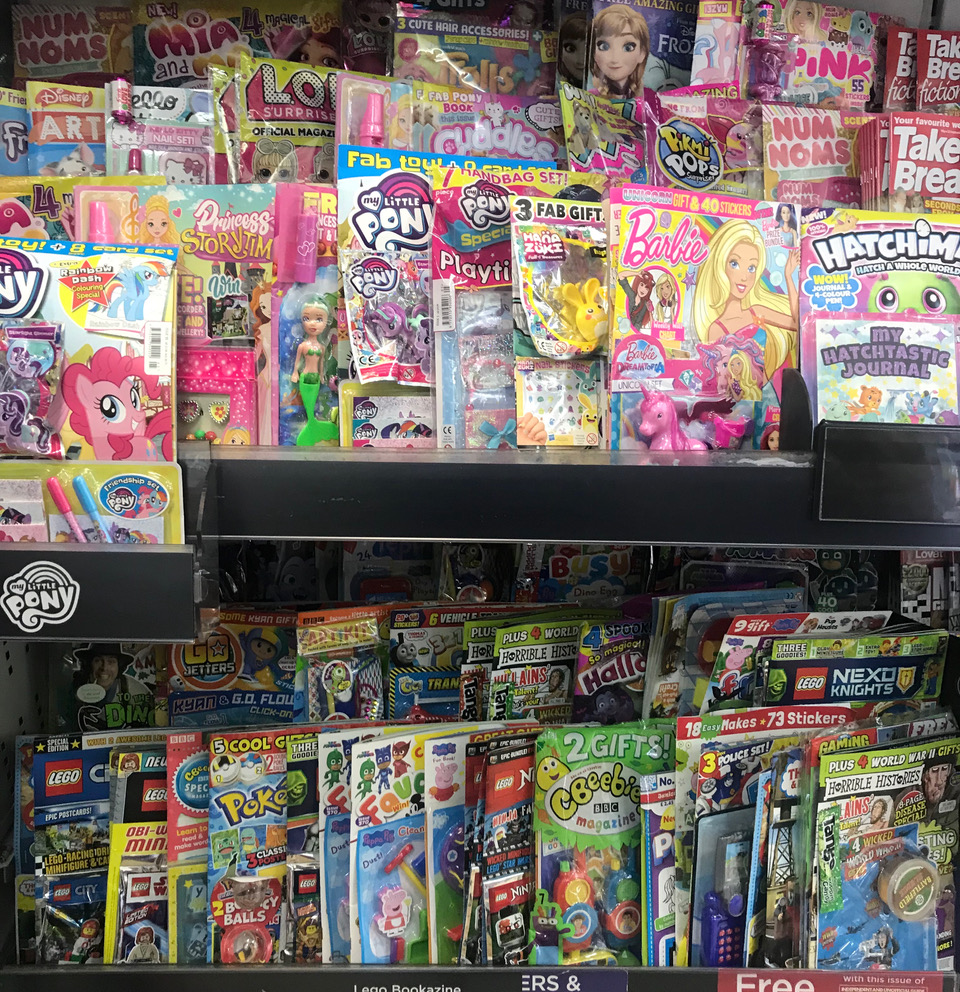
Fed up of flimsy kids’ magazines plastered with cheap plastic toys? Do you wish that children’s magazines weren’t half-filled with advertising? Would you prefer not to have magazines separated into stereotypical girls’ and boys’ subjects?

Children's magazine covers

We’re a small independent publisher, set up by passionate mother-of-three Jenny Inglis, and we’re trying to break the mould of mass-market children’s magazines.

• We believe that children deserve top-quality, engaging content cover-to-cover
• Our magazines are entirely gender-neutral
• There’s no plastic tat that ends up in landfill
• Our magazines don’t contain any adverts

Instead, Whizz Pop Bang is an awesome kids’ science magazine through and through – packed full of eye-catching articles, easy experiments to try at home, science crafts, puzzles, facts and jokes. It’s printed in the UK on thick, uncoated paper from sustainable sources and delivered in our beautifully illustrated paper envelopes to tens of thousands of families throughout the UK and beyond.

Whizz Pop Bang isn’t sold in the shops (we don’t want to have to compete for kids’ attention amongst all that plastic). We sell Whizz Pop Bang through our online shop, where you can order single copies to try individually, as well as monthly, six-monthly and annual subscriptions – all with free UK delivery.

To subscribe for your child visit our online shop. Happy experimenting!


Post Comment

Listen to our exclusive interview with ESA astronaut Tim Peake!

How lucky are we to get not one, but two interviews with ESA astronaut Tim Peake!!!!! Our editor Tammy chatted to Tim on the phone, asking him lots of probing questions from curious Whizz Pop Bang readers (see the list of questions below).

Listen to the full interview, complete with NASA footage and photos here 👇🏾

Enjoy space-lovers!

The questions Whizz Pop Bang readers asked Tim:

  1. What did it feel like taking off in a rocket?
  2. Do your ears pop during take-off like they do on a plane?
  3. How long does it take to get into space?
  4. How long does it take to actually get to the space station?
  5. Do you have to stay put in the capsule for the whole journey? And what happens if you need the loo?
  6. What does it feel like to be weightless?
  7. What’s it like seeing Earth from space?
  8. Does seeing Earth make you feel differently about the fragility of the environment?
  9. What was your scariest moment in space?
  10. Is it cold on a spacewalk?
  11. Why does the Soyuz craft look so black and battered now?
  12. Did it hurt when you landed?
  13. What was it like coming back to Earth?
  14. What do you miss most when you’re in space?
  15. Where would you most like to travel to in space?
  16. Do you think flights to Mars will ever happen?
  17. Do you think we will ever find extra-terrestrial life?
  18. What advice do you have for budding space scientists?

Photo and video credits Tim Peake, NASA, ESA, Victor Zelentsov and Scott Kelly.


Post Comment
sunshine balloon

WIN a Whizz Pop Bang binder + 3 magazines!

Whizz Pop Bang summer holiday competition

Time for our summer holiday competition ?

Whether you’re camping in the garden or staying with Grannie we want to see your Whizz Pop Bang magazine on holiday!

To enter, simply email a photo of your magazine on holiday with hashtag #WPBhols to win@whizzpopbang.com by 31st August, and you could win a WPB binder + three magazines of your choice!

Where will you take yours? ✈ ⛺ ? ? ? ?

By entering this competition you agree to the terms and conditions on our website.


Post Comment
whizz pop bang science magazine paper straw planes

Geometric paper straw planes!

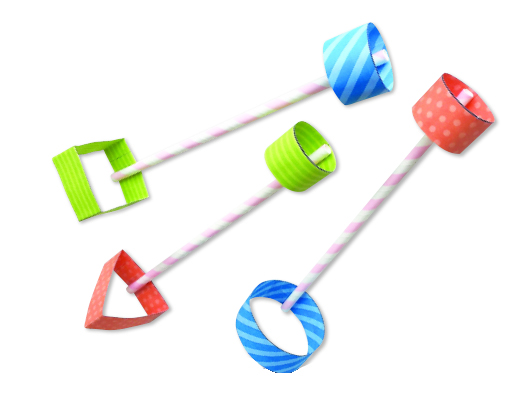
How do you make a triangle fly? Will a square take to the air? Create your own paper straw flying machines and put them to the test with the SKY HIGH SCIENCE issue of Whizz Pop Bang! You’ll find everything you need inside issue 36 of Whizz Pop Bang science magazine, order a copy for just £3.75 with FREE UK delivery here.

Packed full of outdoor science activities for girls and boys over the summer holidays – ditch the screens and find out how planes fly!


Post Comment
what makes something fly

Take off this summer with our Sky High Science issue!

Whizz Pop Bang science magazine for kids! Sky high science

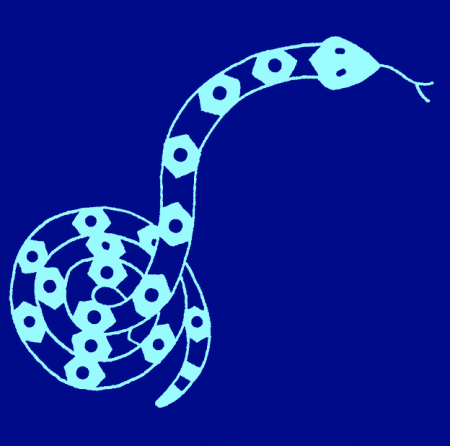
Wouldn’t it be amazing to fly like a bird? Or how do you fancy fluttering like a butterfly, or even soaring like a snake?! There are all sorts of flying phenomena to discover this issue. Have a go at making your own stunt plane, investigating different designs of straw planes and testing aerofoils. We interview Palaeontologist Liz Martin-Silverstone to ask her how on earth the giant pterosaurs were able to fly, plus we find out how drones work, and answer the question on lots of people’s minds… just how do planes fly???

Buy this issue here and fill your summer holidays with awesome science fun!! ? ✈ ?


Post Comment
Agnes Arber photo in Whizz Pop Bang science magazine

Scientists from history

Each month we celebrate a sensational scientist from history; an eminent figure in the creation, invention or discovery of a scientific breakthrough. How many famous scientists can you name? How many of those are women? Female scientists were often forgotten or unknown, simply because they were women. And yet their work was instrumental in discovering hugely important scientific breakthroughs.

Inside Whizz Pop Bang magazine your kids will discover the historic world of science; who invented computers, who discovered the milky way and who is responsible for how we forecast the weather. We tell the story of these fascinating scientists, both male and female, and how they came to discover incredible things.

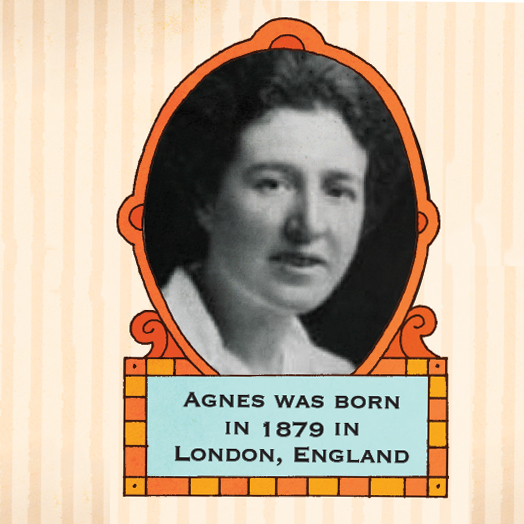
A few examples of the less well-known women we’ve featured: Lise Meitner, whose work led to the discovery of nuclear fission, astronomer Caroline Herschel and Agnes Arber, botanist and early ambassador in helping the world to recognize the amazing talent of women in science. Read the full list of sensational scientists below.

The story of Agnes Arber in Whizz Pop Bang science magazine

List of the sensational scientists featured in Whizz Pop Bang magazine:

Issue 1: Mary Anning

Issue 2: Charles Darwin

Issue 3: Maria Telkes

Issue 4: Leonardo da Vinci

Issue 5: Lise Meitner

Issue 6: Louis Pasteur

Issue 7: Rosalind Franklin

Issue 8: Antoine Lavoisier

Issue 9: Mary Somerville

Issue 10: Charles Lyell

Issue 11: Caroline Herschel

Issue 12: Jacques Cousteau

Issue 13: Grace Hopper

Issue 14: Roy Chapman Andrews

Issue 15: William Henry Perkin

Issue 16: Isambard Kingdom Brunel

Issue 17: Florence Nightingale

Issue 18: Albert Einstein

Issue 19: Gregor Mendel

Issue 20: Rachel Carson

Issue 21: Ibn al Haytham

Issue 22: Richard Feynman

Issue 23: Agnes Arber

Issue 24: Alfred Wegener

Issue 25: Jeanne Villepreux-Power

Issue 26: George de Mestral, velcro

Issue 27: Marie Curie

Issue 28: Nicolaus Copernicus

Issue 29: Hedy Lamarr

Issue 30: Archimedes

Issue 31: Anselmus De Boot

Issue 32: Joseph Bazalgette

Issue 33: Charles Darwin

Issue 34: Michael Faraday

Issue 35: Gerty Cori

To buy a back issue for just £3.75 (with free UK delivery!) visit our shop.


Post Comment