FREE science activities for year 2 and P3!

Now that schools are closed, have you become a home educator overnight? Whizz Pop Bang is the world’s most awesomely amazing kids’ science magazine, bursting with hands-on experiments, facts and fun, and we want to help you and your children with the huge transition that many of us face.

Here are some FREE science activities and experiments to help you entertain, excite and educate your year 2 child! You’ll find reading comprehensions about harvest mice and crabs, find out how to grow a grass head pet while learning about seed germination, discover how to make plastic from milk and create a working wind turbine!

Our experiments are designed for children from 6 to 12, but this list of experiments is particularly perfect for year 2, P3 (Scotland) and 6-year-olds and 7-year-olds as they tie in with the relevant National Curriculum objectives and topics.

The reading comprehensions included here were designed to be read at A3 size, so text may appear too small when printed at A4. They work really well on a tablet or monitor, or you may need to print them on two pages of A4 if your printer allows. 

If you have any comments or questions about our free year 2 science experiments and reading comprehensions, please leave a comment for us. Or do you have any science homeschool ideas or general home educating ideas for 6- and 7-year-olds? We’d love to hear from you!

Find loads more science activities, puzzles and games in our award-winning monthly kids science magazine, Whizz Pop Bang!

Harvest mice reading comprehension

Read all about the smallest rodent in Europe, the tiny harvest mouse!
Find out how they are related to other rodents, how much they weigh, what they use their tails for, how they protect themselves from predators, where they build their nests and what their babies are called. 

This downloadable reading pack includes: 
– A reading spread about harvest mice for you to print or for your child to read on a tablet.
–  Reading comprehension question sheet and answer sheet

Topic links: Year 2 living things and habitats, P3 Biodiversity and interdependence


Seed germination: grow your own plant pet!

Grow grass pets to learn about what seeds need in order to grow.  Design and make your own grass head pets, then discover what plants need in order to grow!

You will need:
Soil or compost
2 tbsp. grass seed
Old nylon tights
Plant pot or bowl
Elastic bands
Googly eyes, felt or beads
Needle and thread or glue

Bonus activity: how to walk like a cat!

Find out what’s special about how cats walk.

Topic links: Year 2 plants and P3 biodiversity and interdependence


Make your own plastic

Explore making plastic from milk (casein plastic) in this fun free science experiment using household items.

You will need:
Milk
White wine vinegar
A sieve
Paper towels

Bonus activity: Try out a leak-proof bag

These activities are taken from Whizz Pop Bang’s Awesomely Amazing Science Club – download the entire pack here!

Topic links: Year 2 Materials and P3 Properties and uses of substances


Crabs reading comprehension

Read about the ultimate recyclers of the seas, crabs! Discover why these cool crustaceans have an exoskeleton, how they walk and more!

This downloadable reading pack includes: 
– A reading spread about crabs for you to print or for your child to read on a tablet.
–  Reading comprehension question sheet and answer sheet.

Topic links: Year 2 living things and habitats, P3 Biodiversity and interdependence

Make a wind turbine

Print, cut and craft a working wind turbine!

You will need:
Printable template (below)
A paper straw
A wooden skewer
A stapler and staples
A few beads that are large enough to thread onto the skewer
Sticky tack

Bonus activity: upside-down glass experiment

This activity is taken from Whizz Pop Bang’s Awesomely Amazing Science Club – download the entire pack here!


Are you home educating children in other year groups? Then you might find these posts helpful:
Free science activities for year 3 and P4
Free science activities for year 4 and P5
Free science activities for year 5 and P6
Free science activities for year 6 and P7
Post Comment
whizz pop bang science magazine paper straw planes

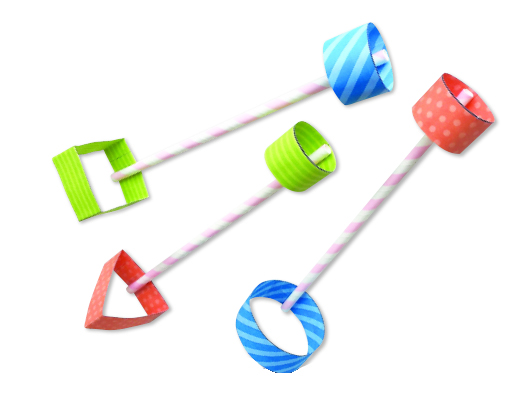
Geometric paper straw planes!

How do you make a triangle fly? Will a square take to the air? Create your own paper straw flying machines and put them to the test with the SKY HIGH SCIENCE issue of Whizz Pop Bang! You’ll find everything you need inside issue 36 of Whizz Pop Bang science magazine, order a copy for just £3.75 with FREE UK delivery here.

Packed full of outdoor science activities for girls and boys over the summer holidays – ditch the screens and find out how planes fly!


Post Comment
what makes something fly

Take off this summer with our Sky High Science issue!

Whizz Pop Bang science magazine for kids! Sky high science

Wouldn’t it be amazing to fly like a bird? Or how do you fancy fluttering like a butterfly, or even soaring like a snake?! There are all sorts of flying phenomena to discover this issue. Have a go at making your own stunt plane, investigating different designs of straw planes and testing aerofoils. We interview Palaeontologist Liz Martin-Silverstone to ask her how on earth the giant pterosaurs were able to fly, plus we find out how drones work, and answer the question on lots of people’s minds… just how do planes fly???

Buy this issue here and fill your summer holidays with awesome science fun!! ? ✈ ?


Post Comment
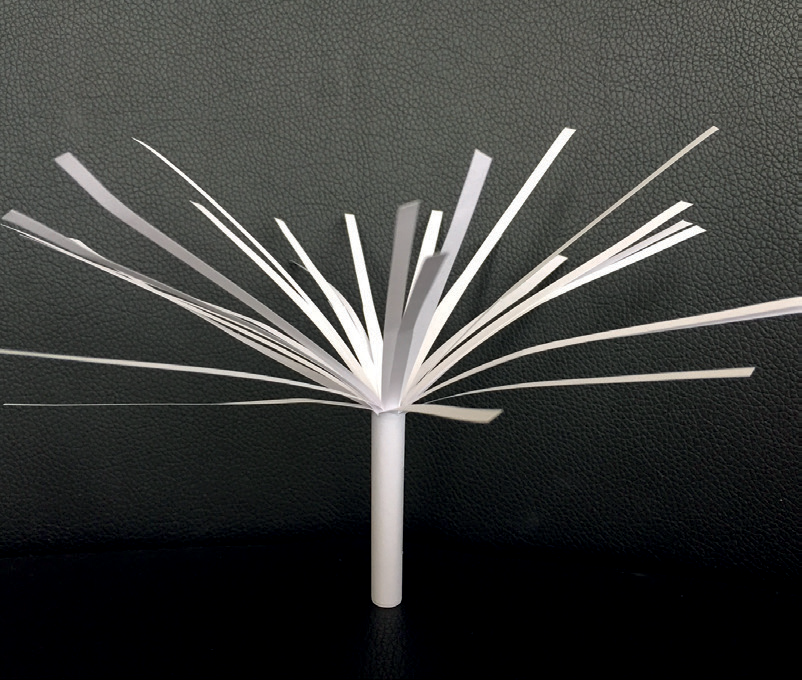
Whizz Pop Bang dandelion test flight

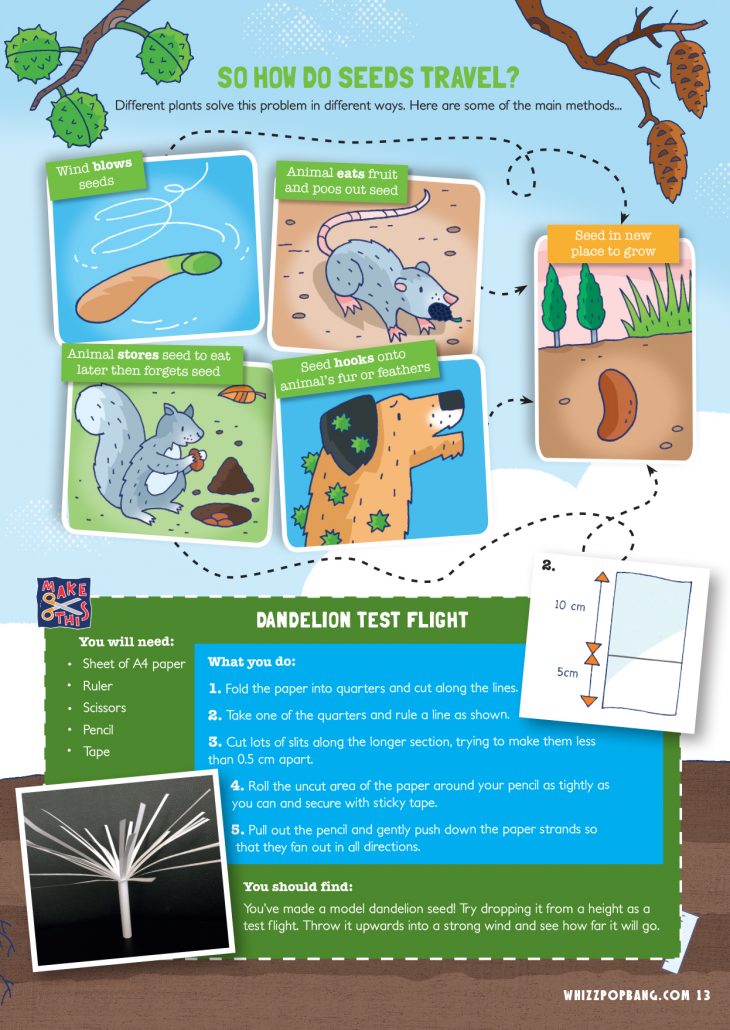
All you need to know about SEEDS

Follow the ingenious journeys of seeds with our SUPER SEEDS issue! Learn about seed dispersal with our simple experiments and activities, like this dandelion model test to show just how far seeds can travel.

Whizz Pop Bang dandelion test flight

Dandelion test flight

You will need:

  • Sheet of A4 paper
  • Ruler
  • Scissors
  • Pencil
  • Tape

What you do:

  1. Fold the paper into quarters and cut along the lines
  2. Take one of the quarters and rule a line as shown
  3. Cut lots of slits along the longer section, trying to make them less than 0.5 cm apart
  4. Roll the uncut area of the paper around your pencil as tightly as you can and secure with sticky tape
  5. Pull out the pencil and gently push down the paper strands so that they fan out in all directions

You should find:

You’ve made a model dandelion seed! Try dropping it from a height as a test flight. Throw it upwards into a strong wind and see how far it will go.

How do seeds travel?


Post Comment
Whizz Pop Bang logo round

Summer science ideas whatever the weather!

School’s officially out for the summer!!! WHOOOPEEEEE! Get ready for summer science fun with Whizz Pop Bang and our awesome experiments to do in the garden, at the beach, in the park or at the kitchen table when the skies are black…

Science outside:
☀️ Make a solar oven and bake cookies in the garden
☀️ Forensic science blood spatter test
☀️ Minibeast habitats
☀️ Butterfly banquet
☀️ Lay a pitfall trap
☀️ Make your own pooter (a special pot for collecting insects)

In the dark:
⭐️ Hold your own stargazing party
? Night time safari

At the beach:
? Take the super strong sand challenge
? Sandcastle secrets for Whizz Pop Bang scientists!
? Sand ripples in a bowl
? Panning for gold
? Shake it up!

Wet weather science:
☔️ Make a snoop-o-scope
☔️ Take your own finger prints
☔️ Make your own pond skater
☔️ Fireworks on a plate
☔️ Take the paper clip challenge
☔️ Penny drop
☔️ Whooshing pepper
☔️ Make an ocean in a bottle
☔️ Make a water-powered boat
☔️ Make an octopus

Order our summer science bundle here https://whizzpopbang.com/shop/product/899265457

Remember to post up your pics! #summerscience


Post Comment
Try this science experiment at home

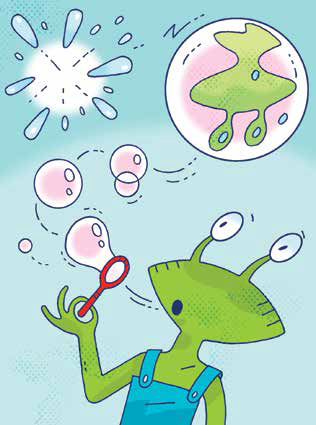
What makes the best bubbles? Try this experiment and see!

Whizz Pop Bang what makes the best bubbles

Would you like to know what makes the best bubbles?


Make a base mixture of water mixed with washing up liquid. If you don’t already have one, you can make a bubble wand using a pipe cleaner. Experiment with blowing bubbles, and then try adding sugar, baking powder, corn syrup or glycerin to your mixture, one at a time. Test how each ingredient changes the surface tension and affects the bubbles.

Have you ever wondered why bubbles form in soapy water but not in ordinary water? The answer is surface tension. The surface tension of water is too strong for bubbles to last – the water molecules pull each other together and the bubbles quickly burst. When water is mixed with soap, the surface tension becomes weaker and the liquid can be ‘stretched’ more, allowing bubbles to form.


Post Comment