
Child eats realistic edible poo

How to Make Edible Poo! A Seriously Gross Science Activity for Kids

Want a science activity that is revolting, hilarious and strangely educational? This edible poo idea is guaranteed to get children giggling while sparking curiosity about the science of the human body, digestion and all things disgusting. It comes from one of our most plop-ular issues of Whizz Pop Bang, and it is perfect for families who love hands-on science fun at home.

Want to receive Whizz Pop Bang: POO! for free? Head this way to find out more! Subscription purchase required, offer available while stocks last.

All You Need

You’ll probably find everything you need for this disgustingly realistic recipe in your kitchen (or in any supermarket):

100 g milk chocolate
1 dessert spoon of golden syrup
3 digestive biscuits
1 dessert spoon of raisins

What You Do

  • Break the chocolate into the bowl and drizzle the syrup over it.
  • Finely crush the biscuits.
  • Ask an adult to microwave the chocolate for 30-60 seconds until melted.
  • Mix in the biscuit crumbs and raisins. If the mixture is too dry, add more syrup or microwave for ten more seconds.
  • When cool enough to handle, roll the mixture into two or three sausage shapes.

Watch Our Edible Poo Video

Here’s our seriously silly edible poo activity in action. This video shows how to make your own deliciously disgusting pretend poo using crushed biscuits and other simple kitchen ingredients.

Why Kids Love This Gross Science Activity

There is something about gross science that children absolutely love. Slime, snot, burps, bogies and poo all have a magical ability to make young scientists laugh while drawing them into real scientific ideas.

This edible poo activity is fun because it combines:

  • hands-on making
  • familiar kitchen ingredients
  • disgusting humour
  • body science
  • screen-free learning

It is a brilliant way to turn curiosity, mess and laughter into a memorable science moment at home.

What is the Science of Disgust?

Did people find your edible poo disgusting? Disgust is an emotion that can be changed by knowledge and experience. People who thought it was a real poo found it disgusting, but you make it and knew it wasn’t real. Did you find it disgusting?

The Science of Poo Can Be Surprisingly Interesting

Poo might seem silly, but it is also a great gateway into learning about digestion, food, the human body and how waste leaves the body. Activities like this can help children feel more comfortable talking about body science while making learning playful and approachable.

If your child enjoys asking rude questions, finding facts about digestion hilarious or discovering how the body works, this is exactly the kind of science activity that keeps them engaged.

More Gross Science Fun from Whizz Pop Bang

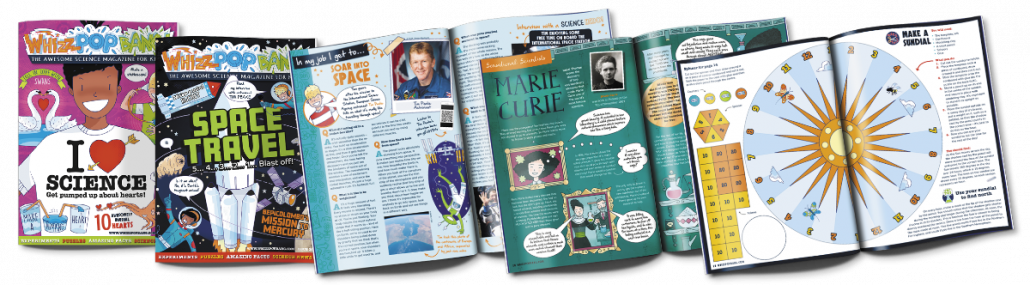
This edible poo activity comes from one of our gloriously gross issues of Whizz Pop Bang, the world’s most awesomely amazing kids’ science magazine. Every issue is packed with hands-on experiments, astonishing facts, science news, puzzles and screen-free fun for curious children.

With no plastic toys, no adverts and plenty of real science, Whizz Pop Bang is designed to spark big questions and inspire a lifelong love of discovery. From experiments at home to interviews with real scientists, it helps girls and boys explore how the world works – and imagine what they might one day discover for themselves.

If your child loves disgusting science, brilliant facts and hands-on activities, Whizz Pop Bang is full of more where this came from. Subscribe today to begin your child’s next science adventure.

Frequently asked questions

What is edible poo?
Edible poo is a funny food-based activity made to look disgusting while helping children enjoy hands-on science fun.

Is edible poo a good science activity for kids?
Yes, it is a fun way to encourage curiosity about digestion, the human body and kitchen science.

What age is this gross science activity suitable for?
It works best for children who enjoy simple hands-on activities and silly science, with adult supervision as needed. It’s ideal for ages 6 to 12, but we think anyone of any age can enjoy this activity!

Where can I find more gross science activities for kids?
You can find more hands-on science fun in Whizz Pop Bang magazine.
Post Comment
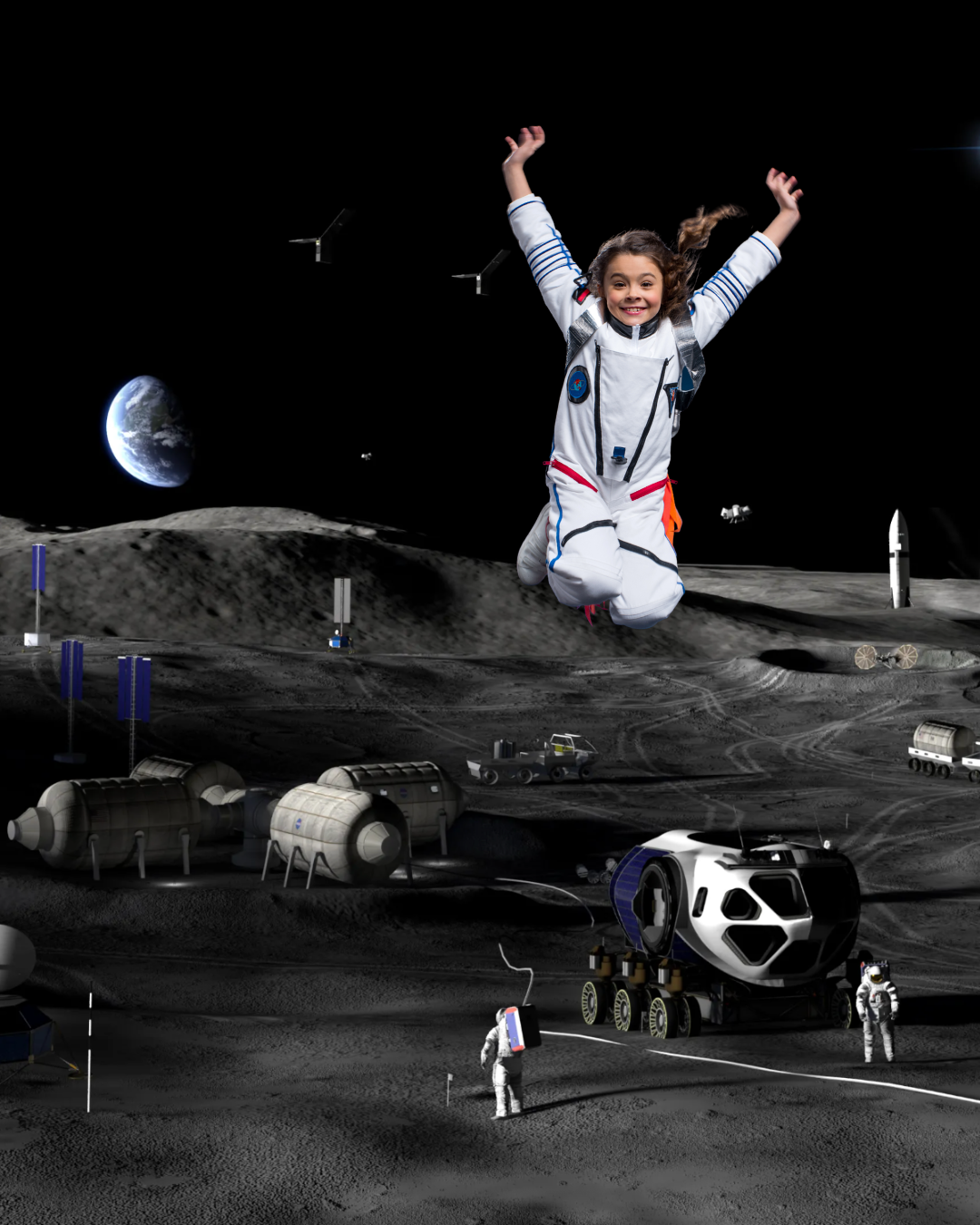
A futuristic Moon base with a child jumping on the lunar surface near Earth

MOON CITY! Could Humans Really Live on the Moon?

A futuristic Moon base with a child jumping on the lunar surface near Earth

Imagine looking up at the Moon and knowing that people are living there!

NASA has revealed exciting plans for a huge lunar base where astronauts could live, work and explore. The Moon base could cover hundreds of square kilometres and help scientists prepare for future missions to Mars.

Although a permanent Moon base is still many years away, engineers and scientists are already working out how it could become a reality.


Want more kids science news? Try Whizz Pop Bang magazine!

Whizz Pop Bang is the award-winning science magazine for curious kids aged 6–12. Every month, young scientists discover fascinating facts, try hands-on experiments, meet real scientists and explore the incredible world around them.

Packed with screen-free activities, puzzles, competitions and amazing science news, it’s designed to inspire a lifelong love of STEM subjects while having lots of fun along the way.

🚀 Subscribe today to have each new issue delivered straight to your door – find our latest special offer here!


What is a Moon base?

A Moon base is a place where astronauts could live for long periods of time on the lunar surface.

Just like research stations in Antarctica, a lunar base would provide shelter, food, water and equipment for scientists exploring an extreme environment.

Future Moon bases might include places to live, research laboratories, power stations and even greenhouses where food could be grown.

Why does NASA want a base on the Moon?

NASA hopes that living on the Moon will help humans learn how to survive on other worlds.

The Moon is much closer than Mars, making it the perfect place to test new technology and learn how astronauts can stay healthy during long space missions.

Scientists could also study the Moon’s rocks, history and hidden resources.

How would astronauts survive on the Moon?

Living on the Moon would be very different from living on Earth.

Astronauts would need protection from:

  • Extreme temperatures
  • Dangerous space radiation
  • Tiny sharp Moon dust
  • Meteorite impacts

Future Moon bases could be built underground or covered with lunar soil for extra protection.

Scientists are also exploring ways to create oxygen, water and fuel using materials already found on the Moon.

Could children ever live on the Moon?

Nobody knows for sure, but it could happen one day.

NASA’s plans are part of a long-term effort to establish a permanent human presence beyond Earth. If future Moon bases become successful, children growing up on the Moon may not just belong in science fiction stories.

Could the first child to live on the Moon be reading Whizz Pop Bang right now?

Amazing Moon Facts

🌕 The Moon is about 384,400 kilometres from Earth.

🚀 It takes about three days for astronauts to travel there.

👨‍🚀 Twelve people have walked on the Moon so far.

🌑 The Moon has no air that humans can breathe.

🦘 Because gravity is weaker on the Moon, astronauts can jump much higher than on Earth.

Want more space science?

If you love rockets, astronauts and incredible discoveries, check out Whizz Pop Bang magazine – it’s packed with hands-on activities, fascinating facts and out-of-this-world science fun!

Want more science news?

Read the latest science news for kids on the Whizz Pop Bang blog (as well as inside every edition of Whizz Pop Bang magazine!)


Post Comment

Introduce a Girl to Engineering Day!

To celebrate Introduce a Girl to Engineering Day on the 25th February 2023, here are some fun and inspiring activities and interviews to share with the girls in your life. You never know, one might grow up to be an engineer!

Reading comprehension: Electrical Engineer

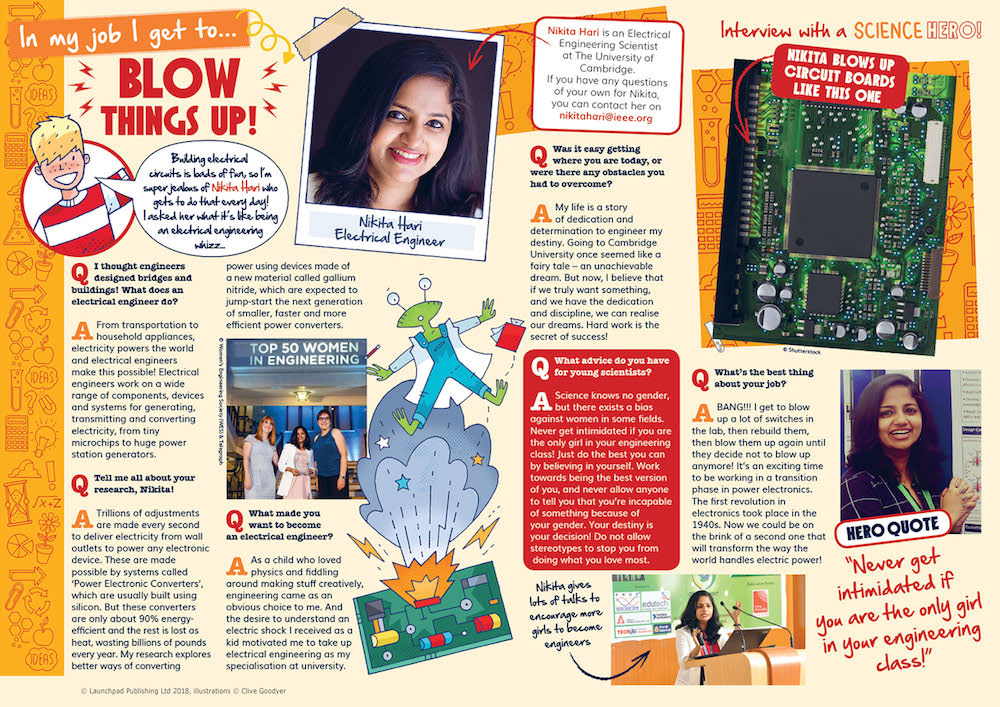
Find out what it’s like to be an electrical engineering whizz with this inspirational interview with Nikita Hari. Includes the feature to print or to read on a tablet, as well as comprehension question and answer sheet.

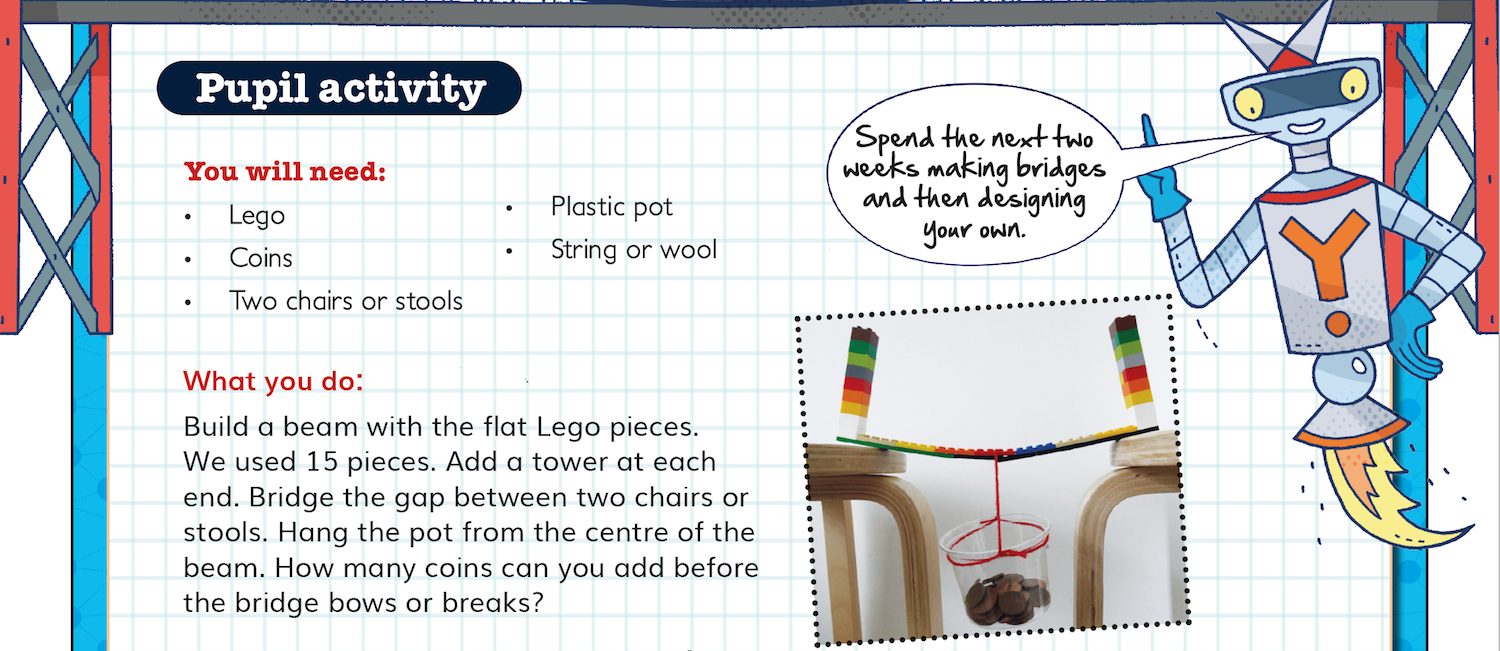
Engineering activity: Design your own bridge 

Get busy designing and building your own bridge and experiment to see how much weight it can hold!

Reading comprehension: Explosions Engineer

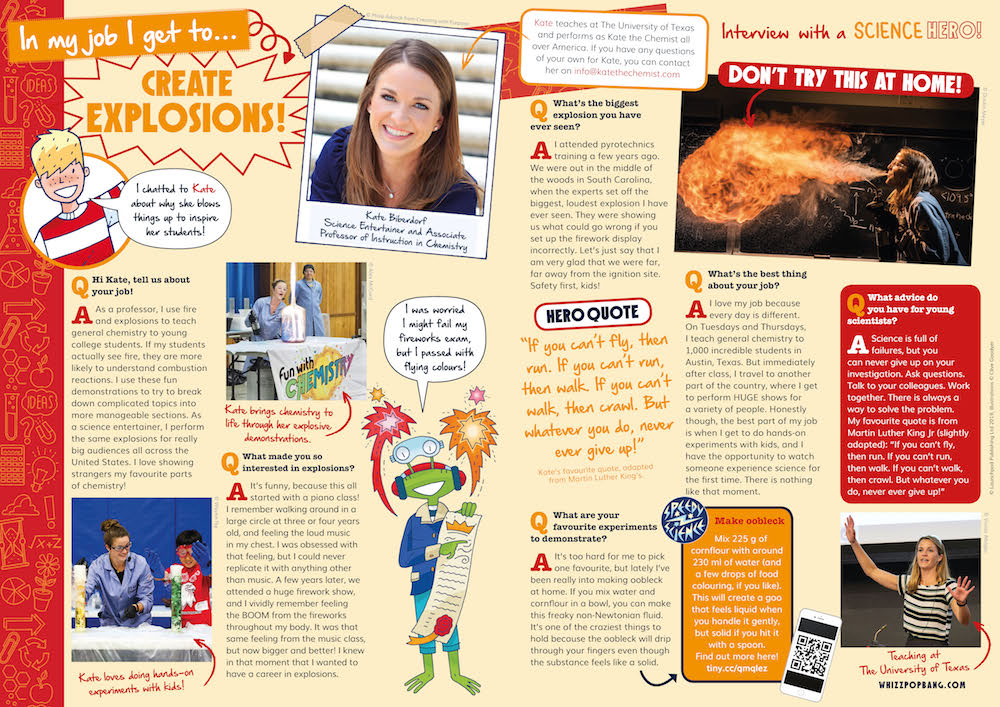
Find out why Kate Biberdorf loves to blow things up to inspire her students! Includes the feature to print or to read on a tablet, as well as comprehension question and answer sheets.

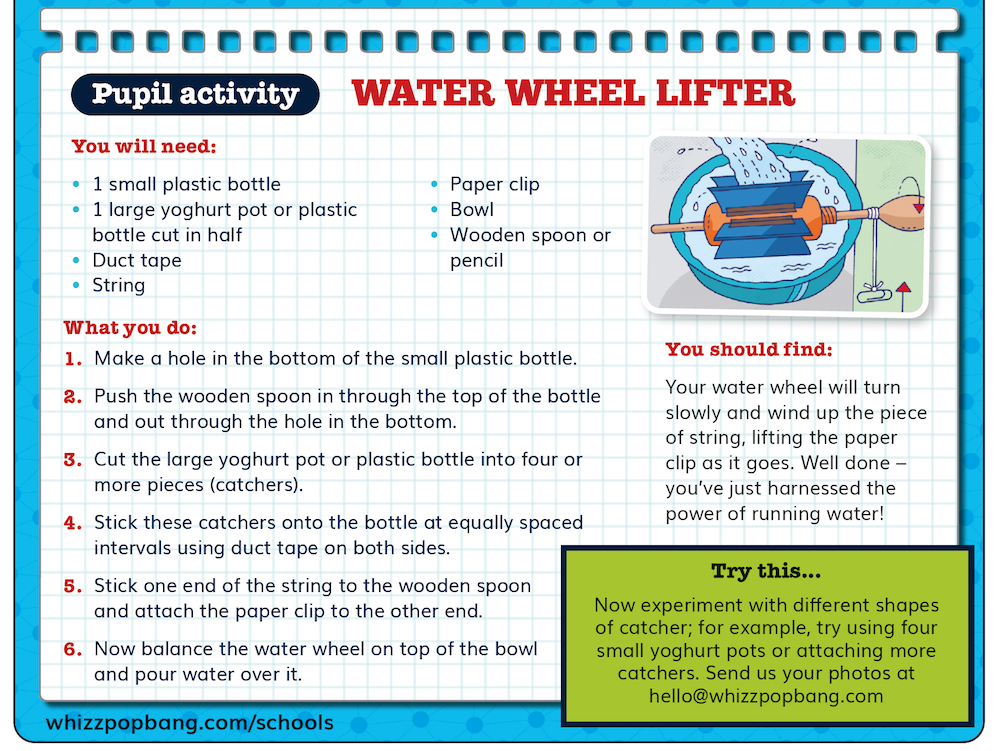
Engineering activity: Water wheel lifter

Can you lift a weight using the power of water? Try this fun science activity to find out!

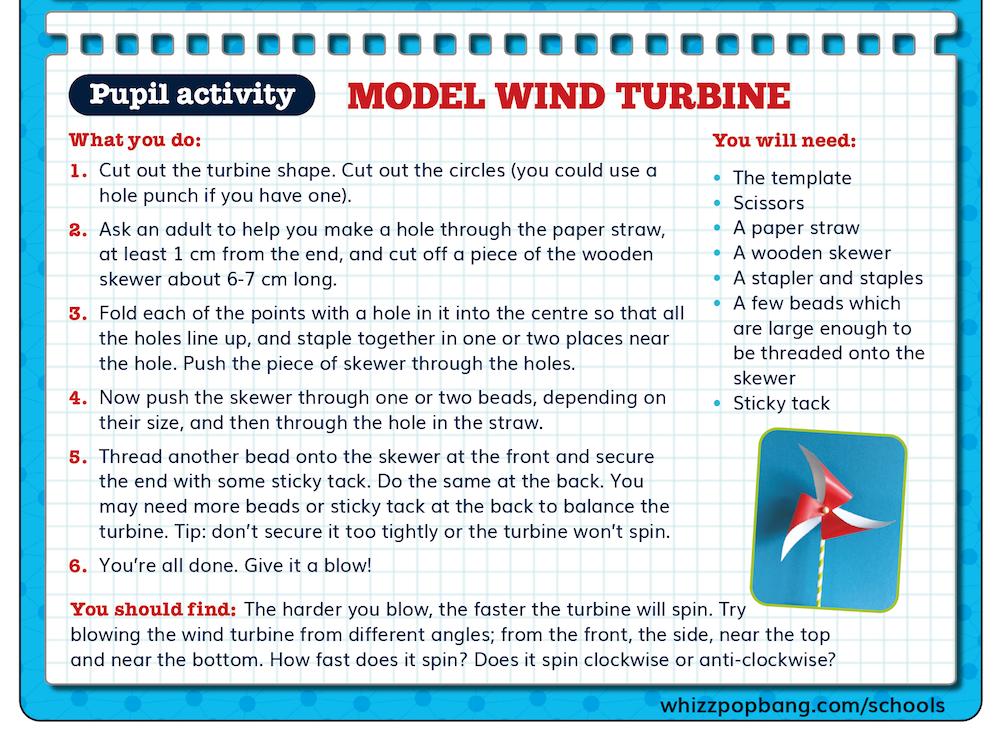
Engineering activity: Make a model wind turbine activity

Print, cut and craft a model wind turbine to try out in windy weather!

Want more engineering activities?

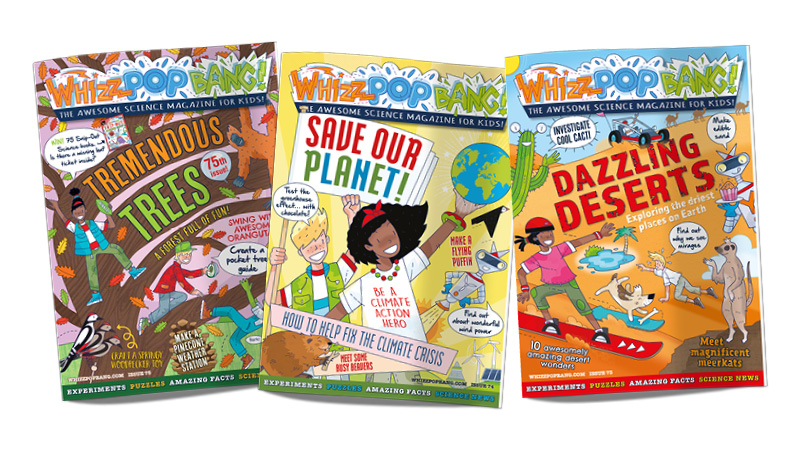
Subscribers to Whizz Pop Bang are automatically enrolled to the Y’s Wonder Club and can complete science challenges to earn collectible enamel badges!

Epic Engineer Badge
Think like an engineer to earn an Epic Engineer badge! Identify a problem, design a solution, get building, then test and improve your design. 

Click here to find out more… 


Fill your child with science wonder with a subscription to Whizz Pop Bang, the award-winning magazine for 6 to 12-year-olds. Watch their face light up with glee when their very own magazine zooms through the letterbox! Packed full of hands-on science awesomeness, it’s the gift that keeps of delighting, month after month.


Post Comment

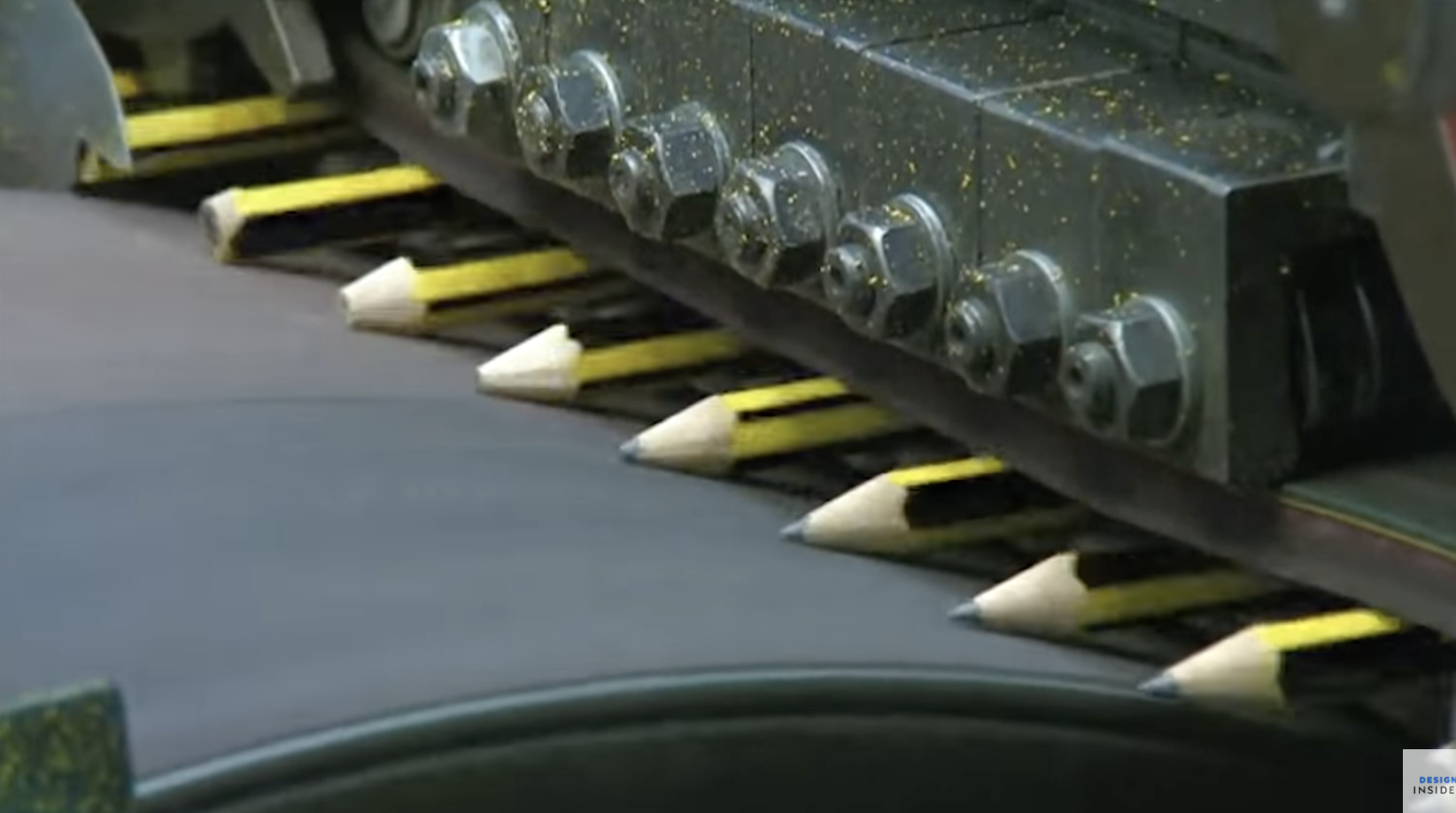
Have you ever wondered how pencils are made?

Watch this video to find out!

Find out more in Whizz Pop Bang 80: Amazing Atoms and Extraordinary Elements! Learn all about how pencils are made, the history of pencils, how many words a pencil can write and more!

Fill your child with science wonder with a subscription to Whizz Pop Bang, the award-winning magazine for 6 to 12-year-olds. Watch their face light up with glee when their very own magazine zooms through the letterbox! Packed full of hands-on science awesomeness, it’s the gift that keeps of delighting, month after month.


Post Comment