Introduce a Girl to Engineering Day!

To celebrate Introduce a Girl to Engineering Day on the 25th February 2023, here are some fun and inspiring activities and interviews to share with the girls in your life. You never know, one might grow up to be an engineer!

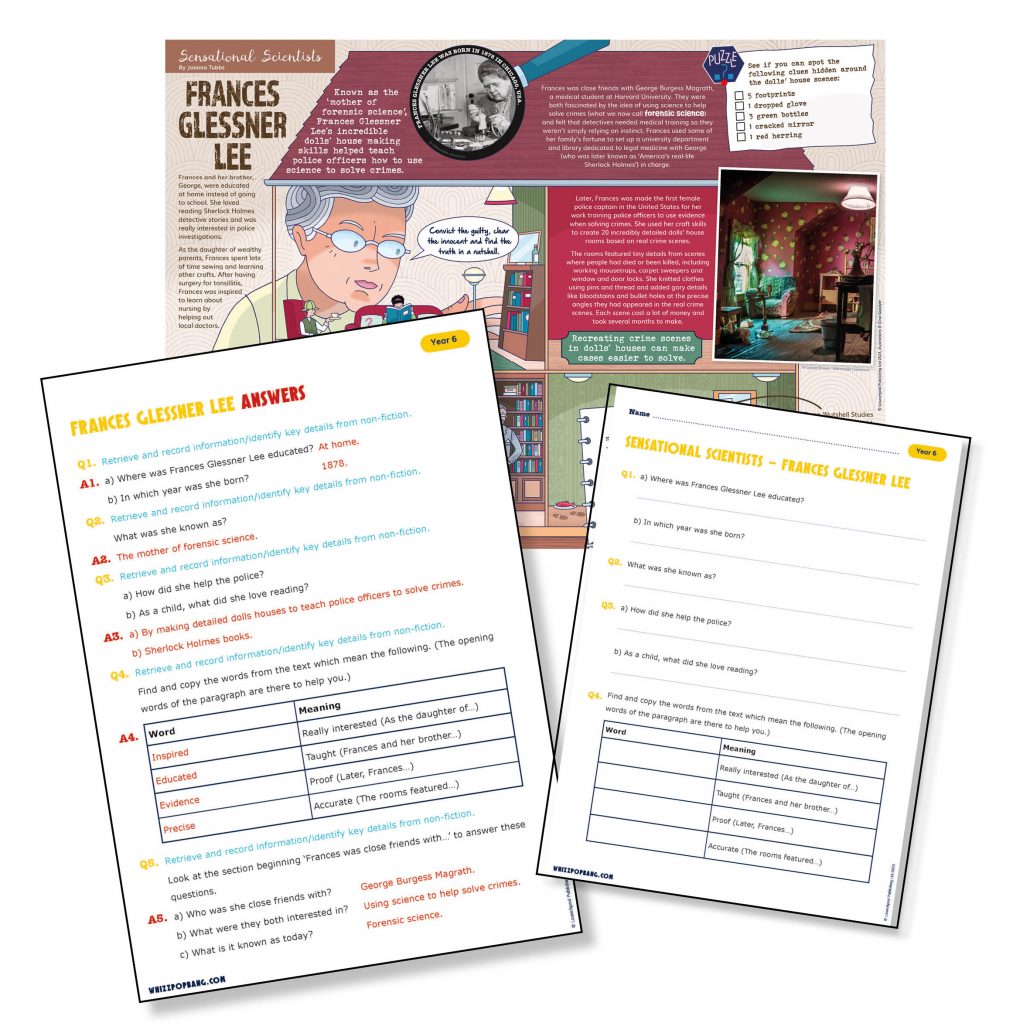
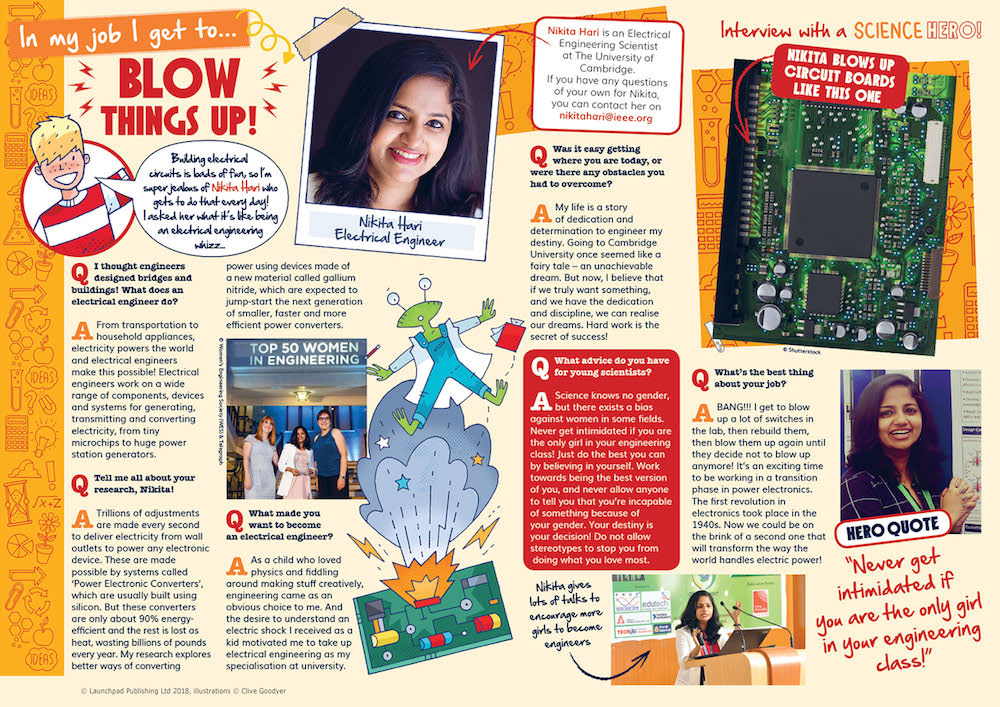
Reading comprehension: Electrical Engineer

Find out what it’s like to be an electrical engineering whizz with this inspirational interview with Nikita Hari. Includes the feature to print or to read on a tablet, as well as comprehension question and answer sheet.

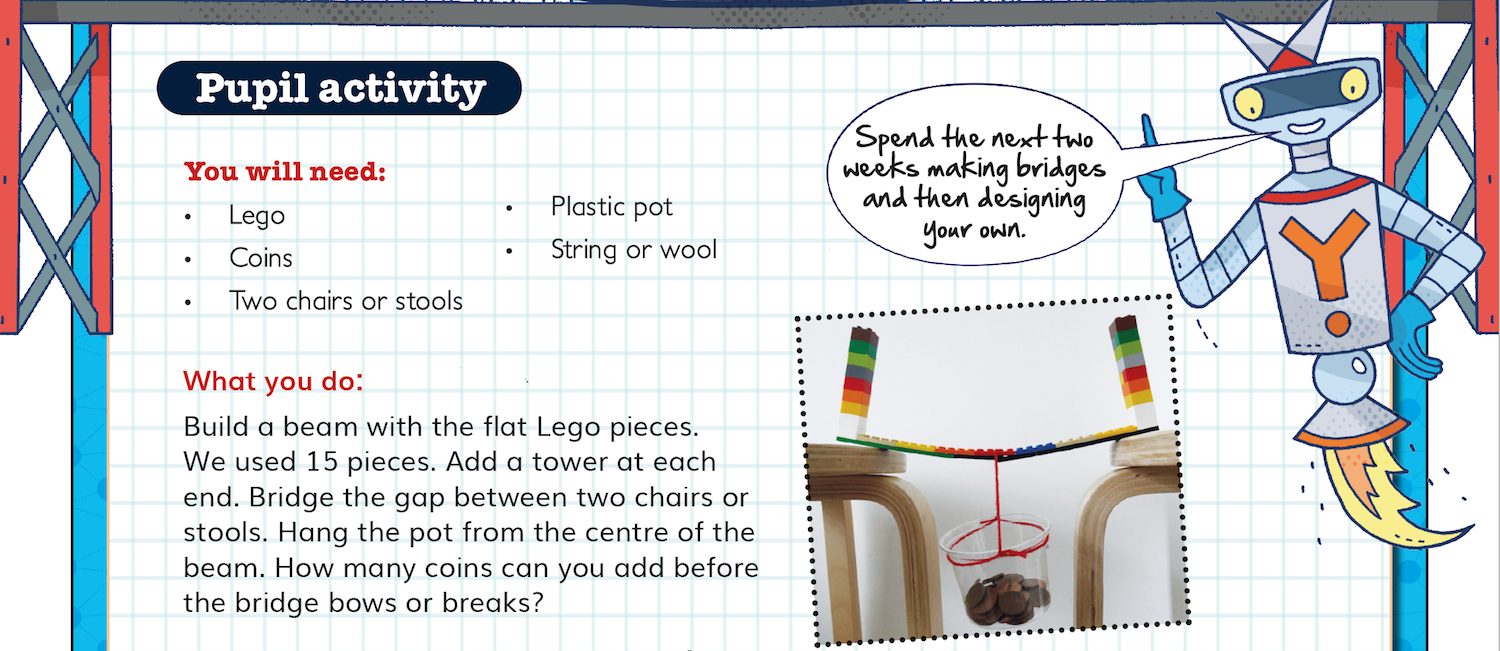
Engineering activity: Design your own bridge 

Get busy designing and building your own bridge and experiment to see how much weight it can hold!

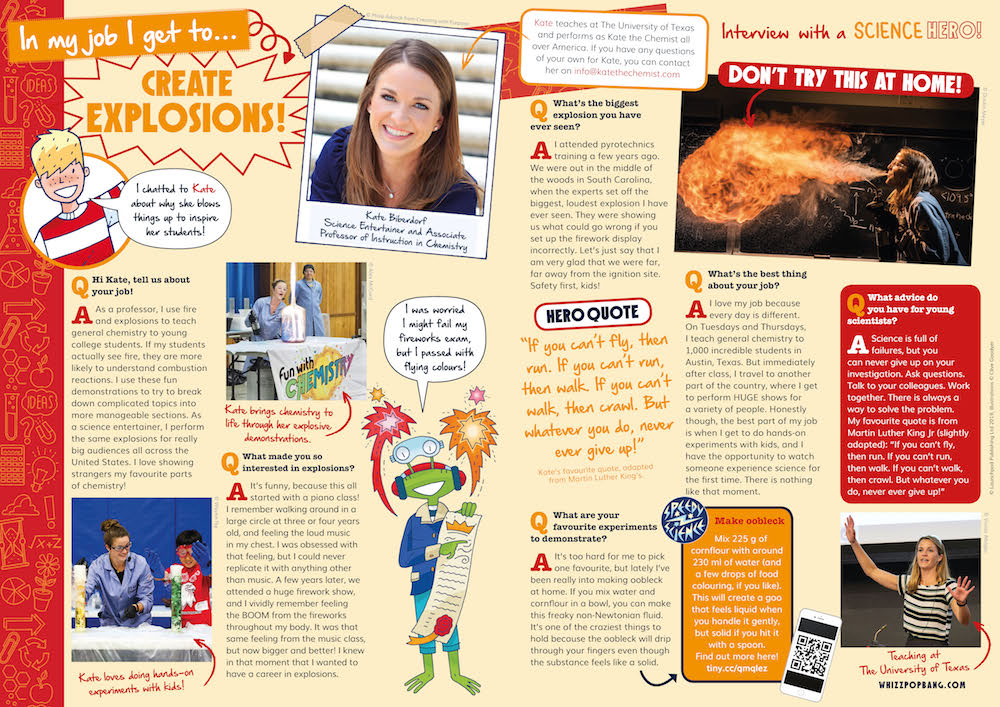
Reading comprehension: Explosions Engineer

Find out why Kate Biberdorf loves to blow things up to inspire her students! Includes the feature to print or to read on a tablet, as well as comprehension question and answer sheets.

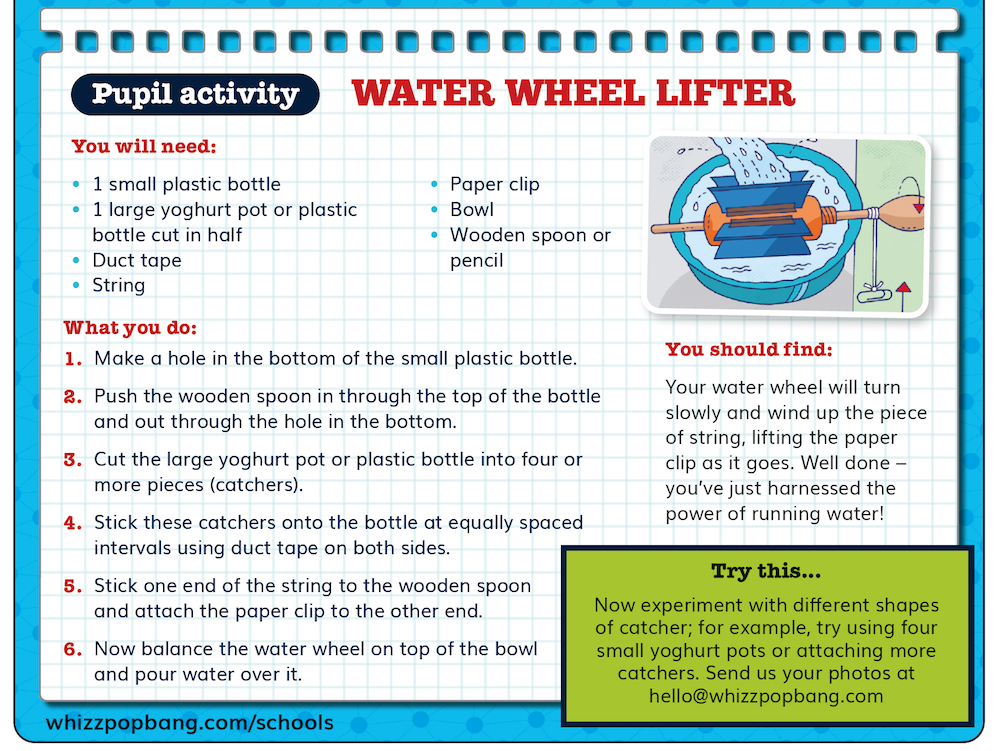
Engineering activity: Water wheel lifter

Can you lift a weight using the power of water? Try this fun science activity to find out!

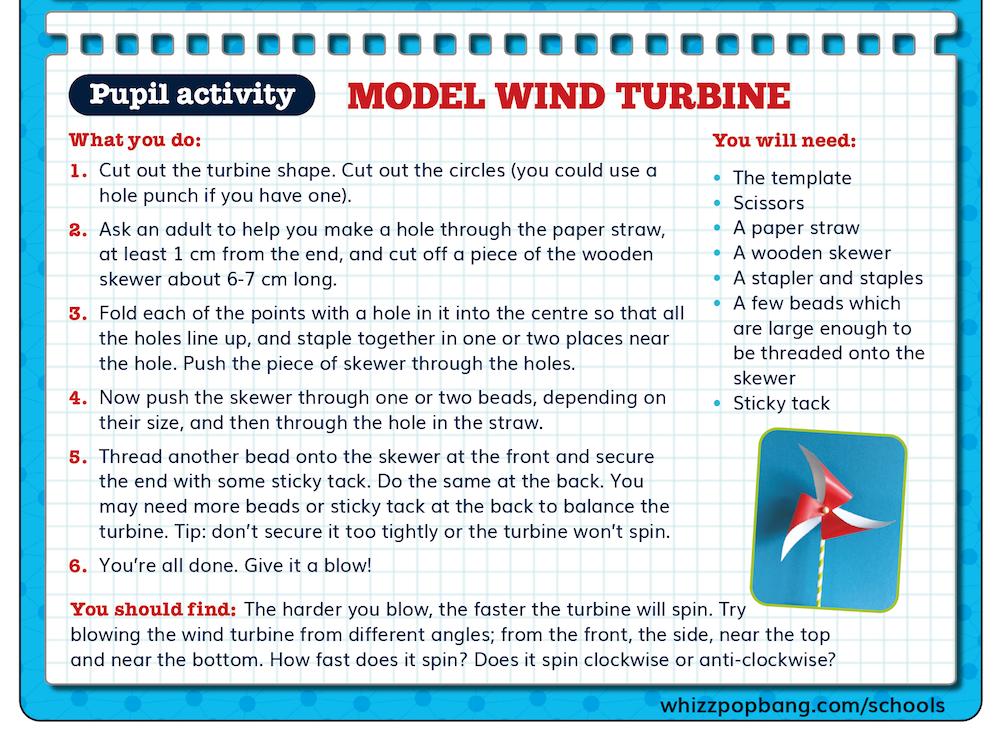
Engineering activity: Make a model wind turbine activity

Print, cut and craft a model wind turbine to try out in windy weather!

Want more engineering activities?

Subscribers to Whizz Pop Bang are automatically enrolled to the Y’s Wonder Club and can complete science challenges to earn collectible enamel badges!

Epic Engineer Badge
Think like an engineer to earn an Epic Engineer badge! Identify a problem, design a solution, get building, then test and improve your design. 

Click here to find out more… 


Fill your child with science wonder with a subscription to Whizz Pop Bang, the award-winning magazine for 6 to 12-year-olds. Watch their face light up with glee when their very own magazine zooms through the letterbox! Packed full of hands-on science awesomeness, it’s the gift that keeps of delighting, month after month.
Post Comment

Teaching Ancient Greece

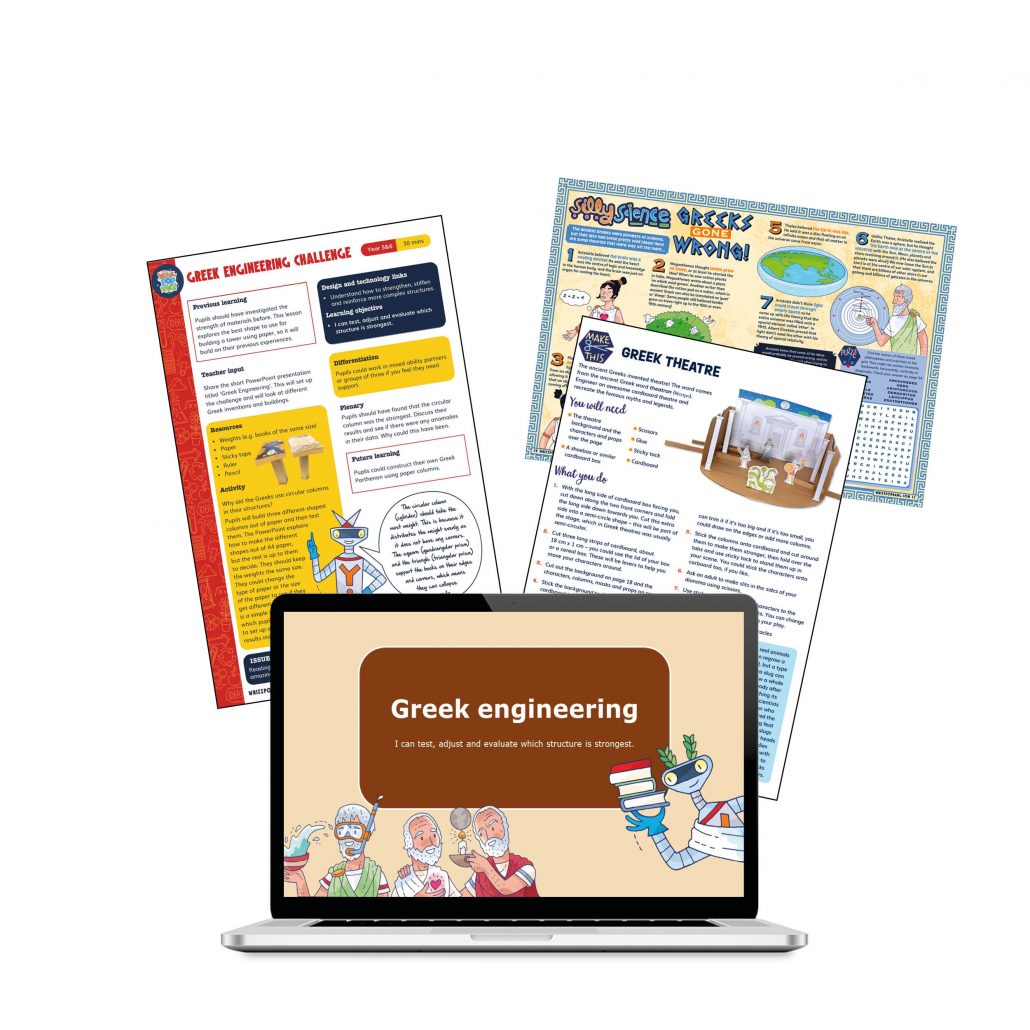
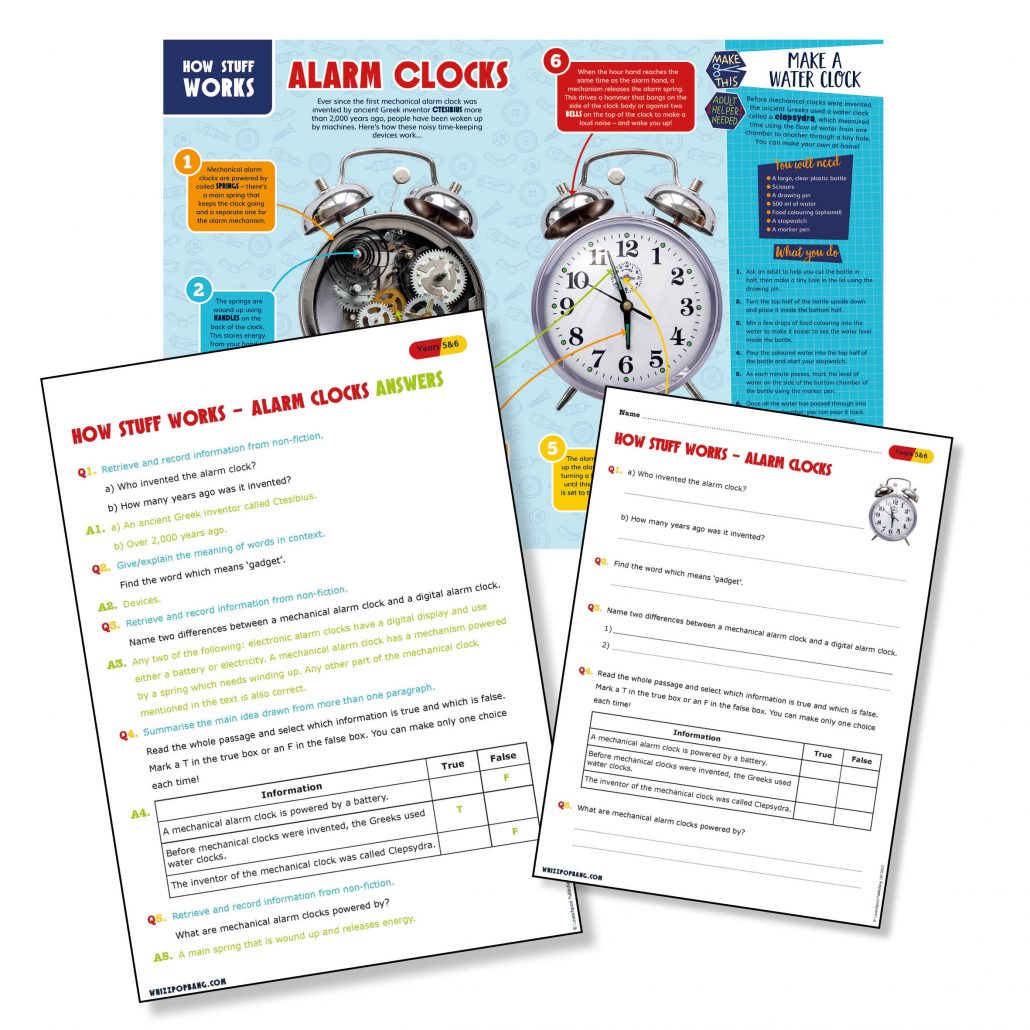
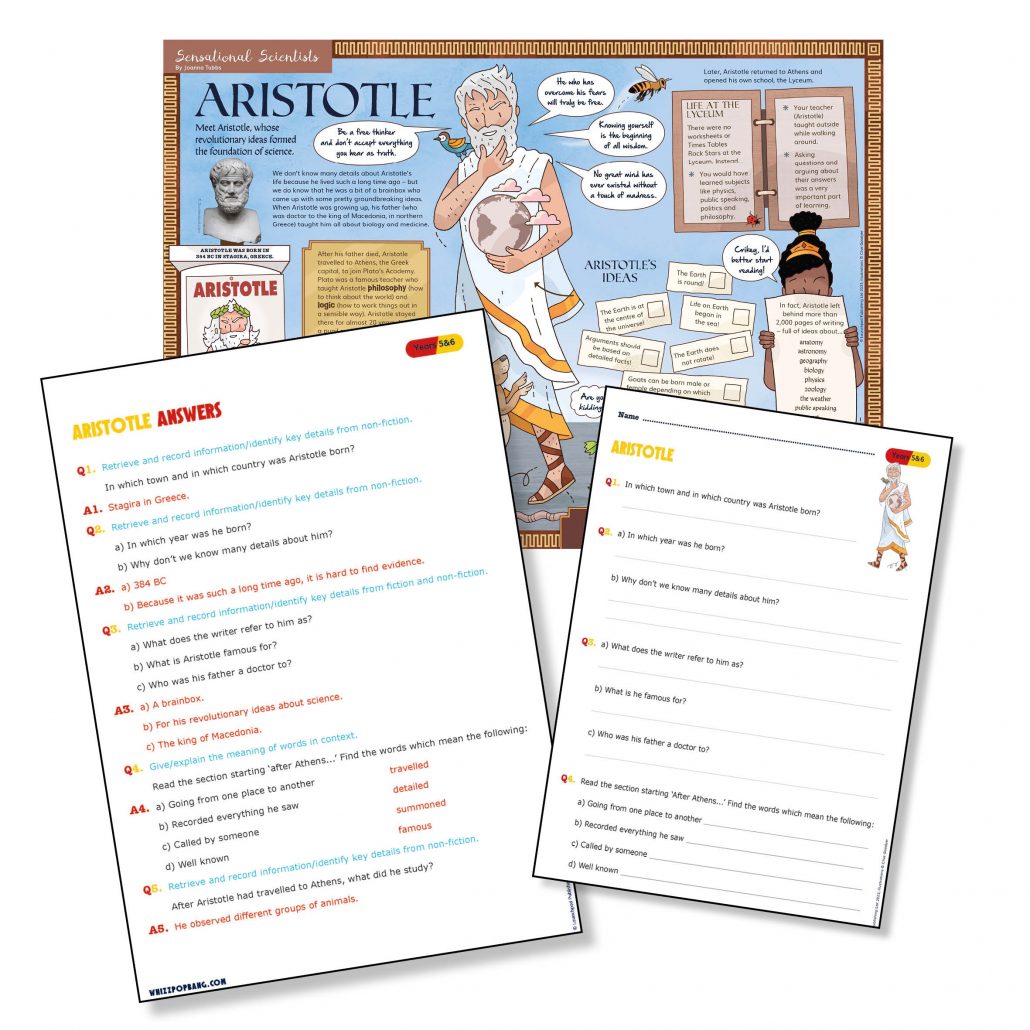
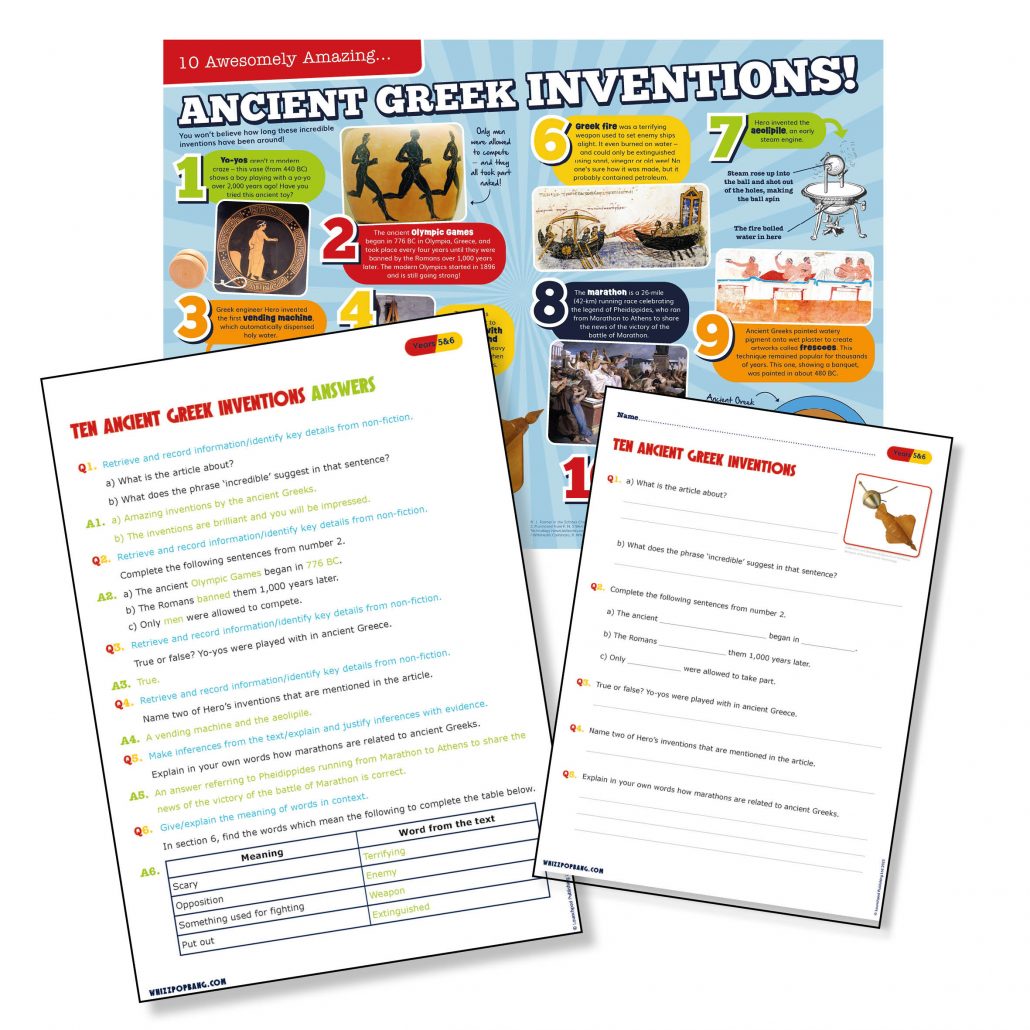
Are you looking for inspiring planning resources for teaching ancient Greece in upper key stage 2? Here’s how you can use our new downloadable ancient Greece teaching resources to easily create a memorable lesson …

Where to start?

Before you use the lesson pack, pupils should already know when the ancient Greek period was and they should be aware of the term engineering. This lesson pack links with history, design and technology and science. Therefore, it is a STEAM lesson.

Pupils will carry out a simple experiment to see why the ancient Greeks chose to build with columns. They will test different shapes and see which is the strongest.

The downloadable pack includes:

  • A differentiated lesson plan
  • A PowerPoint presentation
  • A printable Greek theatre
  • A text explaining some ancient Greeks’ wild ideas!

Quality reading texts related to the ancient Greeks

We have a whole issue dedicated to the ancient Greeks, which is full of fun facts and information suitable for primary-aged children. Our teachers have created three reading comprehensions with questions linked to the National Curriculum and Curriculum for Excellence:

Whizz Pop Bang magazine and teaching resources are brilliant ways to enhance your school’s science teaching:

  • We provide downloadable science lesson plans, PowerPoint presentations, hands-on investigations and science reading comprehensions written by primary school teachers.
  • Whizz Pop Bang teaching resources link to the National Curriculum, ensuring correct coverage.
  • All of our resources are year group specific, ensuring progression between the years.
  • We make cross-curricular links to other subjects, such as English, Maths, History, Geography, Art, Design and Technology and PSHE.

Prices from as little as £197.99 per year for a copy of Whizz Pop Bang magazine through the post each month and whole-school access to our ever-growing library of downloadable teaching resources, with unlimited teacher logins.

We’ve also launched a new individual membership option so teachers and home educators can access all of our amazing downloadable resources for just £20 for the whole year


Post Comment

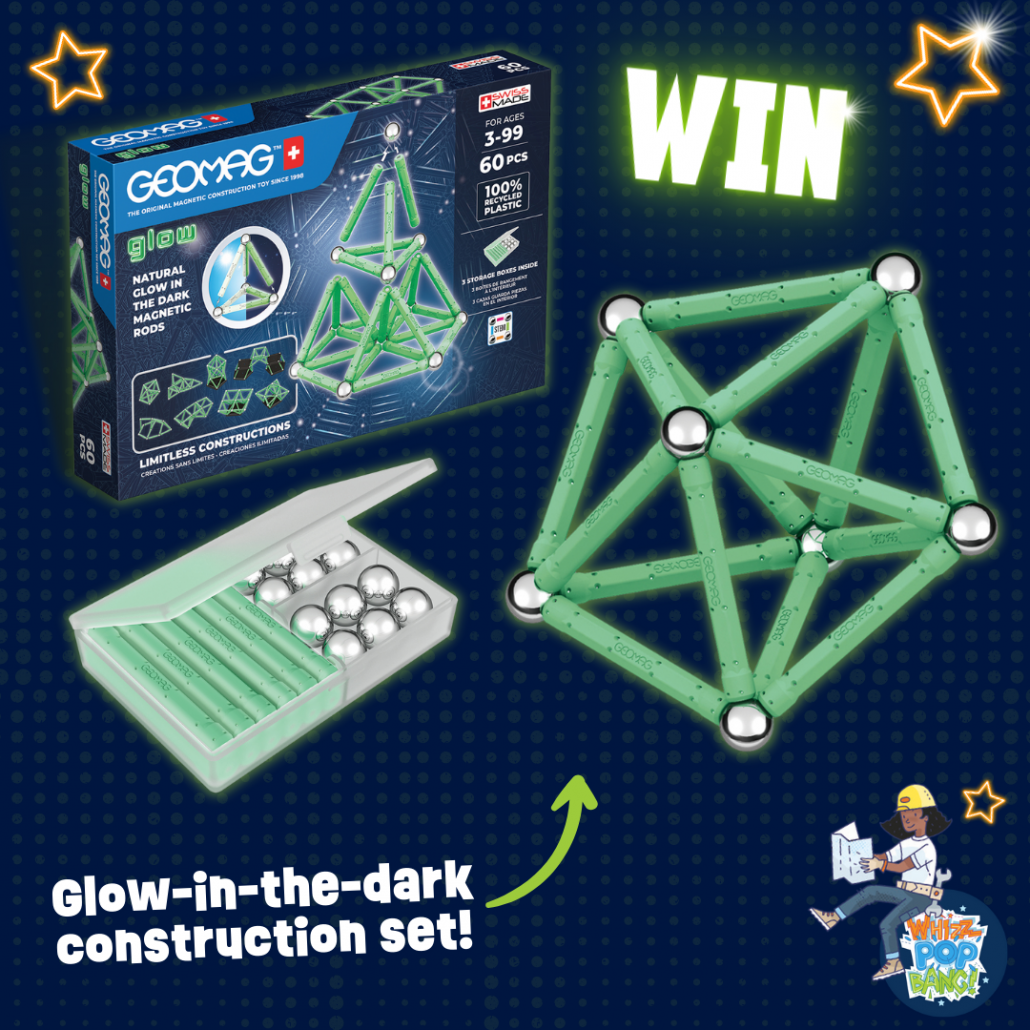
COMPETITION CLOSED: WIN a glow-in-the-dark GEOMAG magnetic construction set!

We’ve got three epic construction sets to give away from Geomag!

Enter our competition to be in for a chance to win a bumper 60-piece magnetic construction set from Geomag! This kit is sure to get mini-engineers excited about building 3D models because not only are they magnetic, but they also glow in the dark!

Use the strength and energy of the Geomag magnets and spheres to build crazy spinning tops and suspended models that will spin for ages. Put your building and spinning skills to the test with this Geomag Glow Magnetic Construction Set! Plus, they are environmentally friendly as all Geomag toys are made from recycled plastic!

For your chance to win, simply answer this question in the comments:

How tall is the Eiffel tower?

a) 30 metres
b) 300 metres
c) 3,000 metres

This competition closes at midnight on 28th February 2023. For full terms and conditions visit whizzpopbang.com/terms


Fill your child with science wonder with a subscription to Whizz Pop Bang, the award-winning magazine for 6 to 12-year-olds. Watch their face light up with glee when their very own magazine zooms through the letterbox! Packed full of hands-on science awesomeness, it’s the gift that keeps of delighting, month after month.

Post Comment
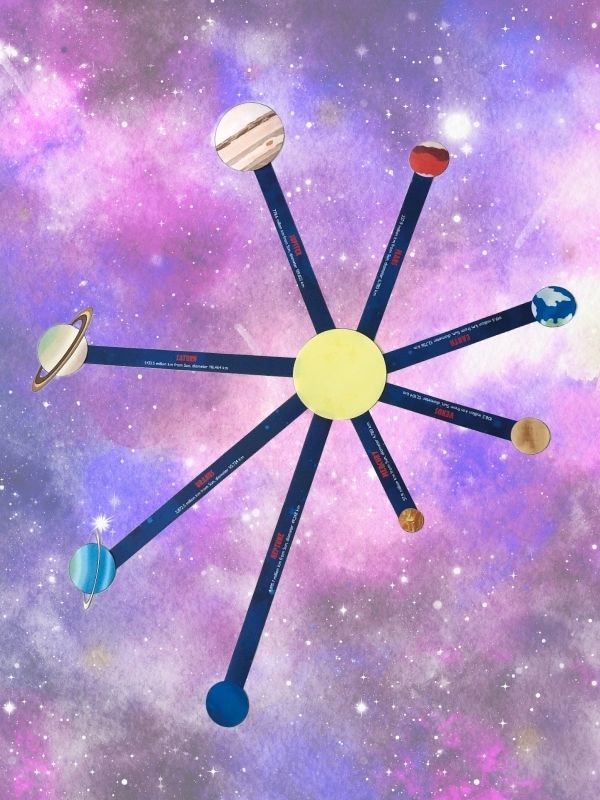
A cut out papercraft model of the solar system free to download

Free Solar System Craft for Kids: Make a Model of the Planets

Updated July 2026

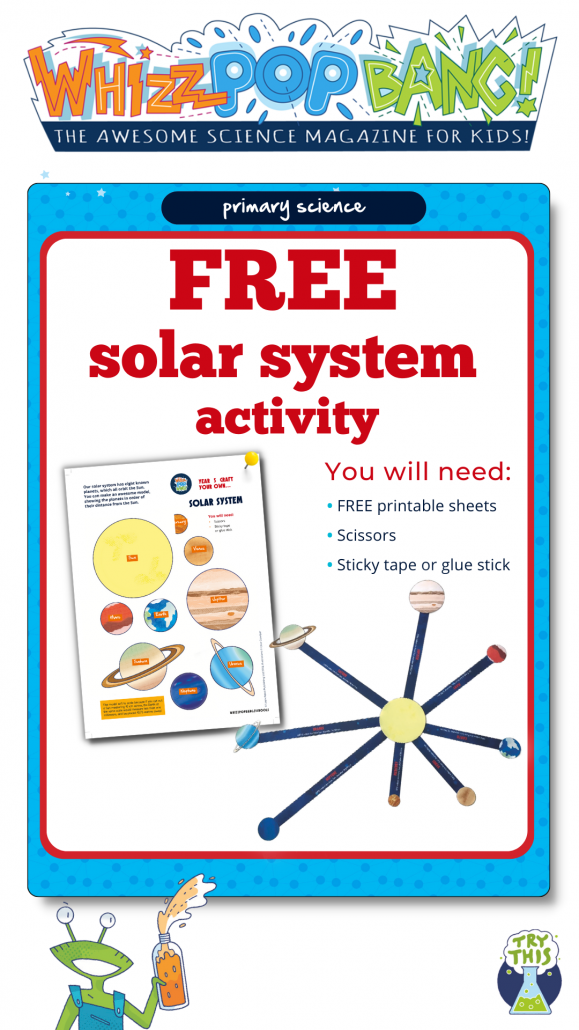
Looking for a fun and easy way to help children learn about the planets? Download our free solar system printable and make your own model of the solar system at home or in the classroom.

This hands-on solar system craft for kids is a brilliant way to learn the names and order of the eight planets while practising cutting, sticking and following instructions.

A cut out papercraft model of the solar system free to download

Simply download the printable, grab some scissors and glue, and get ready for an out-of-this-world science activity!

Learn the order of the planets by making a model solar system. Just download, print, add scissors and glue, and your astronauts-in-training will do the rest. It’s out of this world! 

How to make your solar system model

You will need:

  • Our free solar system printable
  • Scissors
  • Glue

Download and print the activity sheet, then follow the instructions to cut out and assemble your model.

As children make their solar system, encourage them to identify each planet and put them in the correct order from the Sun.

The eight planets in our solar system are:

Mercury, Venus, Earth, Mars, Jupiter, Saturn, Uranus and Neptune.

Can your young scientist remember them all?

What will children learn from this solar system activity?

Making a model of the solar system helps children explore space science through a fun, hands-on activity.

Children can:

  • Learn the names of the eight planets
  • Discover the order of the planets from the Sun
  • Compare the different planets in our solar system
  • Practise cutting, sticking and following instructions
  • Build confidence with science vocabulary

It’s a simple activity for families, home educators and primary school teachers looking for an engaging way to introduce or reinforce learning about Earth and space.

What age is this solar system craft suitable for?

This activity is designed for children aged approximately 6 to 12.

Younger children may need some help with cutting and assembling their model, while older children can use the activity as a starting point for further investigations.

Try asking:
Which planet is closest to the Sun?
Which is the largest planet?
Which planets have rings?
Why is Earth the only planet known to support life?

Does this activity support the primary science curriculum?

Yes. This activity is particularly useful for children studying Earth and space in Year 5 science in England and P6 science in Scotland. 9 and 10 year olds till be taught about the solar system according the the National Curriculum for this year group.

The national curriculum includes learning about the movement of the Earth and other planets relative to the Sun and describing the Sun, Earth and Moon as approximately spherical bodies.

Making a solar system model gives children a memorable, hands-on way to practise identifying the planets and their order.

What is the order of the planets?

Starting with the planet closest to the Sun, the eight planets are:

Mercury → Venus → Earth → Mars → Jupiter → Saturn → Uranus → Neptune

Here’s a challenge for your young scientist: can they invent their own silly sentence to help remember the planets.

More space activities for kids

Did your young scientist enjoy making their solar system?

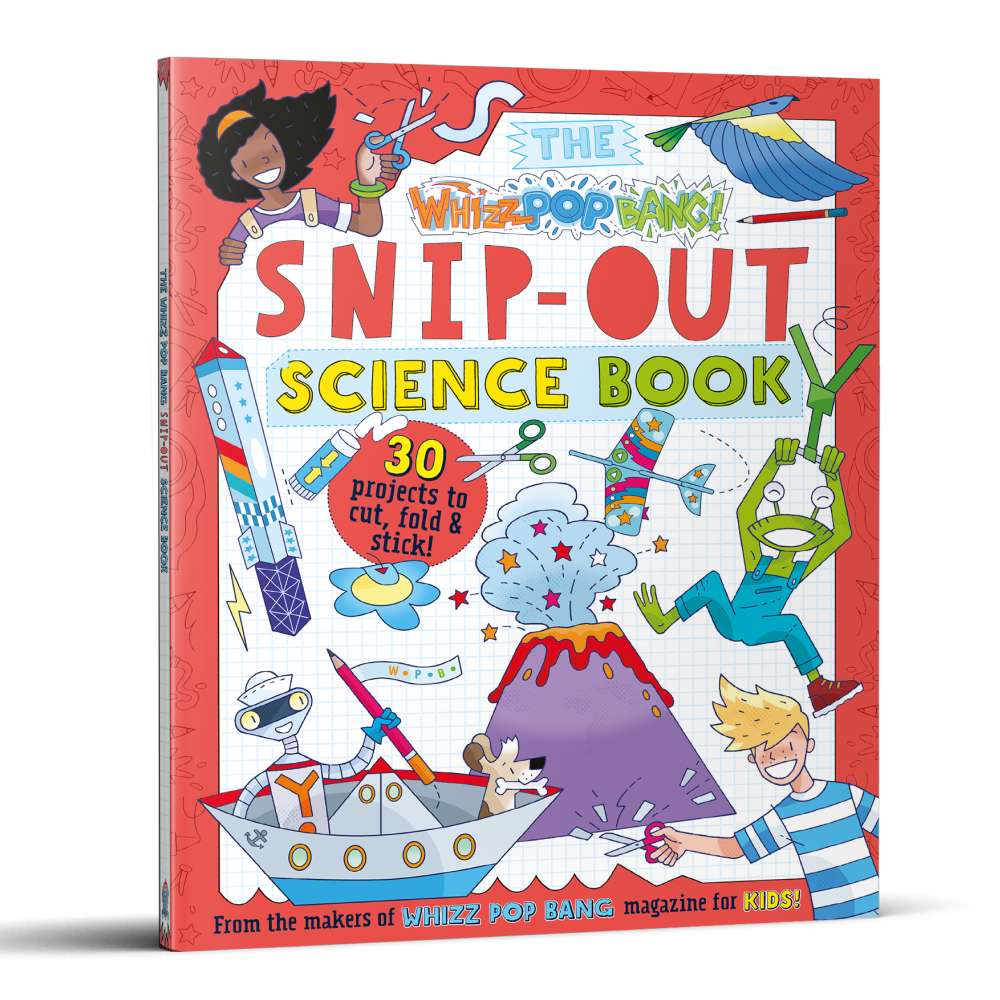
This activity comes from the Whizz Pop Bang Snip-Out Science Book, which is packed with paper-based science activities for curious kids.

You can also explore more free space activities, experiments and fascinating astronomy articles on the Whizz Pop Bang blog.

Discover Whizz Pop Bang magazine

Whizz Pop Bang is the award-winning science magazine for curious children aged 6–12.

Every month, young scientists can try hands-on experiments, discover fascinating facts, meet real scientists and explore everything from dinosaurs and space to the human body, animals and engineering.

Packed with screen-free activities, puzzles and competitions, Whizz Pop Bang makes science exciting and fun.

Subscribe to Whizz Pop Bang and give your child a new science adventure every month!

Find loads more science activities, puzzles and games in our award-winning monthly kids science magazine, Whizz Pop Bang!


Did your mini-scientist enjoy this activity? This is just one of the many fun paper craft activities from the Whizz Pop Bang Snip-Out Science Book. Click the image below to discover how much more fun your budding scientist can have with this book!

Fill your child with science wonder with a subscription to Whizz Pop Bang, the award-winning magazine for 6 to 12-year-olds. Watch their face light up with glee when their very own magazine zooms through the letterbox! Packed full of hands-on science awesomeness, it’s the gift that keeps of delighting, month after month.

Post Comment

Learn to juggle!

Find out how to make balloon juggling balls in Whizz Pop Bang: Supercharged Science, then learn to juggle in this brilliant video!

Learning to juggle is a great way to improve your coordination. Find out how to make your own amazing upcycled juggling balls from balloons in Whizz Pop Bang: Supercharged Science!

Feel the force of static electricity in Whizz Pop Bang: Supercharged Science!

Static electricity powers thunderstorms, makes clingfilm clingy and sets our hair on end when we take off woolly clothing. Find out how it works and then harness its power to charm a paper snake, roll a can, spin an umbrella, sail a boat, bend a stream of water and make a jellyfish fly!

You’ll also get to discover ten shockingly electric animals, find out how LEDs light up our homes, learn how electric eels stun their prey, read all about Benjamin Franklin and meet a scientist who chases electric storms as part of her job. We show you how to make a set of juggling balls from balloons in Emmi’s Eco Club, you’ll get to race around a thunderous board game avoiding the lightning in Silly Science, you can also find out how plasma balls work and even create miniature lightning streaks inside your mouth!


Post Comment

Can spiders fly?

Did you know that some spiders can fly? On sensing atmospheric electricity, they release many
strands of silk which repel each other (in the same way that static makes your hair stands on
end), creating a balloon-shaped sail which rises and floats on the breeze.


Post Comment

Fold a static-powdered boat

In issue 90: SUPERCHARGED SCIENCE, you can cut out and fold a floating boat and then make it move using a static charge!

Here’s a video showing you how to fold the boat:

Fill your child with science wonder with a subscription to Whizz Pop Bang, the award-winning magazine for 6 to 12-year-olds. Watch their face light up with glee when their very own magazine zooms through the letterbox! Packed full of hands-on science awesomeness, it’s the gift that keeps of delighting, month after month.

Post Comment

COMPETITION CLOSED: WIN a Build Your Own Marble Labyrinth!

Put your maze navigation skills to the ultimate test with Build Your Own’s new eco-friendly, STEM-inspired Marble Labyrinth!

We’ve got SIX build your own Marble Labyrinths from Build Your Own to give away to lucky winners! Two games in one and double the fun, this innovative Marble Labyrinth provides hours of entertainment.

Each kit comes with everything you need to build a fully functioning Marble Labyrinth with two games to play.

To be in with a chance of winning one of six Build Your Own Marble Labyrinth kits, simply answer this question in the comments:

In Greek mythology, which mythical creature lived in a labyrinth:

A) Mermaid
B) Unicorn
C) Minotaur

Good luck!

This competition closes at midnight on Tuesday 31st January 2023. Whizz Pop Bang competition terms and conditions are here.


Post Comment

FREE science activity – make a stunt plane!

Whizz Pop Bang is the awesomely amazing (and award-winning!) science magazine for kids aged between 6 – 12. We want to inspire the scientists of the future with our monthly magazine! We know that sometimes you just want a bit more science to get your teeth into, so here’s a FREE activity that your scientists-in-training will love to cut, fold and launch!

Our experiments are designed for children aged 6 to 12, but this one is especially appropriate for year 5, P6 (Scotland), and children aged 9 and 10, as it relates to the subject of the forces that will be covered in this school year’s National Curriculum.

Find loads more science activities, puzzles and games in our award-winning monthly kids science magazine, Whizz Pop Bang!


Did your mini-scientist enjoy this activity? This is just one of the many fun paper craft activities from the Whizz Pop Bang Snip-Out Science Book. Click the image below to discover how much more fun your budding scientist can have with this book!

Fill your child with science wonder with a subscription to Whizz Pop Bang, the award-winning magazine for 6 to 12-year-olds. Watch their face light up with glee when their very own magazine zooms through the letterbox! Packed full of hands-on science awesomeness, it’s the gift that keeps of delighting, month after month.

Post Comment