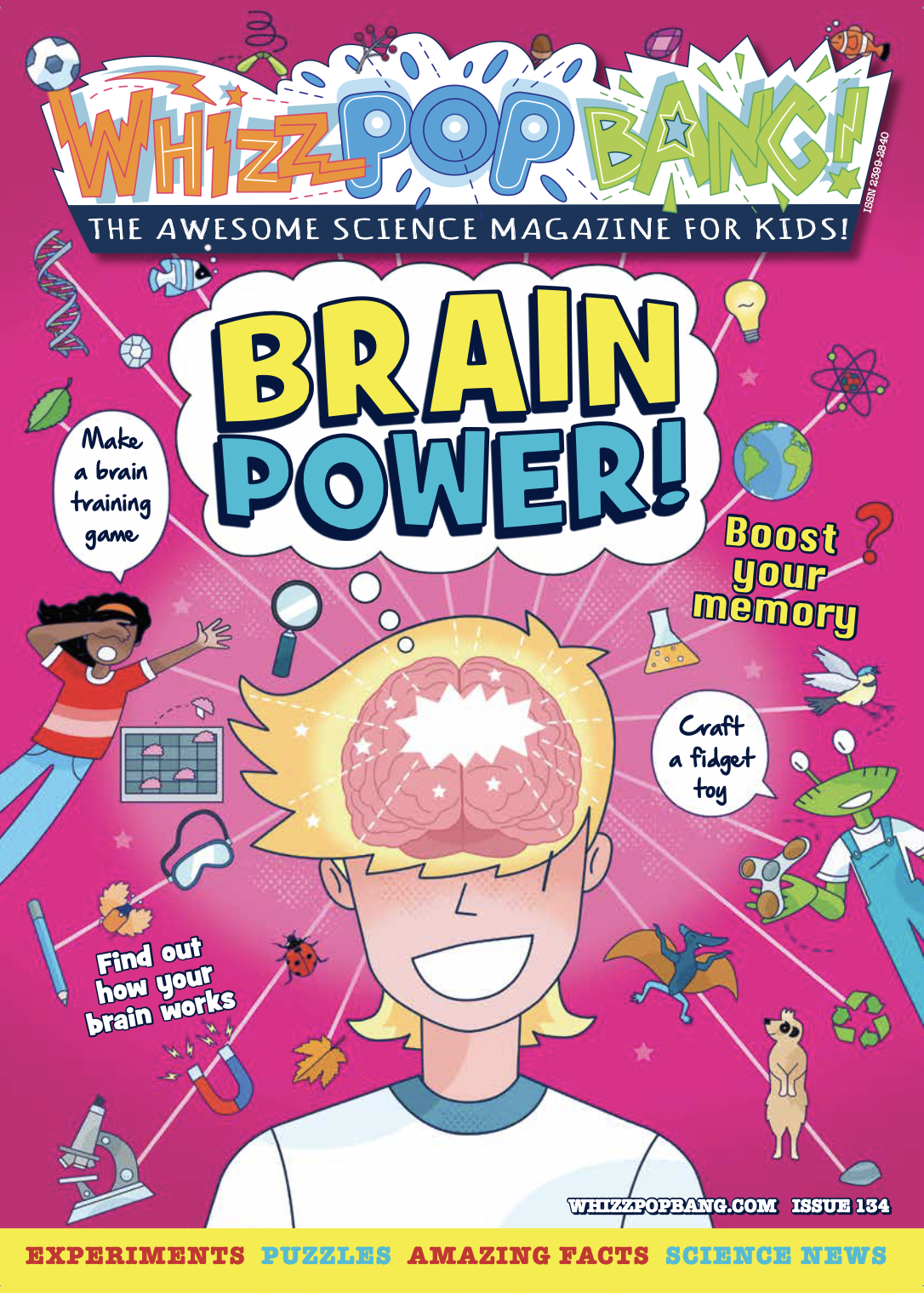
Get ready for some brain-bending science! Whizz Pop Bang Issue 134: Brain Power is packed with hands-on activities that explore how our amazing brains work, from testing memory and making a brain-training game to investigating how younger children think.
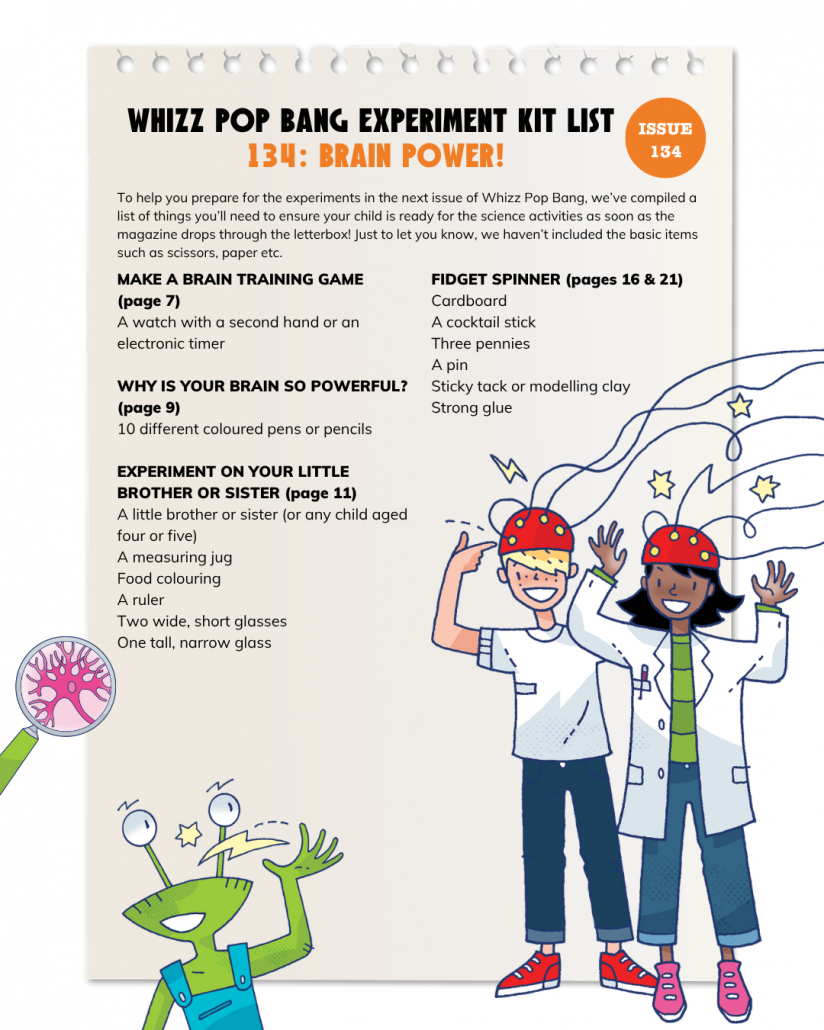
To help your child get stuck into the experiments as soon as their magazine arrives, we’ve put together this handy Brain Power experiment kit list. Gather these few simple supplies in advance and your young scientist will be ready to experiment!
We haven’t included everyday basics such as scissors and paper.
There’s much more than experiments inside Whizz Pop Bang Issue 134: Brain Power. Kids can discover how billions of neurons help them think and remember, meet super-smart parrots, try clever memory-boosting tricks, explore the science of sleep and tackle plenty of brain-bending puzzles and riddles.
Want to join in with the Brain Power fun?
Subscribe to Whizz Pop Bang and your child can enjoy a new science adventure delivered through the letterbox every month.
Learn how to make dirty coins shine with this easy chemistry experiment for kids! Using vinegar and salt, discover the science of oxidation in just a few minutes.
Have you ever wondered why old coins lose their shine?
With just vinegar, salt and a few grubby coins, your child can become a mini chemist and discover the science behind oxidation in just a few minutes.
This quick experiment is perfect for curious children and uses everyday kitchen ingredients to reveal an amazing chemical reaction.
Watch the experiment
Watch our short video below to see the gleaming coins experiment in action.
You’ll need
A glass jar
200ml white vinegar
1 teaspoon of salt
Some grubby 1p or 2p coins
Paper towels
Running water
What happens?
When copper coins are exposed to air over time, they react with oxygen to form a dull layer called copper oxide.
Mixing vinegar (a weak acid) with salt creates a solution that dissolves this oxide layer, revealing the shiny copper underneath.
It’s a brilliant way to introduce children to the idea that chemistry is happening all around us—even on the loose change in your pocket!
The science behind it
Copper naturally reacts with oxygen in the air.
This reaction forms a coating called copper oxide, which makes the coin look brown and dull.
The acetic acid in vinegar helps loosen this layer, while the salt speeds up the reaction. Once the oxide has dissolved away, the shiny copper beneath is revealed.
Although it looks like magic, it’s actually chemistry!
Questions to ask your young scientist
Can you predict which coin will become the shiniest?
Why do you think older coins look dirtier than newer ones?
What happens if you leave the cleaned coin out in the air again?
Can you think of any other metal objects that change colour over time?
Safety
This experiment should be carried out with adult supervision.
Wash hands after handling coins and avoid drinking the vinegar solution.
Keep the science going!
If your child loved this experiment, they’ll love Whizz Pop Bang magazine.
Every month is packed with exciting experiments, fascinating facts, puzzles and hands-on STEM activities designed for children aged 6–12.
On Wednesday 12th August 2026, people across the UK will witness the biggest solar eclipse visible here since 1999. Depending on where you are, the Moon will cover around 90–96% of the Sun, creating an unforgettable sight.
If you’ve left it too late to buy eclipse glasses, don’t panic! There are still plenty of brilliant (and completely safe) ways to enjoy this spectacular event.
The most important thing to remember is this:
Never look directly at the Sun without proper eye protection.
Even when most of the Sun is covered by the Moon, its remaining light is still powerful enough to cause permanent eye damage. Unlike a total eclipse, there is never a safe moment to look directly at the Sun during the UK’s partial eclipse.
Here are our favourite safe ways to enjoy eclipse day.
1. Use Certified Eclipse Glasses ⭐
If you’ve already got a pair, check they’re genuine before using them.
Safe eclipse glasses should:
Meet the ISO 12312-2:2015 international safety standard
Be free from scratches, tears or damage
Come from a reputable supplier
Remember:
❌ Regular sunglasses are not safe.
❌ 3D cinema glasses are not safe.
❌ Homemade tinted plastic or smoked glass are not safe.
If your glasses are damaged or you’re unsure whether they’re genuine, don’t risk using them.
2. Make a Simple Pinhole Projector
One of the easiest (and most fun) ways to watch the eclipse is to project an image of the Sun instead of looking at it.
You’ll need:
Two sheets of white paper or card
A pin
Simply make a tiny hole in one sheet of card, stand with your back to the Sun and let the sunlight shine through onto the second sheet.
You’ll see a tiny image of the Sun—and as the eclipse progresses, you’ll notice a little “bite” appearing in it!
It’s a fantastic science activity for children too.
3. Grab a Colander from the Kitchen
Yes, really!
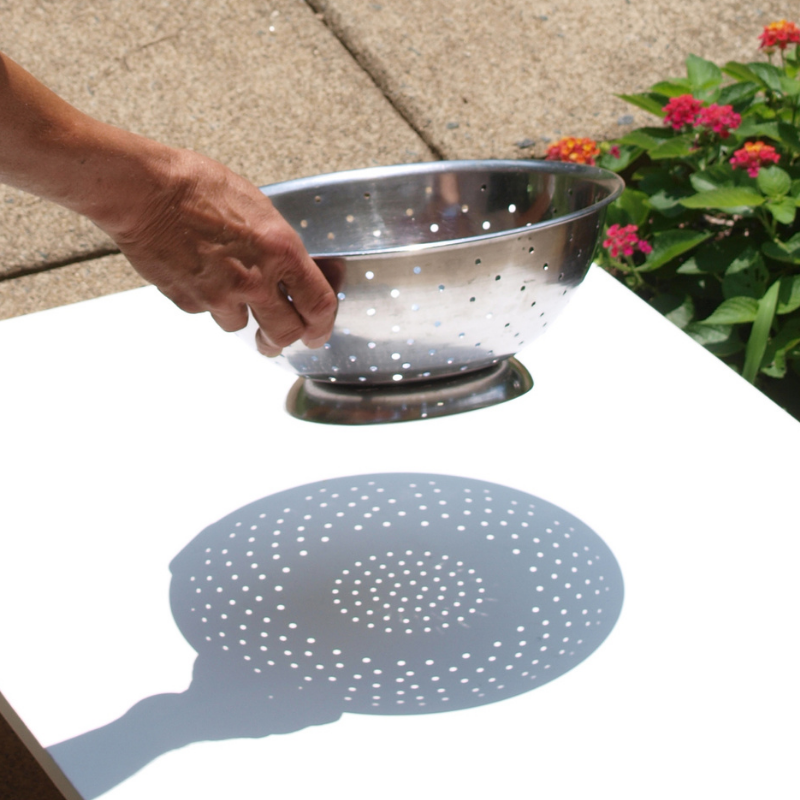
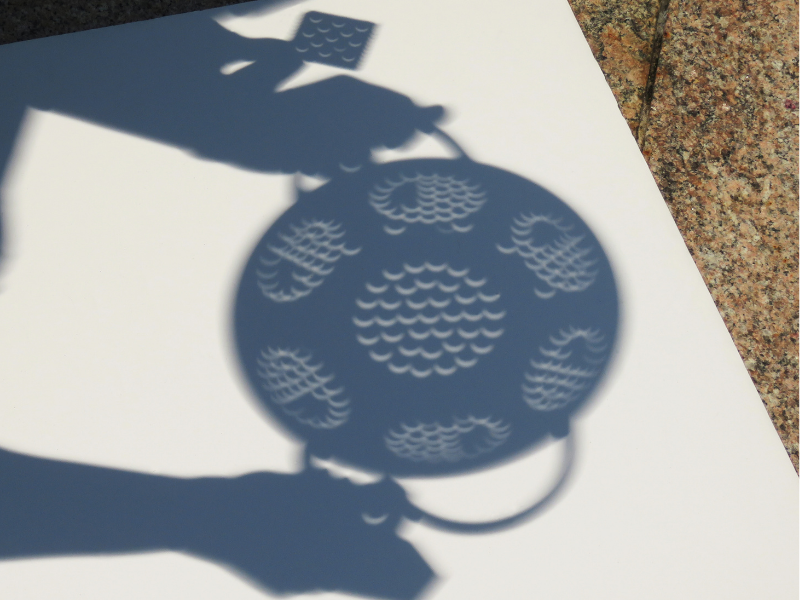
The hundreds of tiny holes in a kitchen colander act like lots of miniature pinhole projectors.
Hold the colander so sunlight shines through onto the ground or a sheet of paper and you’ll see dozens of tiny Suns projected underneath.
As the Moon moves across the Sun, every little image changes shape.
It’s one of the easiest ways to view the eclipse (and bonus – there’s no complicated crafting required!)
4. Look Beneath the Trees
Nature has already made thousands of pinhole projectors.
The tiny gaps between leaves allow sunlight through, creating hundreds of miniature images of the Sun on the ground.
During a solar eclipse those little circles transform into tiny crescents.
Take a walk beneath a leafy tree during the eclipse and have a look—you might be surprised by what you find!
5. Watch a Live Stream
Cloudy skies? No problem.
The Royal Observatory Greenwich will be broadcasting the eclipse live online using professional solar telescopes, with astronomers explaining exactly what’s happening as the Moon passes across the Sun.
It’s completely free and a brilliant option if the British weather doesn’t cooperate.
6. Visit a Local Astronomy Group
Many local astronomy clubs and observatories hold public viewing events during eclipses.
They often provide:
Special solar telescopes
Expert guidance
Safe viewing equipment
Family-friendly activities
It’s a fantastic opportunity to learn more about our nearest star while seeing the eclipse through equipment that’s specially designed for observing the Sun safely.
7. Can’t Wait? Watch a Solar Eclipse Simulation
This video is a realistic 3D simulation of a solar eclipse – no glasses, no special weather conditions and absolutely no patience required! This could be the perfect solution if the eclipse is a little too late, subtle or slow for a young child who wants to see what happens during a solar eclipse.
Things You Should Never Do
However tempting it might be, never:
❌ Look directly at the Sun without proper protection
❌ Use sunglasses instead of eclipse glasses
❌ Look through binoculars or a telescope without a certified solar filter fitted to the front of the instrument
❌ Look through a camera lens while wearing eclipse glasses
These can all cause serious, permanent eye damage.
Make It a Family Science Challenge
Why not turn eclipse day into a mini science investigation?
Try comparing:
Which method gives the clearest image?
Does a metal colander work better than a plastic one?
How does the projected image change every 10 minutes?
Can you spot crescent-shaped patches of light beneath different trees?
It’s a wonderful opportunity to combine astronomy, observation and a little scientific curiosity.
Whether you’re using eclipse glasses, a homemade projector or simply watching online, there are plenty of safe ways to experience one of nature’s most spectacular shows.
Let’s keep our fingers crossed for clear skies! 🌞🌙
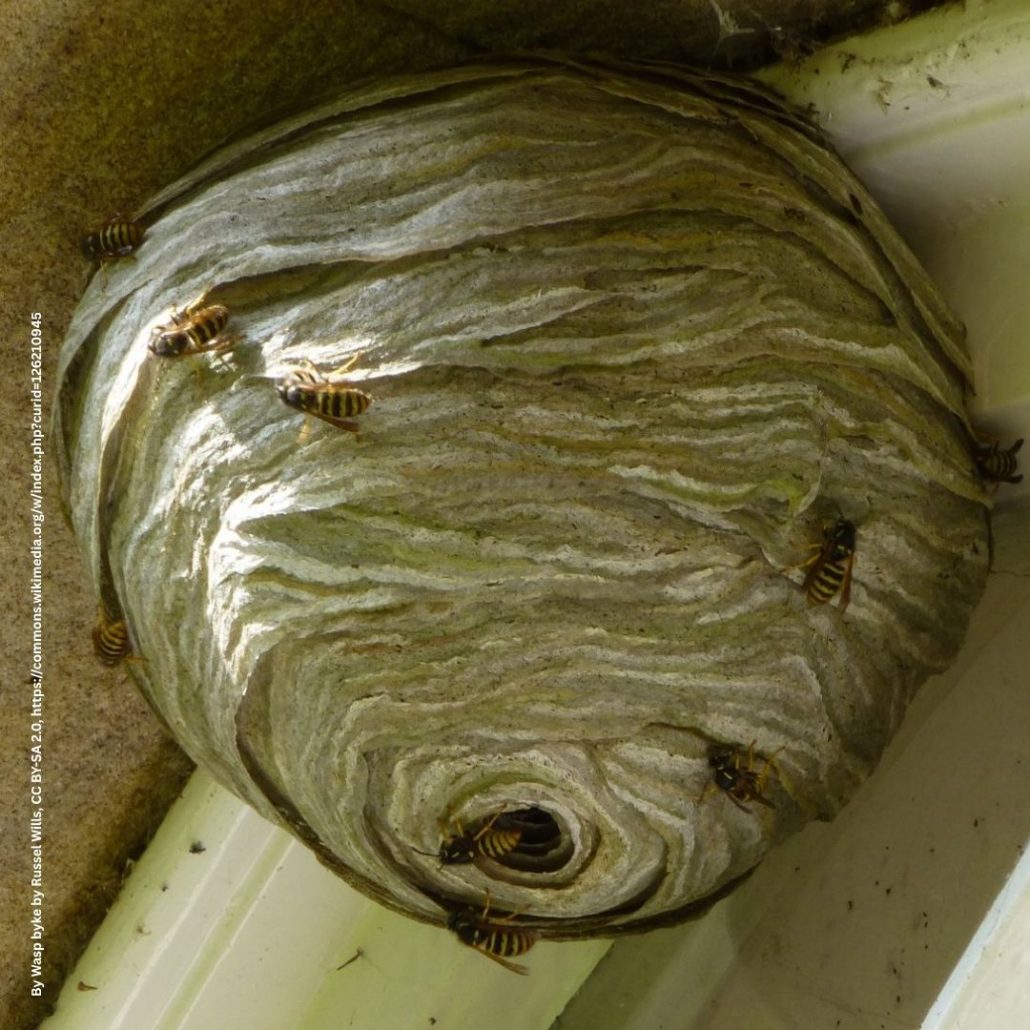
Imagine going back to work after a few weeks away, only to discover that thousands of wasps have moved into your office!
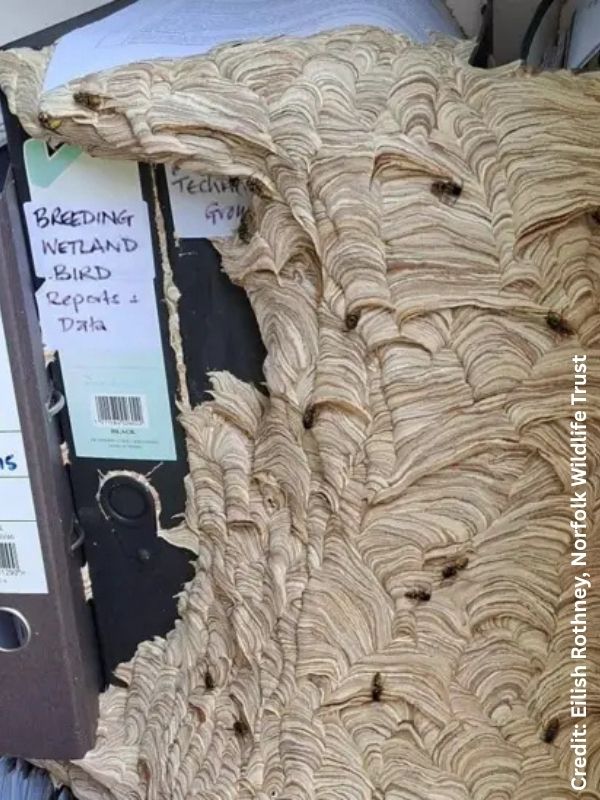
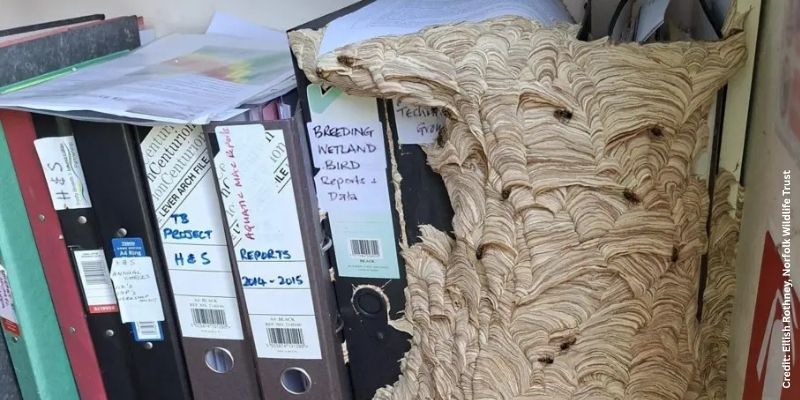
That’s exactly what happened to Eilish Rothney, a nature reserve manager at the Norfolk Wildlife Trust. While she was busy carrying out wildlife surveys, a colony of wasps quietly built an enormous nest around a bookshelf inside her office.
By the time she returned, the nest had grown to around one metre tall and wrapped itself around boxes, shelves and ring binders.
Instead of trying to destroy it, Eilish decided to let the wasps carry on with their important work.
The Norfolk Wildlife Trust protects wildlife and wild places across Norfolk while helping people discover and enjoy nature.
If you’d like to explore more incredible wildlife stories, visit the Norfolk Wildlife Trust website and discover why every creature — even wasps — has an important role to play.
Curious about nature?
Whizz Pop Bang is the award-winning magazine for curious children aged 6–12. Every month it’s packed with amazing science news, experiments, wildlife, engineering, space, puzzles and hands-on activities to inspire the next generation of scientists.
Calling all space fans! If your child dreams of exploring space, this brand-new immersive experience should be high on your family’s summer holiday list.
Credit: Smithsonian Institution & Fever
This summer, there’s an awesome new immersive experience at London’s Science Museum. Using virtual reality (VR) technology, ‘Starstruck’ takes you on a journey through the universe, exploring stars, black holes and galaxies.
Credit: Smithsonian Institution & Fever
Whizz Pop Bang went along for a sneak preview before the exhibition opened and we can confirm that it really is out of this world!
We also got to meet awesome ESA astronaut Meganne Christian and discuss black holes with Cambridge University’s astronomy professor and black hole expert Sera Markoff!
Planning a trip to London this summer? If your family loves space, science and immersive experiences, Starstruck looks like a fantastic way to explore the universe together.
Book your tickets and prepare for an unforgettable journey among the stars.
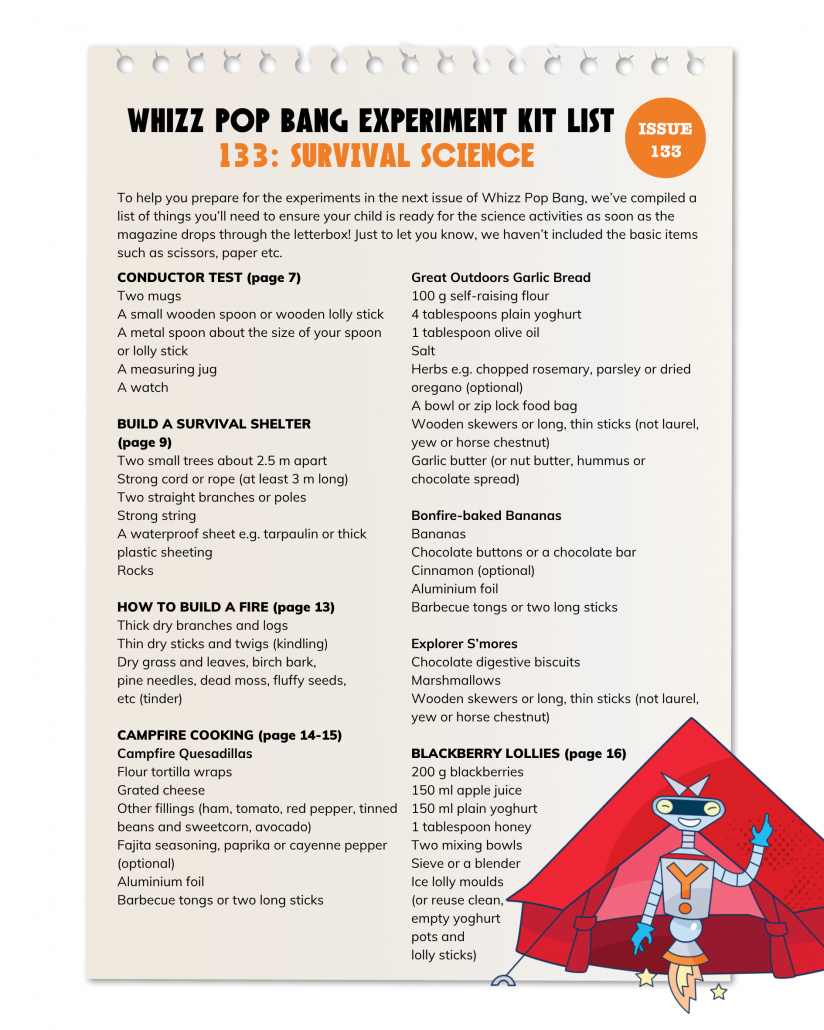
What does it take to become a real outdoor explorer? That’s exactly what your child is about to discover… because the latest Whizz Pop Bang is packed with survival science, hands-on experiments and wild adventures.
This month, scientists-in-training can: 🏕️ Build a survival shelter 🔥 Learn how to build a campfire safely 🧪 Test which materials conduct heat best 🍌 Make bonfire-baked chocolate bananas 🫓 Cook campfire quesadillas And so much more!
Here’s a kit list to help you get ready for Whizz Pop Bang 133. As ever, there’s so much science fun to be had, even if you don’t have every single thing on the list. There’s one you can print out below, too!
Looking for ways to keep curious kids busy this summer? We’re giving away two fantastic Summer Holiday Bundles, packed with science, activities, experiments and screen-free fun!
We’ve teamed up with our sister magazine, Hoopla, to give two lucky families the chance to win a bundle.
Two action-packed Whizz Pop Bang science magazines
A copy of Hoopla magazine, packed with activities for younger children
A Science Cut & Create Activity Book
There are experiments to try, things to make, puzzles to solve and fascinating facts to discover – perfect for keeping curious minds busy at home, on holiday or while travelling.
The giveaway closes at midnight on Thursday 23rd July 2026, and the winners will be announced on Friday 24th July. Find full terms and conditions here.
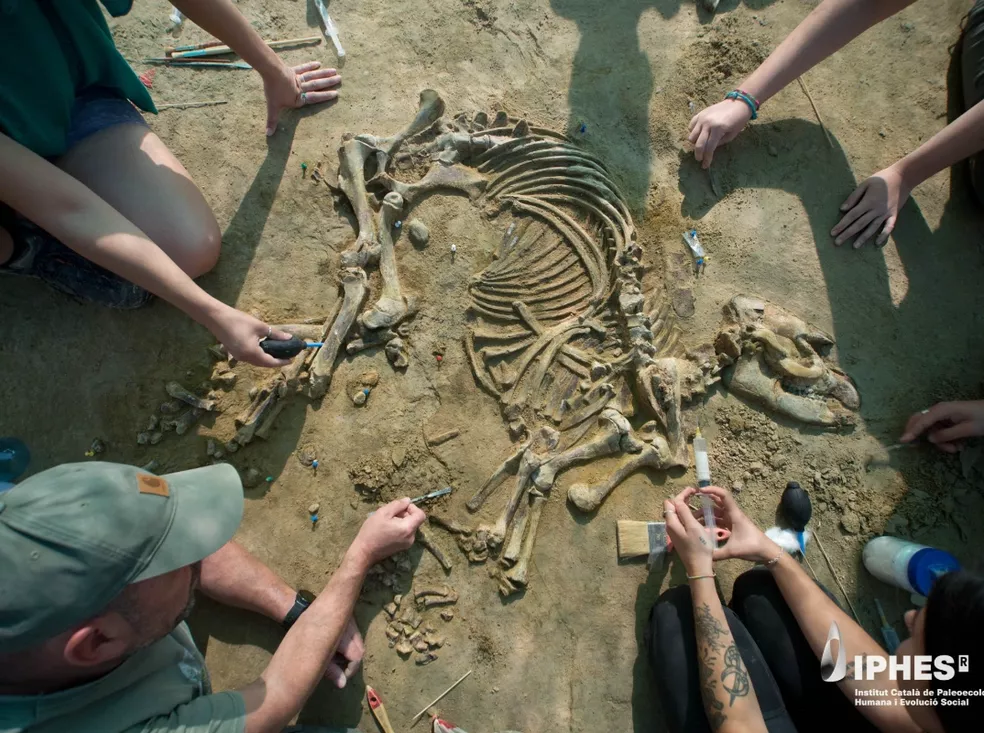
The prehistoric baby was only about one year old when it died. Its fossilised skeleton is the most complete juvenile tapir skeleton ever discovered in Europe.
The amazing find could help scientists discover how prehistoric tapirs grew, developed and lived millions of years ago – as well as revealing more about what Europe was like at this point in history.
Where was the prehistoric tapir discovered?
The fossil was discovered at Camp dels Ninots near Girona in northeastern Spain.
This area is packed with fossils from the pliocene epoch and seven tapir skeletons have been found there so far. Scientists can tell that around four million years ago, this area looked very different to today. A warm, humid forest grew around an ancient volcanic lake, and large prehistoric tapirs lived near the water alongside many other plants and animals.
Over millions of years, special conditions at the bottom of the lake helped preserve the remains of animals that died there. “Camp dels Ninots functions as a genuine time capsule,” explains Dr. Oriol Oms, from the Universitat Autònoma de Barcelona. “The geological and chemical conditions of the volcanic paleolake have allowed entire skeletons to be preserved with a level of detail that is highly unusual in paleontology,”
What did scientists discover?
Researchers uncovered the skeleton of a young tapir that was around one year old when it died. Finding such a young animal is extremely unusual.
Even more excitingly, much of its skeleton was still arranged in the same positions as when the animal died.
At many fossil sites, scientists find individual bones that have been scattered, damaged or moved by scavengers. At Camp dels Ninots, researchers have discovered several whole or nearly complete tapir skeletons.
Why is this baby tapir fossil so important?
The newly discovered skeleton is the most complete juvenile tapir ever found in Europe.
Scientists have now discovered the remains of seven tapirs at Camp dels Ninots, including animals of different ages and sexes.
This gives researchers an unusual opportunity.
By comparing the skeletons of young and adult tapirs, scientists can investigate how these extinct animals changed as they grew.
They hope to answer questions such as:
How quickly did prehistoric tapirs grow?
How did their skeletons change as they became adults?
Were young tapirs shaped differently from their parents?
What can their bones tell us about how they lived?
Finding fossils from different stages of an animal’s life could help scientists reconstruct the life cycle of this extinct species.
What did prehistoric tapirs look like?
The tapirs discovered at Camp dels Ninots belonged to an extinct species called Tapirus arvernensis.
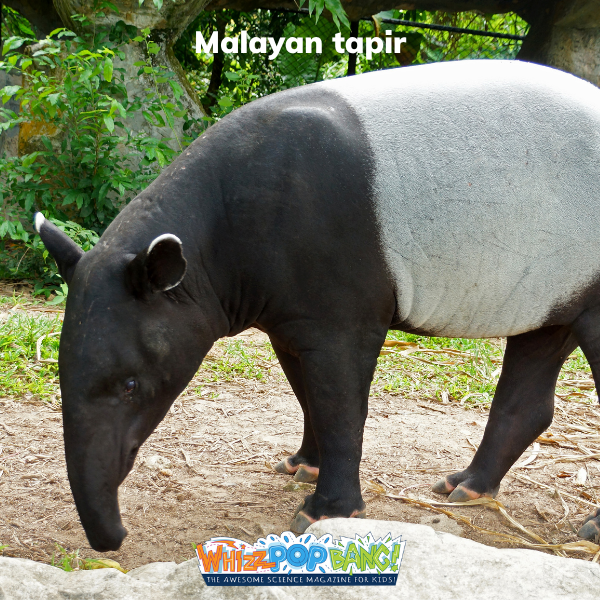
They were large, strong herbivores with bodies similar to tapirs alive today.
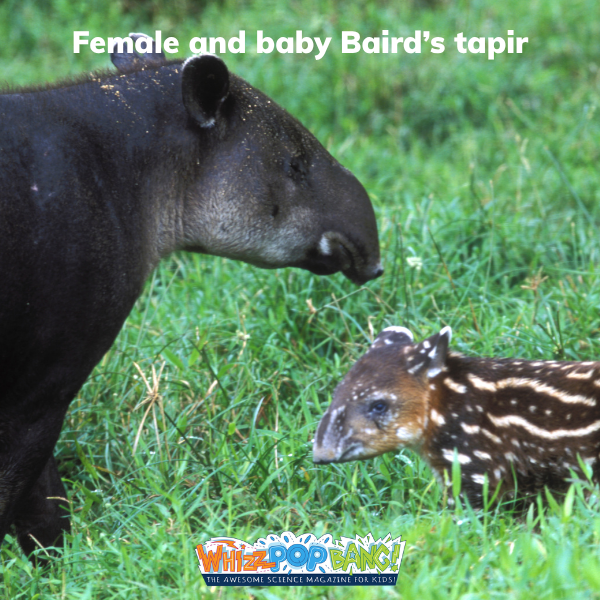
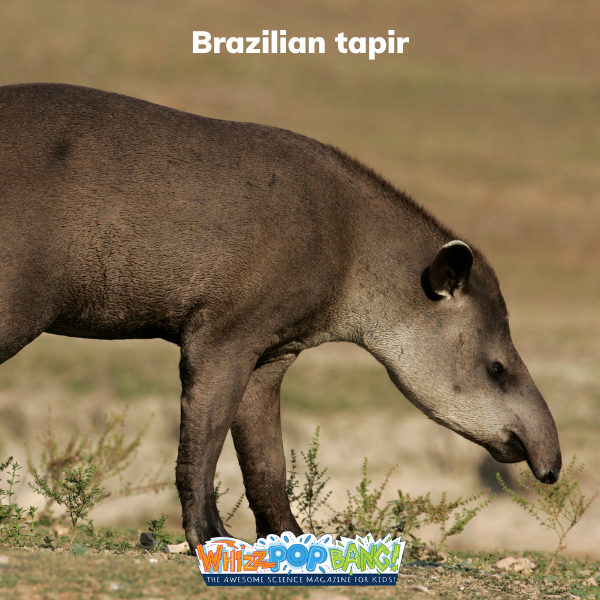
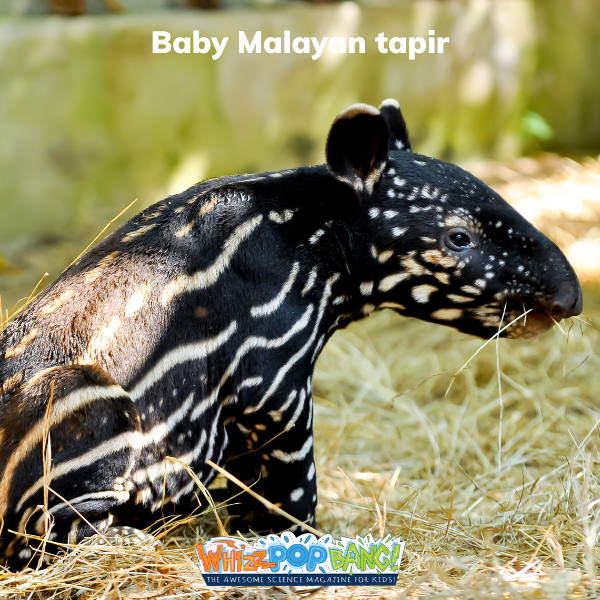
Modern tapirs have rounded bodies, short legs and wonderfully flexible noses. Their closest living relatives include horses and rhinoceroses.
Scientists think the prehistoric tapirs living in Spain may have been closely related to modern Asian tapirs.
Why was the skeleton so well preserved?
Camp dels Ninots lies inside an ancient volcanic crater that once contained a lake.
Over time, layers of sediment collected at the bottom of the lake.
The geological and chemical conditions helped preserve animal skeletons in extraordinary detail.
Scientists have even suggested that some animals may have died suddenly near the lake, possibly because of gases linked to volcanic activity.
Instead of being eaten by scavengers or having their bones scattered, some of the animals sank into the lake sediments and remained there for millions of years.
How do scientists remove a four-million-year-old fossil?
Very carefully!
Researchers first uncover and document every bone.
They use high-precision recording and 3D scanning technology to record exactly where each part of the skeleton was found.
Experts also work to protect and strengthen the fragile fossils before moving them.
The young tapir skeleton will then be transported to the laboratory, where scientists can continue studying it.
Are there still tapirs alive today?
Yes! There are four living species of tapir. They are found in Central and South America and Southeast Asia.
Tapirs play an important role in forests because they eat fruit and spread seeds in their poo as they travel.
Sadly, all four living tapir species are threatened with extinction.
Discoveries like the Camp dels Ninots fossils help scientists understand the long history of these extraordinary animals and how they have changed over millions of years.
Amazing tapir facts for kids
🦴 Tapirs have lived on Earth for millions of years.
🐴 Their closest living relatives are horses and rhinoceroses.
👃 A tapir’s nose and upper lip form a short, flexible trunk.
🌱 Tapirs are herbivores and eat leaves, fruit and other plants.
🌳 By spreading seeds in their poo, tapirs can help forests grow.
🔎 Scientists have now discovered seven prehistoric tapirs at Camp dels Ninots.
What can this fossil teach us?
A single fossil can tell scientists something about an animal.
But finding several animals of the same species at different ages is much more unusual.
The extraordinary collection of prehistoric tapirs at Camp dels Ninots could allow scientists to piece together the story of how these animals were born, grew up and changed throughout their lives.
Four million years after this young tapir lived beside a volcanic lake, its skeleton is giving scientists a remarkable glimpse into Europe’s prehistoric past.
Inspire your young scientist with Whizz Pop Bang!
Whizz Pop Bang is the award-winning science magazine for curious kids aged 6–12.
Every month, young scientists can discover incredible science stories, try hands-on experiments, meet real scientists and explore the amazing world around them.
Packed with facts, activities, puzzles and competitions, Whizz Pop Bang makes science exciting, accessible and fun.
Subscribe to Whizz Pop Bang and give your child a new science adventure every month!
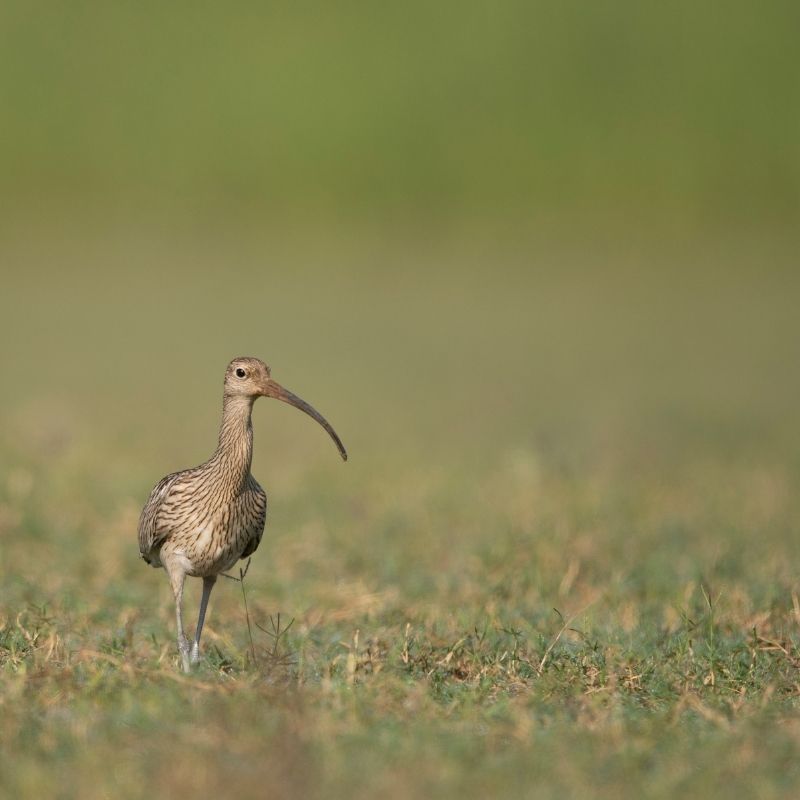
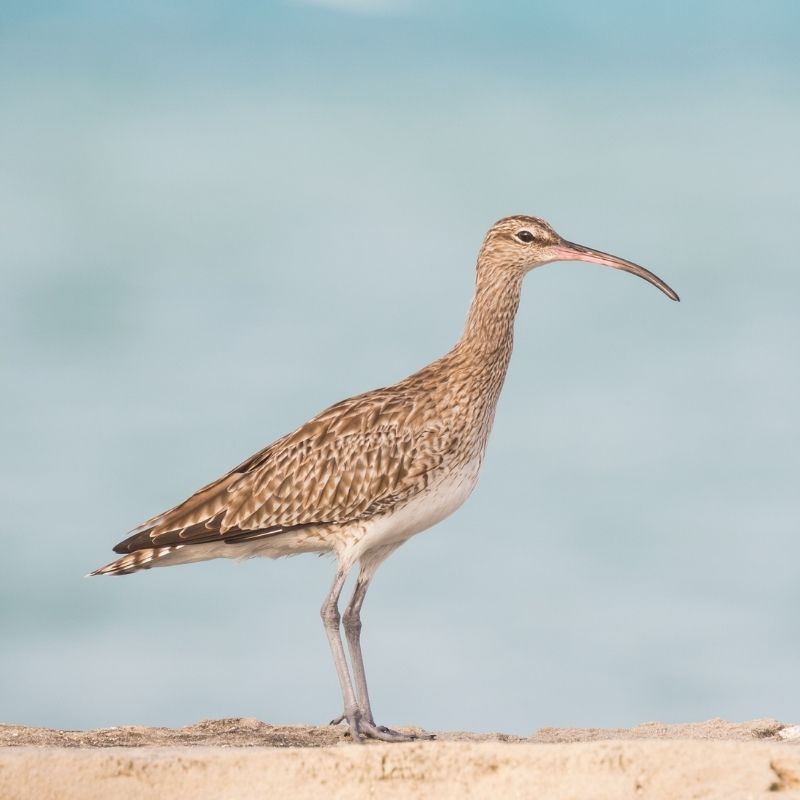
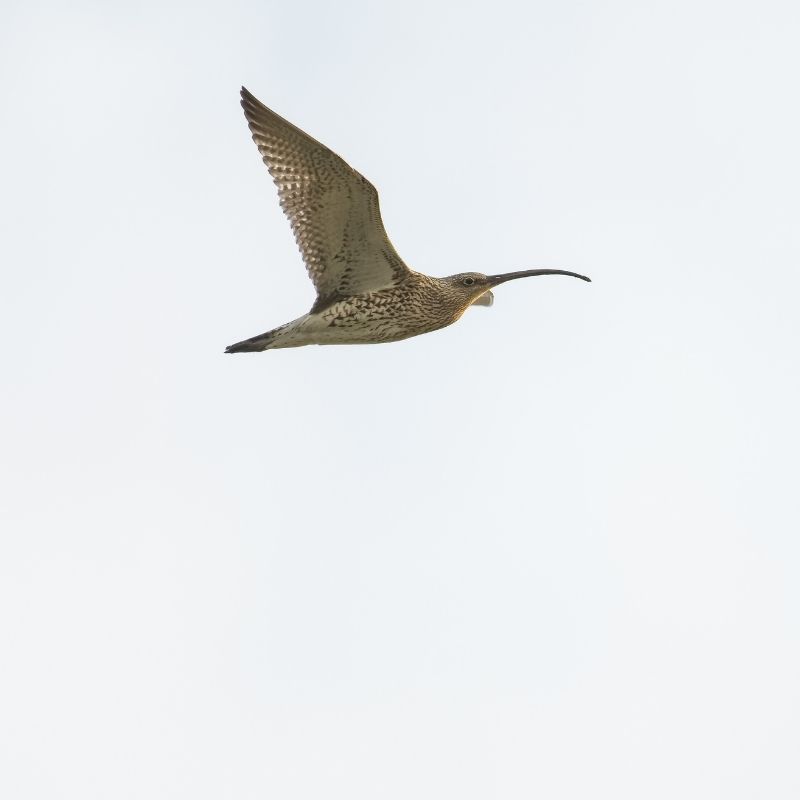
The Eurasian curlew is one of the UK’s most rapidly declining breeding birds. Numbers have fallen by more than 65% since the 1970s, placing it on the Red List of birds of conservation concern. The species requires an estimated 10,000 additional chicks to fledge each year simply to stabilise the UK population.
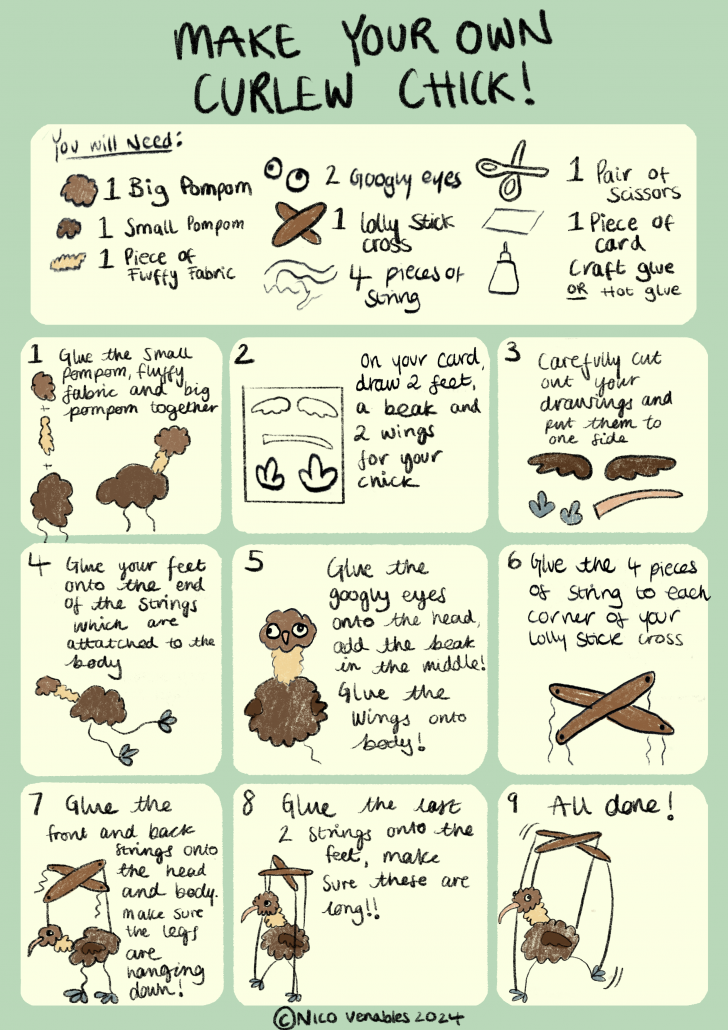
1 big pompom 1 small pompom 1 piece of fluffy fabric 2 googly eyes 2 lolly sticks glued together in a cross shape String 1 pair of scissors 1 piece of card Craft glue or hot glue
What to do:
Glue the small pompom (head), fluffy fabric (neck) and big pompom (body) together.
On your card, draw 2 feet, a beak and 2 wings for your chick.
Carefully cut out your drawings.
Glue your feet onto some pieces of string and tie them round the body.
Glue the google eyes and beak onto the head. Glue the wings onto the body.
Cut four pieces of string measuring about 30 cm each. You will need to trim these to the right lengths as you attach them to your puppet in steps 7 and 8. Glue a piece of string onto each end of the lolly stick cross.
Glue one string to the top of the head and the opposite string to the back of the body.
Glue one of the other strings to one foot, and the final string to the other foot.
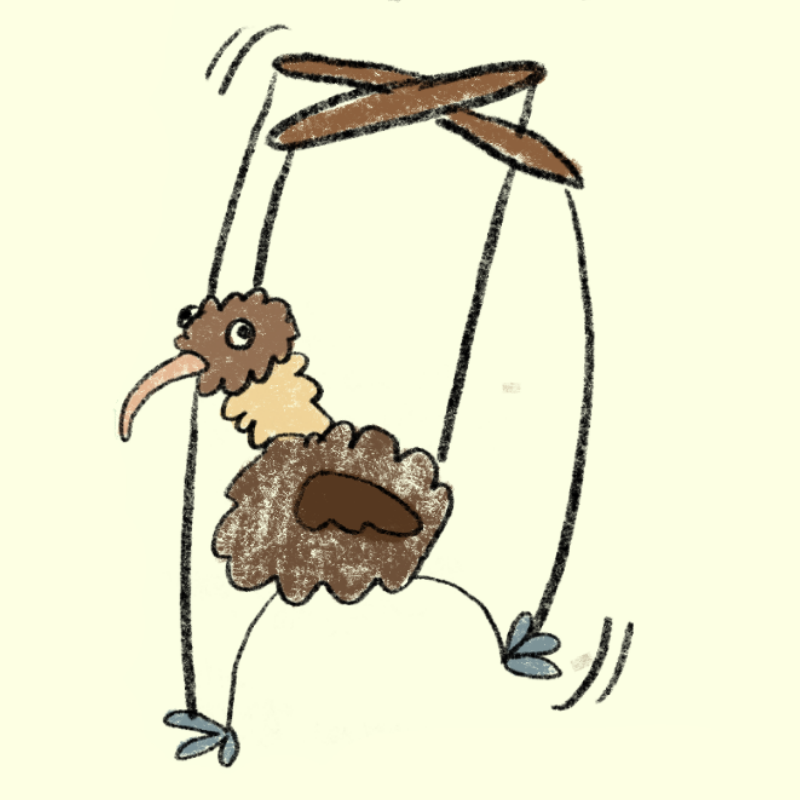
All done! Your curlew chick puppet is ready to creep, stalk and dance!
Help protect real curlews
Curlews are disappearing from the UK countryside, but families and children can help. Find out why these amazing birds are in danger, meet the giant curlews taking on the Yorkshire Three Peaks and discover simple ways to help protect them.
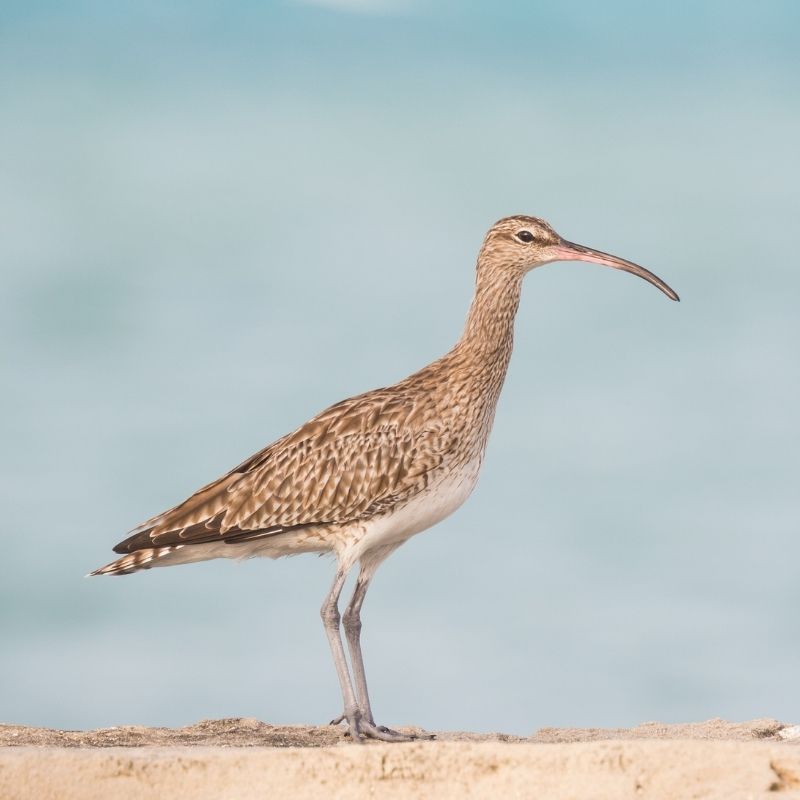
The haunting, bubbling call of the Eurasian curlew has been heard across the British countryside for thousands of years. But these extraordinary birds are disappearing.
UK breeding curlew numbers have fallen by more than 65% since the 1970s, making the curlew one of Britain’s fastest-declining breeding birds.
Scientists estimate that around 10,000 more curlew chicks need to survive and learn to fly every year just to stop the population from continuing to fall.
Why are curlews in danger?
Curlews nest on the ground, often in farmland, moorland and grassland.
Their eggs and chicks are vulnerable to predators and disturbance, while changes to farming and the loss of suitable habitats have made it harder for enough young curlews to survive.
Giant curlews take on the Yorkshire Three Peaks!
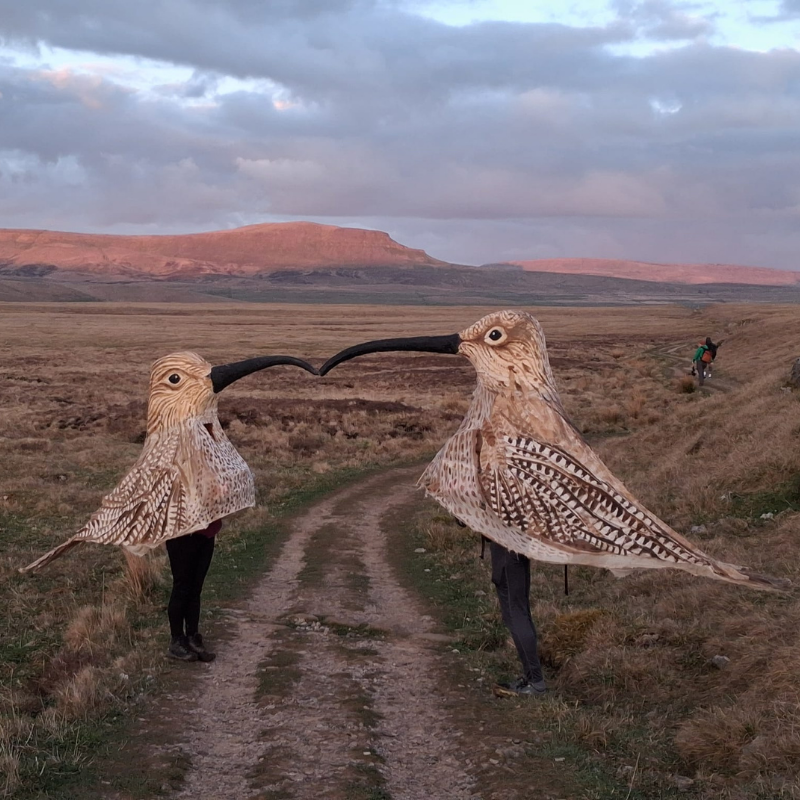
In April 2026, a team of walkers did something rather unusual to draw attention to the plight of the curlew.
They tackled the gruelling 24-mile Yorkshire Three Peaks challenge dressed as enormous curlews!
Leading the way were Cathy the Curlew, a 10-foot-long handmade bird costume, and her companion Heathcliff.
The team set out to raise £10,000 – one pound for each of the additional 10,000 chicks that need to fledge every year to help stabilise the UK’s curlew population.
Two days after the walk, the giant curlews travelled to the Houses of Parliament for a special World Curlew Day event, helping to bring the campaign to the attention of politicians.
The campaign raised awareness and funds for Curlew Action and the Yorkshire Dales Millennium Trust, which work to protect curlews, their habitats and the landscapes they depend on.
How can children and families help curlews?
You don’t need to climb three mountains dressed as a giant bird to help!
You can:
Keep dogs on leads near ground-nesting birds during the breeding season.
Give nesting birds plenty of space and never disturb eggs or chicks.
Learn to recognise the curlew’s distinctive call and record your sightings.
Tell friends and family why curlews need our help.
Support organisations working to protect curlews and their habitats.
Make your own curlew puppet and use it to help spread the word!
Every person who learns about curlews and helps others understand why they are in danger can help give these extraordinary birds a louder voice.