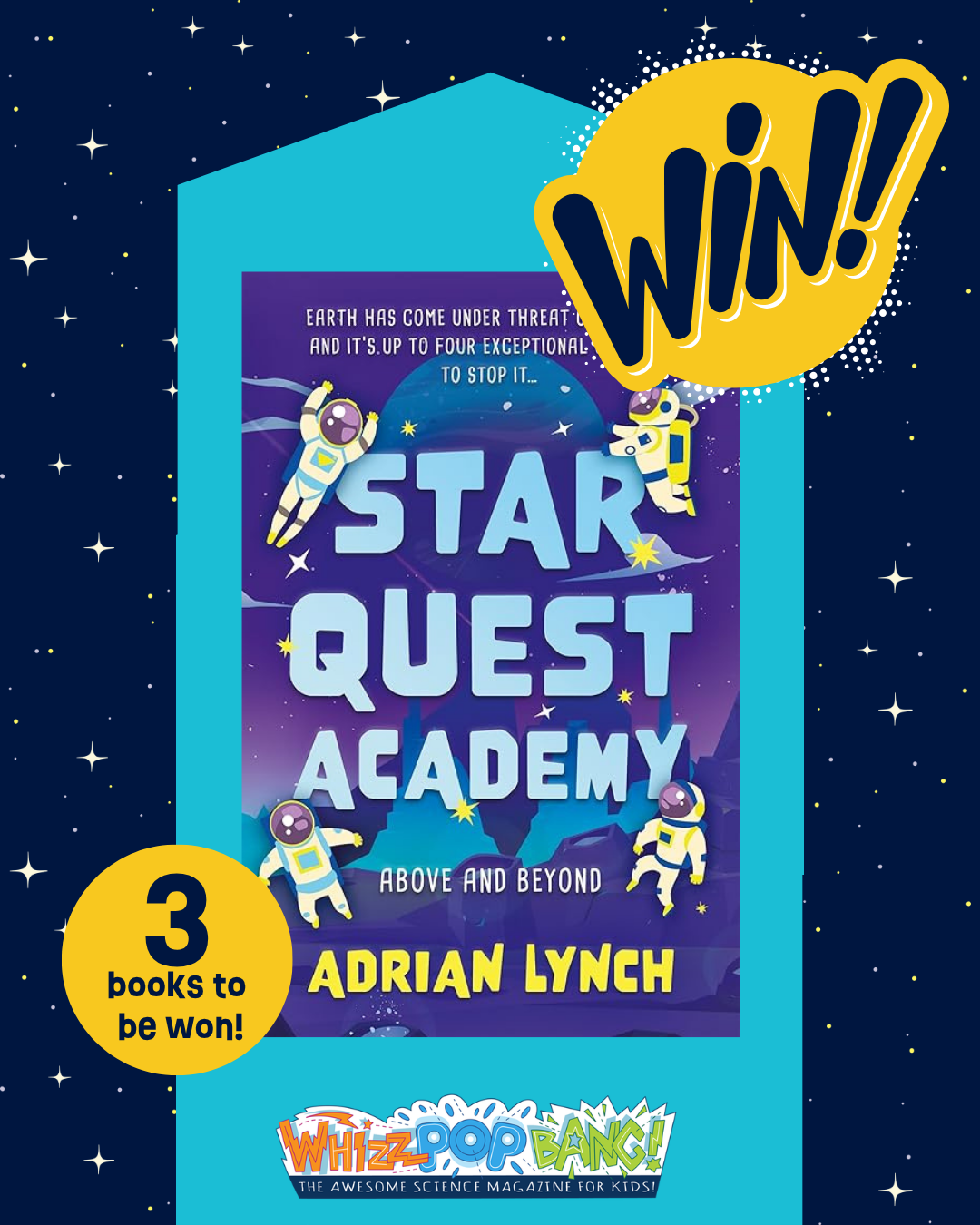
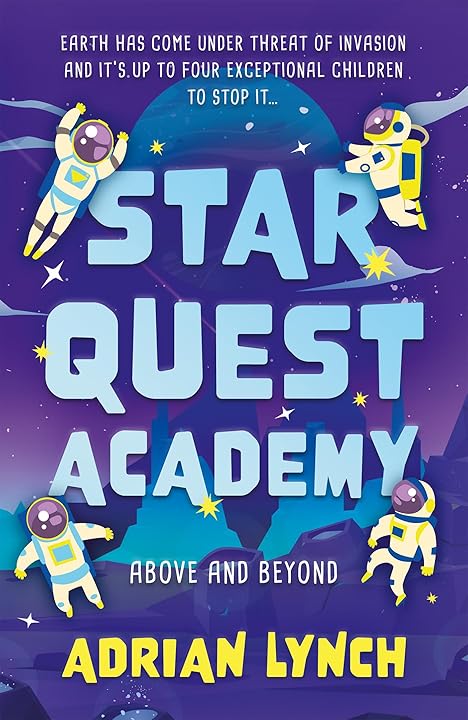
Perfect for curious readers who love space, science fiction and fast-paced stories, this is a book they won’t want to put down!
🚀 About the book
Step into a universe of adventure at Star Quest Academy, where young recruits are trained to explore the stars and take on daring missions beyond Earth.
The Easter holidays are a wonderful time for family adventures, but they can also bring the familiar challenge of two whole weeks to fill with activities.
Parents often find themselves searching for Easter holiday activities for kids that are fun, educational and easy to set up. And when the weather turns rainy (as it often does in the UK!), screen-free activities become even more valuable.
If you’re looking for creative, science-inspired ways to keep children entertained this Easter, we’ve put together some brilliant ideas.
Why Screen-Free Activities Matter During the Holidays
School holidays often lead to a big increase in screen time. While digital entertainment can be useful in small doses, many families prefer to balance this with activities that encourage:
creativity
curiosity
problem-solving
family interaction
Hands-on activities, like experiments, crafts and puzzles, help children learn while they play. They also create moments families can enjoy together.
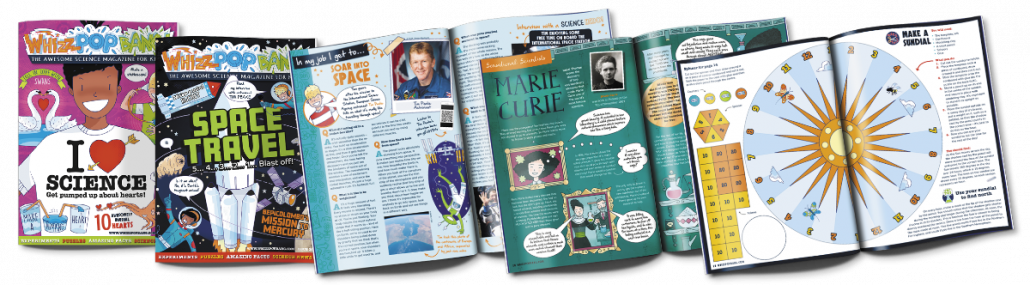
If you’re looking for an Easter gift idea that lasts longer than chocolate, the Whizz Pop Bang Family Activity Bundle is designed to keep children entertained throughout the holidays.
This special bundle includes four fantastic books and magazines packed with science, creativity and laughter.
Discover Whizz Pop Bang’s new family activity bundle
Inside you’ll find:
Whizz Pop Bang: Amazing Grazing
A fascinating science magazine exploring the surprising world of grasses. Children can investigate plant science, try hands-on experiments and discover amazing facts about nature.
Perfect for curious readers aged 6 to 12.
Hoopla: Deep Blue Sea
Our sister magazine Hoopla is designed for younger explorers aged 4 to 9.
In this ocean-themed issue, children can enjoy pirate games, creative crafts and fun ocean activities.
The Whizz Pop Bang Science Joke Book
With 200+ science jokes, this book is perfect for car journeys, rainy afternoons and family giggles around the table.
The Whizz Pop Bang Snip-Out Science Book
A hands-on activity book with 30 creative projects to cut, stick and build, from flying machines to moving skeletons.
Why Families Love the Family Activity Bundle
Many families have children of different ages, which can make it tricky to find activities everyone enjoys. This bundle is designed with that in mind. It includes:
✔ Something for older children ✔ Something for younger siblings ✔ Science-based and creative activities to do together ✔ Jokes and puzzles the whole family can enjoy
It’s a wonderful way to bring science, creativity and laughter into the Easter holidays.
A Perfect Alternative to Chocolate Easter Gifts
Chocolate eggs are a classic Easter tradition – but they tend to disappear quickly! Many parents and grandparents are now looking for Easter gifts that inspire creativity and curiosity.
Give the gift of curiosity
A magazine or activity book can provide hours of discovery, making this bundle a thoughtful and lasting Easter surprise.
Easy Easter Holiday Activities to Try at Home
If you’re planning some simple Easter holiday activities, here are a few ideas to try with children:
Plant some seeds and watch them grow – it’s one of the easiest ways to see science in action in your own home or garden. Discover how to grow a grass pet here!
What are some screen-free Easter holiday activities for kids?
Hands-on activities such as science experiments, crafts, puzzles and creative projects are great screen-free options. Magazines and activity books can also provide structured activities children can enjoy independently or with family.
What is a good Easter gift for children besides chocolate?
Many families choose educational gifts like science magazines, activity books or craft kits. These gifts encourage curiosity and creativity while providing entertainment throughout the holidays.
What age is Whizz Pop Bang magazine for?
Whizz Pop Bang is designed for children aged 6–12 and is packed with experiments, puzzles and science stories.
What age is Hoopla magazine for?
Hoopla magazine is aimed at younger children aged 4–9 and focuses on creativity, crafts, nature and mindful activities.
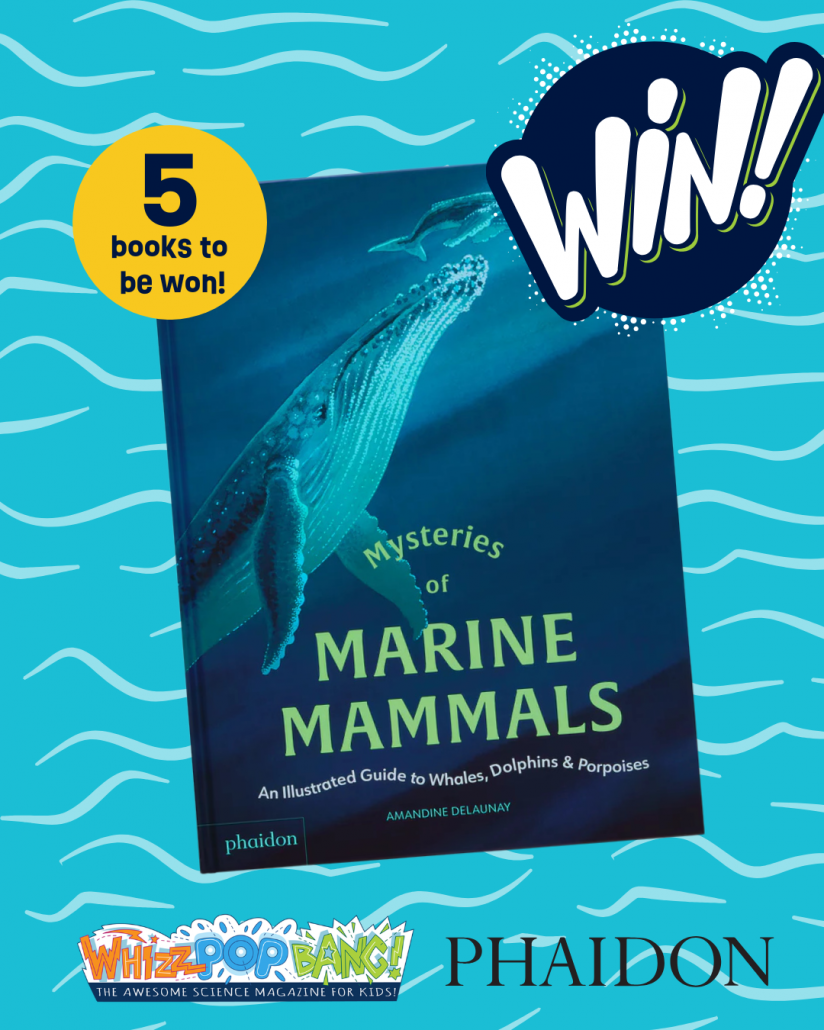
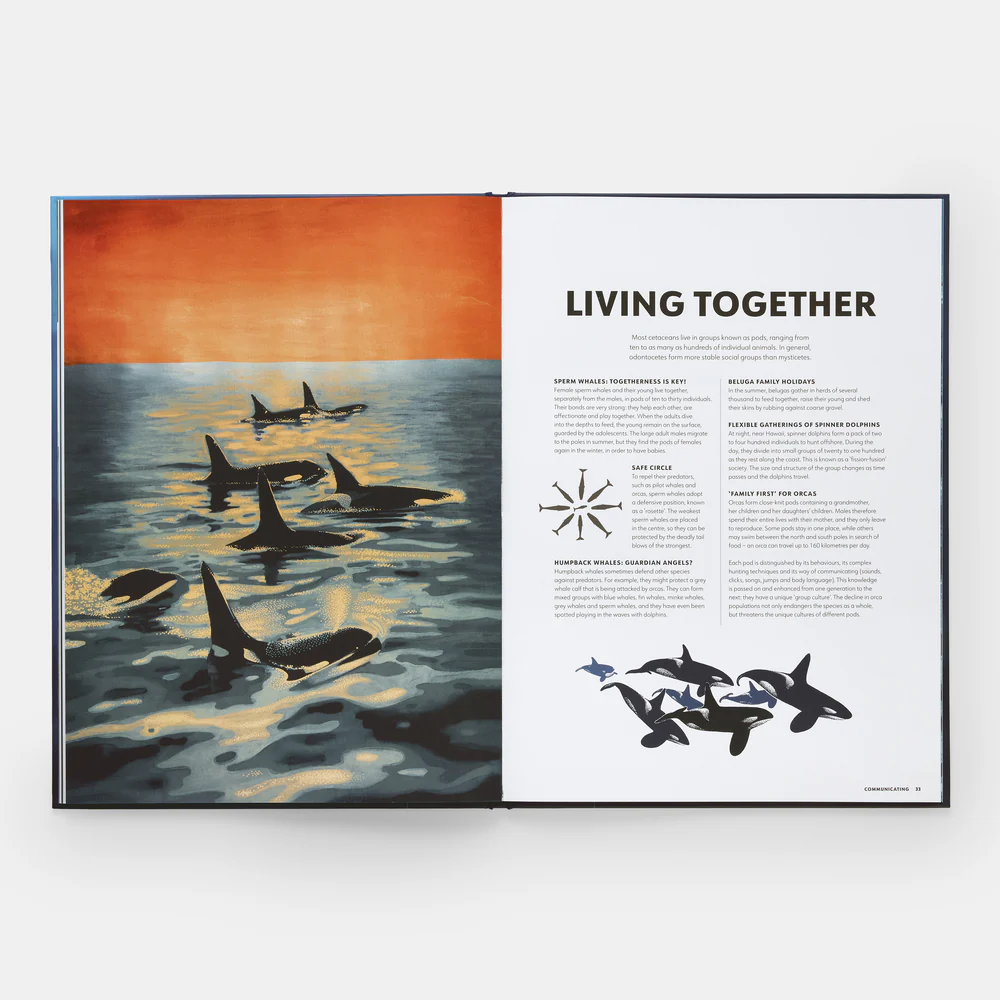
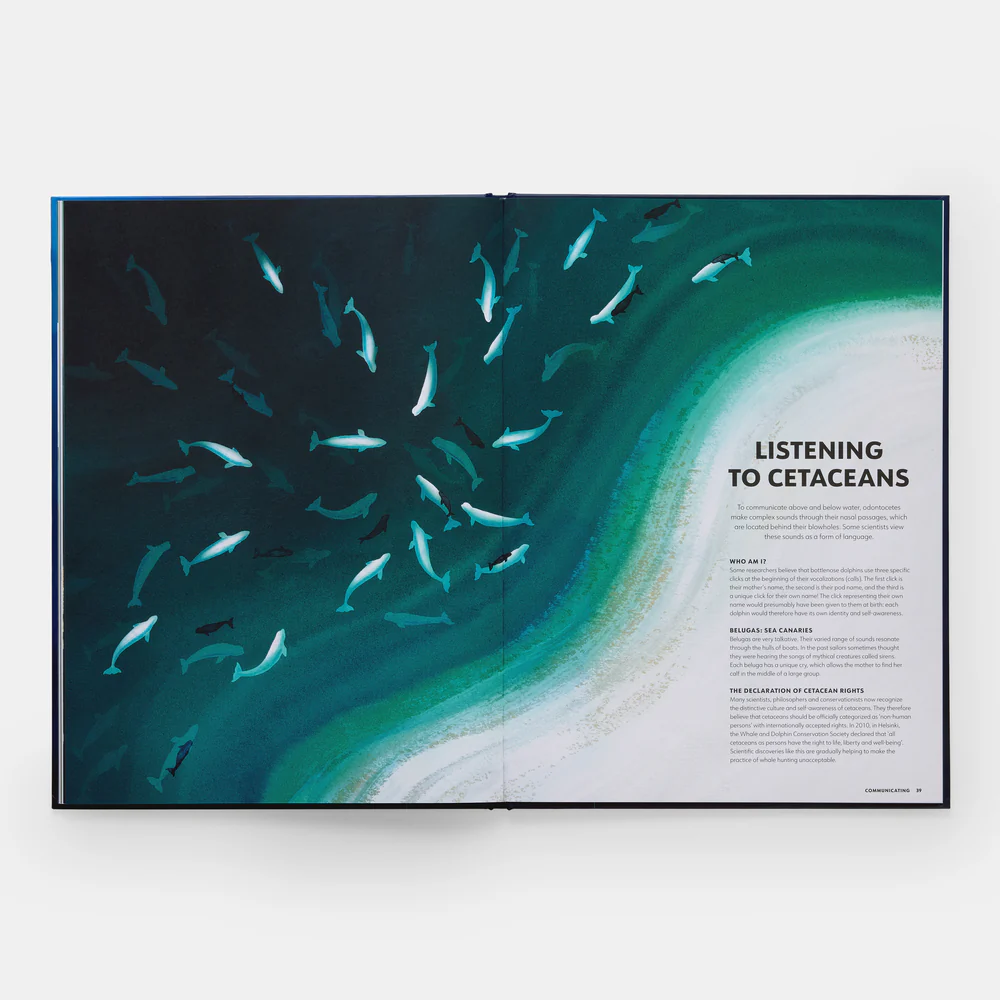
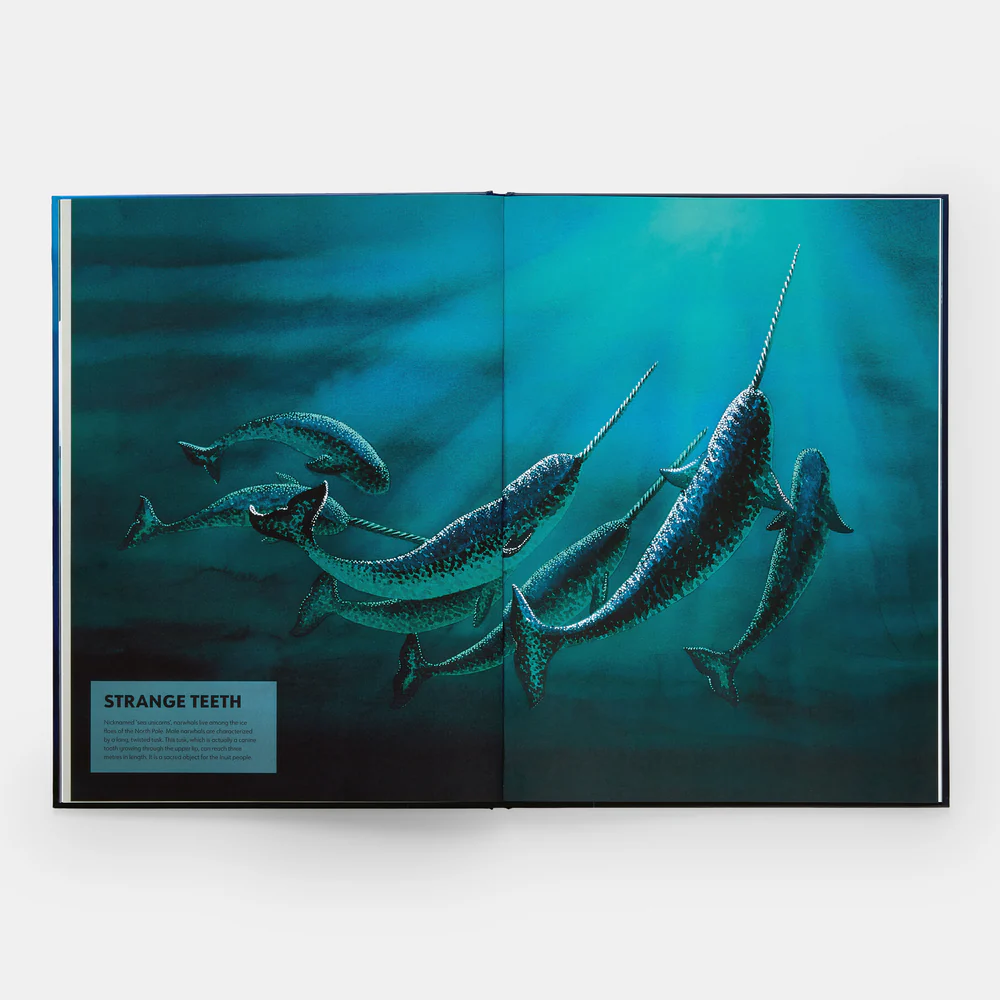
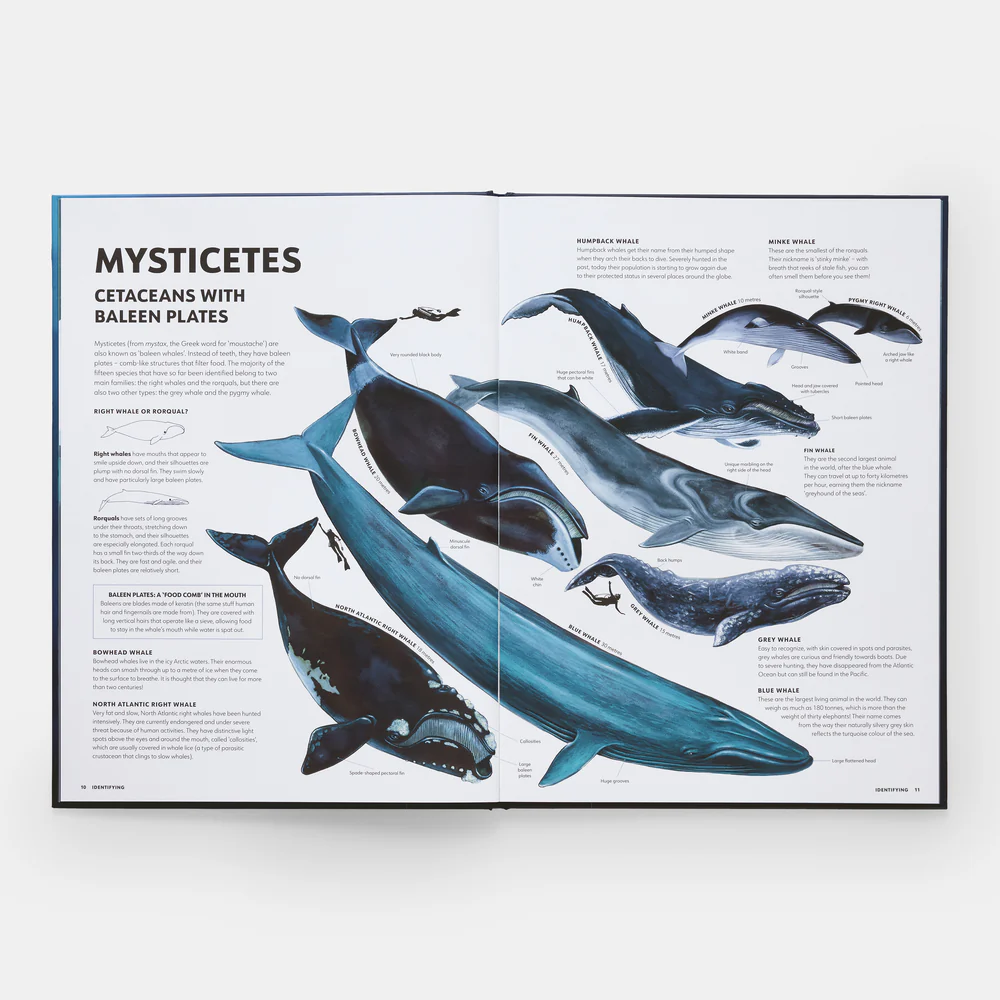
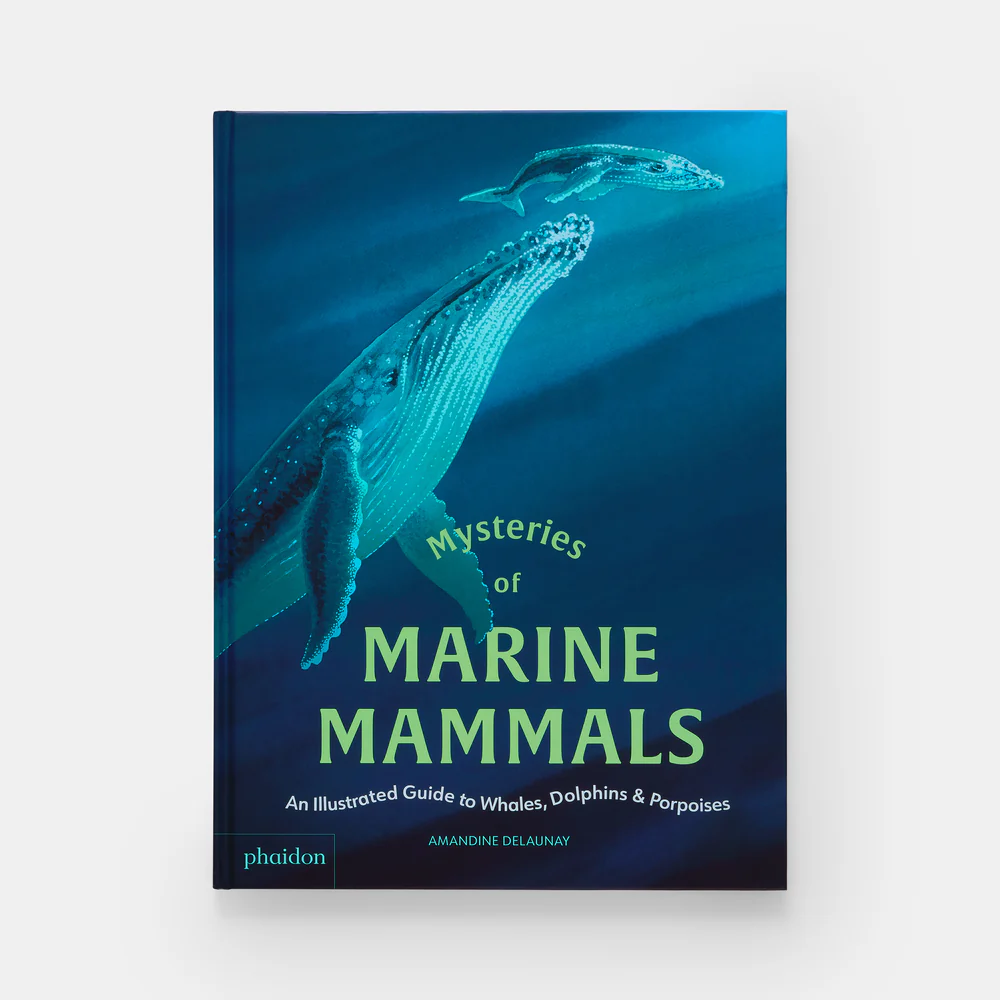
Love whales, dolphins and life beneath the waves? Then you’re in for a treat because this month’s edition of Whizz Pop Bang, Undersea Explorers, is all about the ocean. But that’s not all… we’re also giving our fans the chance to win one of five copies of Mysteries of Marine Mammals by Amandine Delauney – a beautifully illustrated guide to whales, dolphins and porpoises.
What is Mysteries of Marine Mammals about?
Written and illustrated by Amandine Delaunay, Mysteries of Marine Mammals is a stunningly illustrated exploration of the ocean’s most fascinating mammals.
Inside, young readers will discover:
🐋 How whales communicate across vast ocean distances
🐬 The differences between dolphins and porpoises
🌊 How marine mammals survive in icy waters
🧠 The surprising intelligence of ocean giants
🫁 Why mammals breathe air – even underwater ones
It’s a brilliant example of a science book for children that combines real biology with engaging artwork and accessible explanations.
Who is this book suitable for? This book is ideal for children aged around 7 to 11 who enjoy ocean life, animals and science.
Do I need to be a Whizz Pop Bang subscriber to enter? No – this competition is open to all readers.
When does the competition run? The giveaway runs from 1 March to 31 March 2026.
Good luck, Undersea Explorers!
We love sharing science books for kids that inspire curiosity about the natural world. Whether you’re fascinated by breaching whales or deep-diving dolphins, this giveaway is your chance to explore the ocean’s most remarkable mammals.
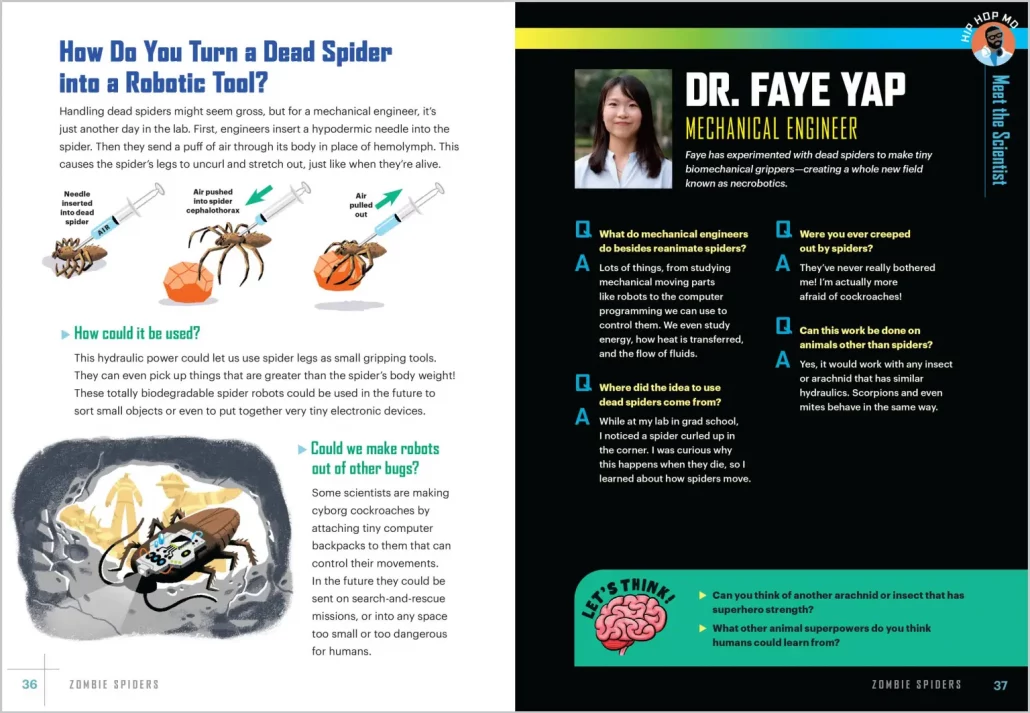
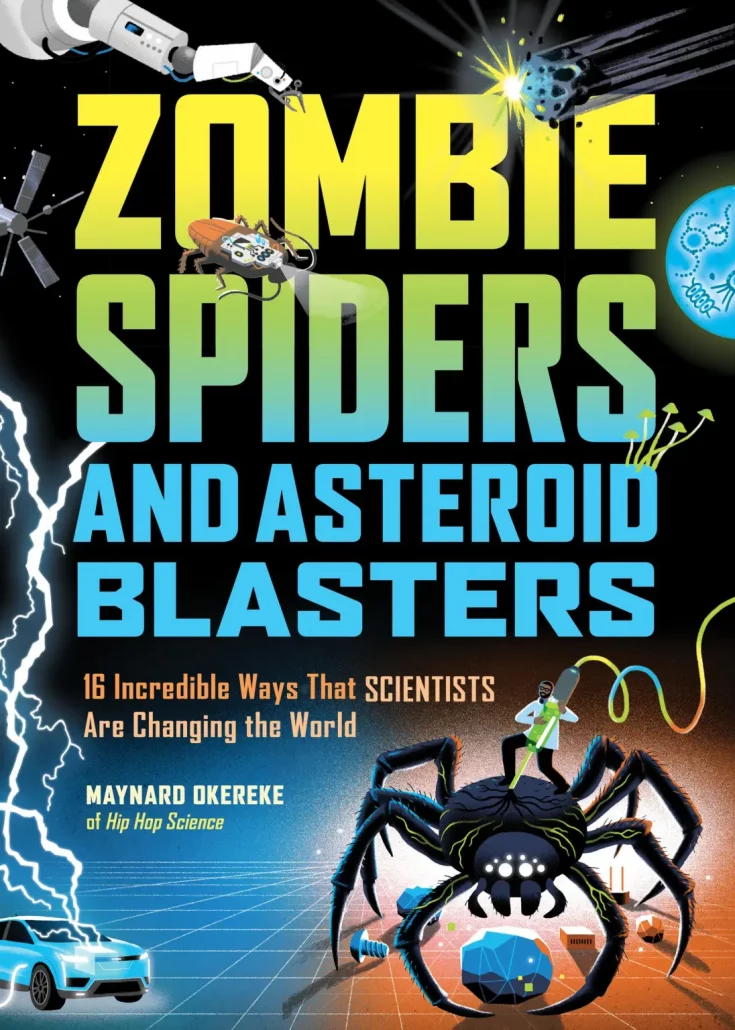
Looking for a children’s science book giveaway packed with curiosity, humour and real STEM ideas? We’re giving Whizz Pop Bang readers the chance to win one of five copies of Zombie Spiders and Asteroid Blasters – a fun, fact-filled science book that uses wild “what if?” questions to explain real physics, biology and space science to curious children aged 8–12.
What’s Zombie Spiders and Asteroid Blasters all about?
Written by science communicator Maynard Okereke, this brilliantly bonkers book takes ideas that sound impossible and explores them using real science.
Inside, readers will discover:
🧠 Whether zombies could ever exist
🕷️ What it would really take to create giant spiders
☄️ How scientists might stop an asteroid hitting Earth
🚀 The science behind sci-fi films, games and comics
Each chapter starts with a big, imaginative question and breaks it down using clear explanations, humour and evidence, helping children think like real scientists.
Why Whizz Pop Bang readers will love it
This is exactly the kind of book that appeals to curious Whizz Pop Bang fans:
🔬 A fun science book for kids who love asking “how does that work?”
📖 Easy to dip into – perfect for reluctant readers and confident readers alike
🤯 Encourages critical thinking and problem-solving
🎮 Ideal for fans of sci-fi, gaming and STEM
It’s a fantastic example of a STEM book for children that makes big ideas exciting and accessible.
How to enter this children’s science book giveaway
To be in with a chance of winning one of 5 copies, simply answer this question in the comments:
Which of these is a real type of spider?
A) Black belt spider B) Hairy toed spider C) Happy-bum spider
Who is this book suitable for? This book is ideal for curious children aged around 8–12 who enjoy science, sci-fi and asking big questions.
Do I need to be a Whizz Pop Bang subscriber to enter? No – the competition is open to all Whizz Pop Bang readers.
Is this competition open internationally? No, this giveaway is open to UK entries only.
Good luck!
We love sharing science books for kids that spark curiosity, stretch imaginations and show how exciting real science can be. Good luck to everyone entering – and keep asking brilliant (and slightly bonkers) questions! 💥🔍
Tim Peake spent 186 days on the International Space Station between 15 December 2015 and 18 June 2016 and has shared some of his amazing experiences with Whizz Pop Bang magazine. We chatted to him about what it’s like to live in space!
European Space Agency astronaut, Tim Peake.
How did you feel when you were preparing to go into space?
“I had so many feelings! On the one hand, there was a huge amount of excitement and adrenaline. The trip was a culmination of years of work and effort, so I was really looking forward to it. I was a little bit apprehensive as well – obviously there’s a rocket launch to go through, and then all eyes are on you. The eyes of the agency, the eyes of your crew mates, the eyes of the nation watching! There are times when you just have to step up to the plate and perform.
Catching a visiting cargo vehicle is a one-person job: it is your responsibility to connect an entire space station to an entire cargo vehicle, and nobody else can help with that. These tasks are very, very high-pressure!
I felt that pressure – as sports people do when they have to perform – when I went out on the space walk. So I was definitely apprehensive, but the majority of my feelings were excitement and adrenaline. Being up there on the space station is such a privilege and everyone supports you to try and be the best that you can be.”
What’s it like looking at Earth from space?
“I just loved looking down at Kamchatka on the east coast of Russia, for example, and seeing a volcano smoking away. I’d think, ‘Nobody but me knows that volcano is erupting,’ because there literally are no humans within 2000 square miles of that location. It’s just wonderful that you can visualise the entire planet having been around it about 3000 times.
There’s nowhere on Earth that I don’t know now. Although clearly, I haven’t visited every country, I’ve got a different perspective of the planet.
It’s very serene in space. It’s a beautiful environment to be in; weightlessness, to be floating, to be looking down, just gracefully passing over the Earth without any noise, no vibration. It’s a beautiful, beautiful feeling.”
Did you look out for aliens!?
“Absolutely! The funny thing about looking out away from Earth is that in the daytime, you just see the blackness of space. It’s a very strange black – the blackest black you’ll ever see. Here on Earth we never really see black like this, because there’s always ambient light around.
In space – wow! You feel like you’re falling into the void when you look out at the blackness of space. And of course, there are no stars because the Sun is so bright that it blinds out the light of the other stars. You can only see this black abyss.
At night, when we are in the Earth’s shadow, all the stars come out. It’s beautiful to look the other direction: you can see 100 billion stars making up the Milky Way with no light pollution. The interesting thing is, you can’t see other satellites which you can see clearly from Earth – I look up at the night sky here, and I’m always seeing satellites going overhead. But in space, because we’re travelling so fast, it’s very, very hard to see another satellite that’s also travelling very fast with the naked eye. So we don’t see lights coming towards us in space.”
What’s bedtime like in space?
“Sleeping in weightlessness is lovely once you get used to it. It’s a bit tough to begin with, because your body doesn’t know to go to sleep. Here on Earth, every day of our lives we lie down at bedtime, rest our heads on pillows, and these actions are such strong triggers to make us fall asleep. When you don’t have those triggers, you float around all day, you float into your crew quarter, you zip up a sleeping bag, you can switch off the lights, you can put in some earplugs in but your body says, ‘What now?’ Once you get used to it and your body can fall asleep, wow, it’s a lovely sleep. There are no pressure points, no tossing and turning, no restlessness and you wake up completely relaxed.
We only need six hours’ sleep maximum on the space station because the quality of sleep is so good.
I used to like to strap my sleeping bag loosely using tie wraps, just enough to allow me to float around a little bit – not so much that I’d bang my head on the roof, but enough to enjoy that floating experience.”
How do you eat on the ISS?
“You get very unpopular with your crew mates if you open a packet of crisps or something like that!
Crumbs go everywhere, even in people’s eyes, all week long – so we try and avoid that.
I had bags of pistachio nuts, already shelled, but they were a treat that were sent up in care packages every now and again. You just had to be careful about how you eat that kind of thing. But yes, you don’t really want to have crumbs in the space station!”
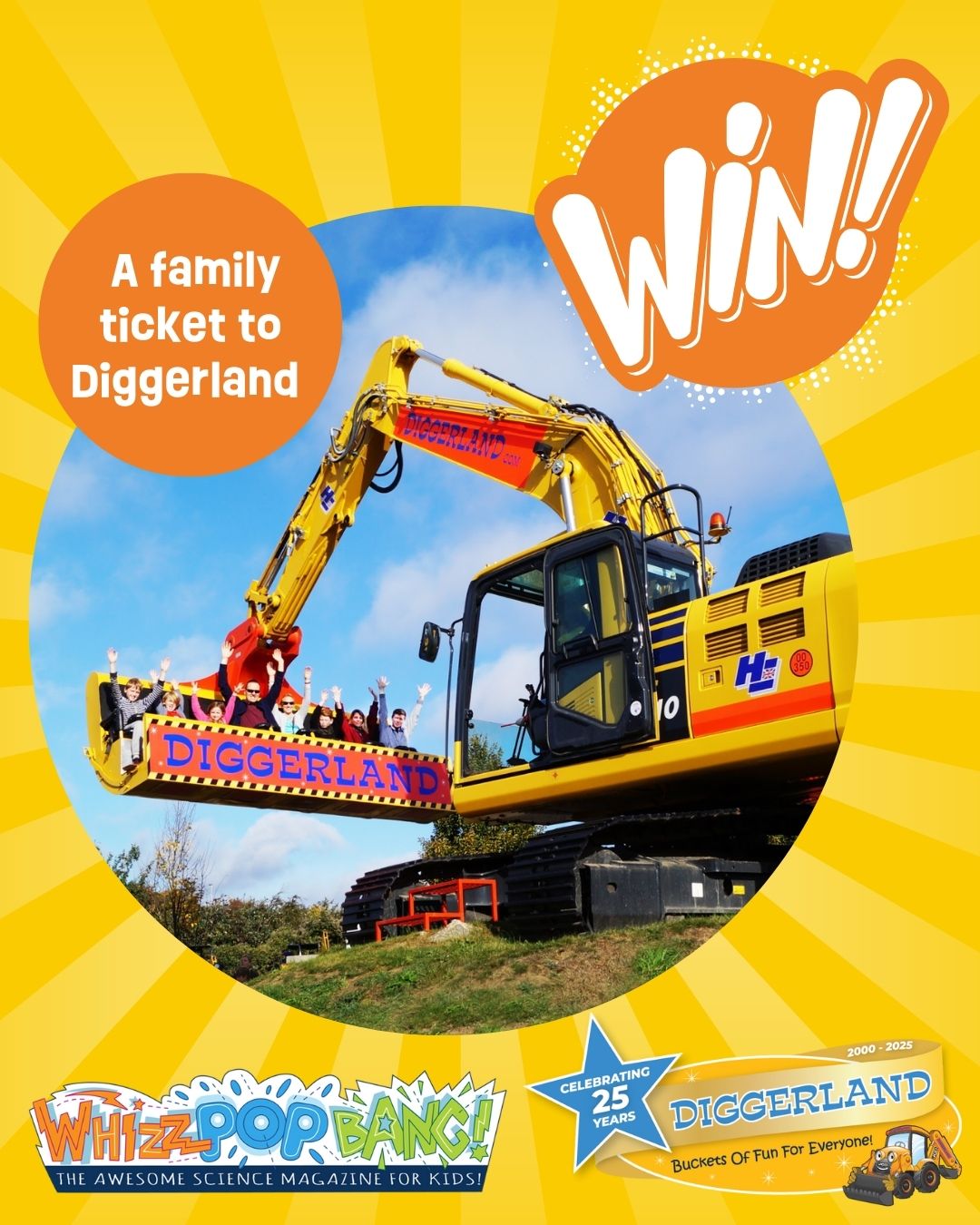
The place where kids can dig, drive and discover the science behind big machines!
Got a budding engineer at home who loves anything with wheels, levers and buckets? We’ve got the perfect prize for your family!
We’re giving away one family ticket (for up to 4 people) to Diggerland UK. It’s the UK’s only construction-themed adventure park where kids don’t just watch machines… they drive them!
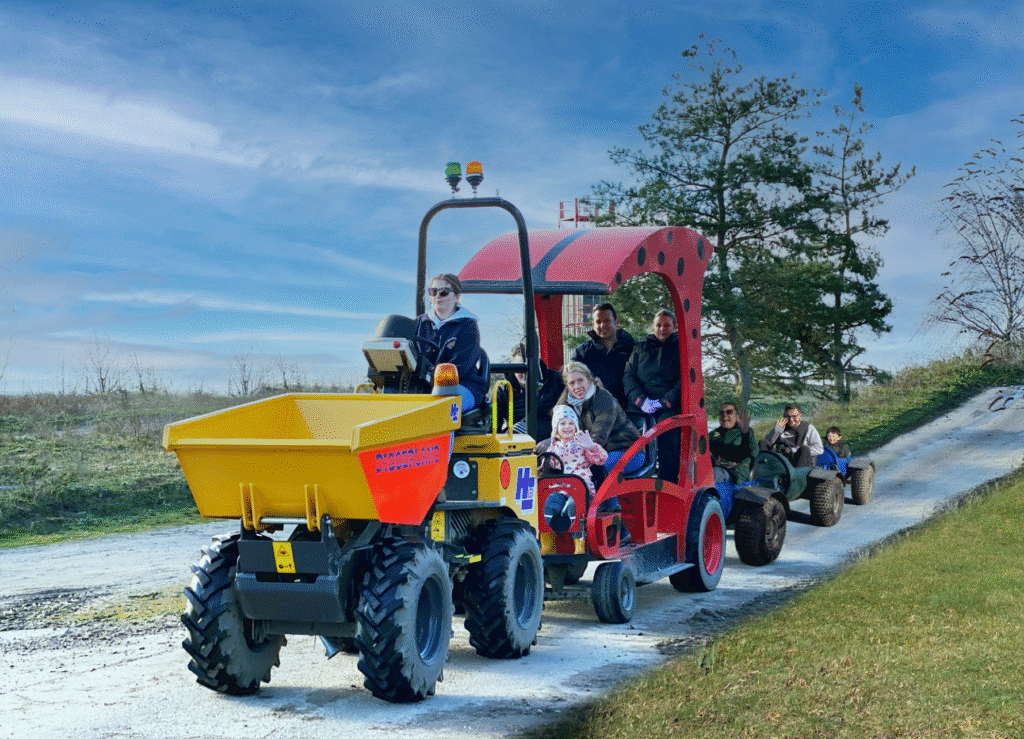
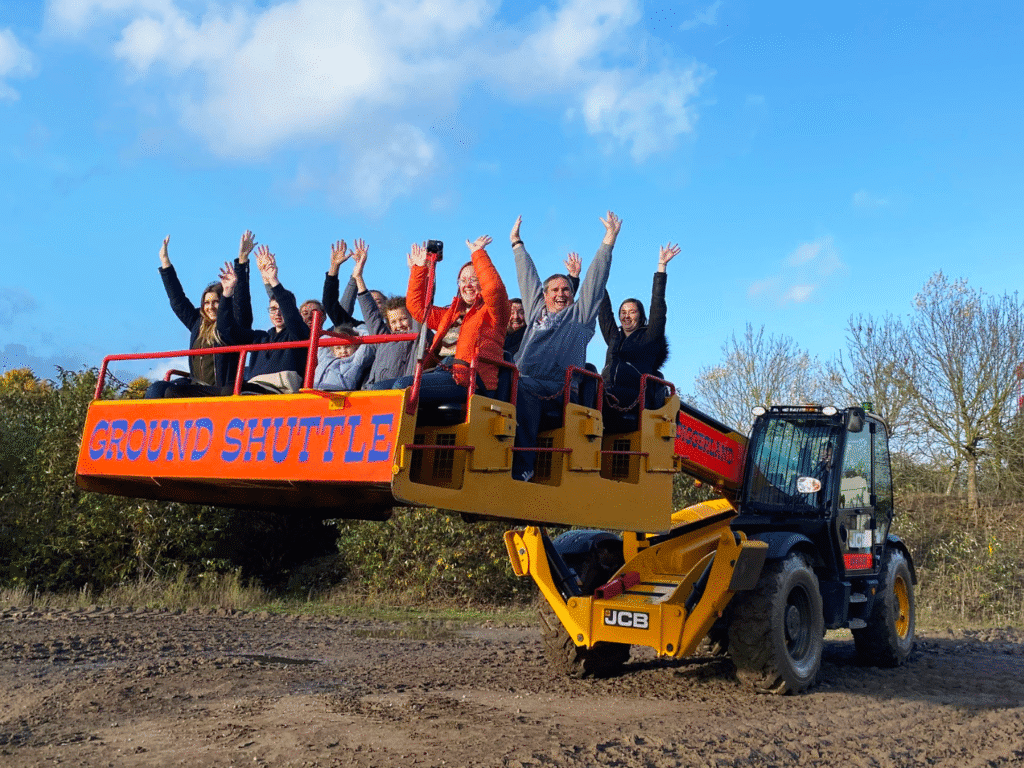
Whether it’s steering a mini-digger, navigating a dumper truck or giggling on the Skyshuttle with a view over the park, Diggerland turns real engineering into pure fun for everyone. There are over 20 rides and drives packed with rumbling engines and hands-on action, plus rides like Spindizzy, Go-Karts and more to keep the whole family smiling all day long.
Where could your adventure be? Diggerland parks are dotted around the UK — in Kent, Devon, Durham and Yorkshire.Check out the locations here.
🛠️ What’s So Great About Diggerland?
This isn’t a normal theme park — it’s like stepping onto a real-life construction site where kids become the operators:
🏗️ Operate mini diggers and giant machines: feel the levers and hydraulics do their thing!
🚜 Drive dumpers and skidsteers: loads of engineering-fun for curious minds.
🎢 Ride machine-themed attractions like Spindizzy and Skyshuttle: think science of motion meets silly fun.
It’s perfect for kids who love big vehicles and for adults who secretly want to try digging too! (We won’t tell 😉)
How to Enter
To be in with a chance of winning this awesome family day out, simply answer this question in the comments:
What is the scoop on a digger called?
A. A ladle B. A bucket C. A paw
Competition closes: 31.01.26. After the closing date we’ll pick one lucky winner who will receive a family ticket for four people to any Diggerland park – choose from Kent, Devon, County Durham or West Yorkshire.
🧠 Why We Love Engineering Adventures
At Whizz Pop Bang we think science is best felt not just read about — and Diggerland does exactly that. Playing with real machines introduces kids to mechanics, forces and motion in a way that sticks. When they pull a lever or steer a dumper, they’re discovering engineering without even realising it!
Whether your family’s budding builder dreams of designing bridges or just loves a good dig in the mud, this prize is all about sparking curiosity and shared fun.
Competition closes at midnight on 31st January 2026. There is no cash alternative. The gift cannot be exchanged for money, food, gift shop credit or anything other. Standard Diggerland terms and conditions apply which can be found here.Standard Whizz Pop Bang terms and conditions also apply and can be found here. The winner’s details will remain private and will not be shared with any third party unless explicit permission is given. Winner’s details including name, email address, phone number and postal address will be shared with Diggerland and where applicable the partner prize company for the prize(s) to be posted directly to the winner. Winning Diggerland ticket will be valid for 4 people only. Winning Diggerland ticket will expire on 30th June 2026 and cannot be extended under any circumstances.
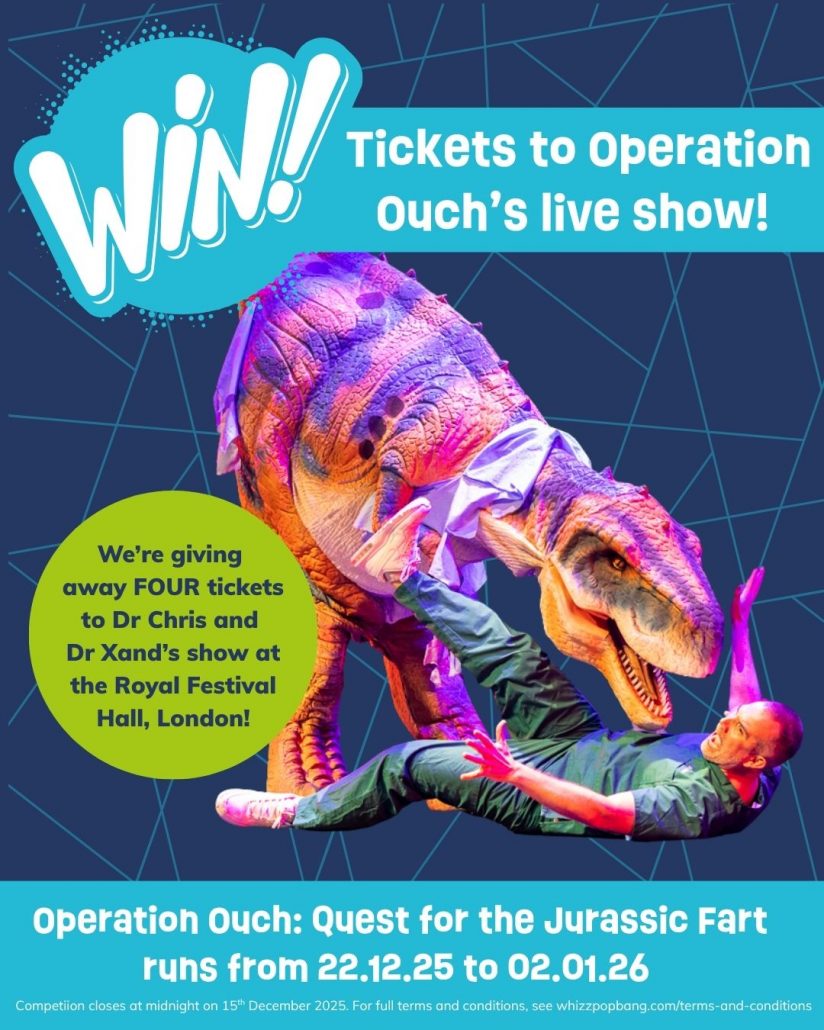
Win four tickets to see our favourite TV doctors, Dr Chris and Dr Xand, in their roarsome live show at London’s Royal Festival Hall on a date of your choice, from Monday 22nd December 2025 to Friday 2nd January 2026 (subject to availability).
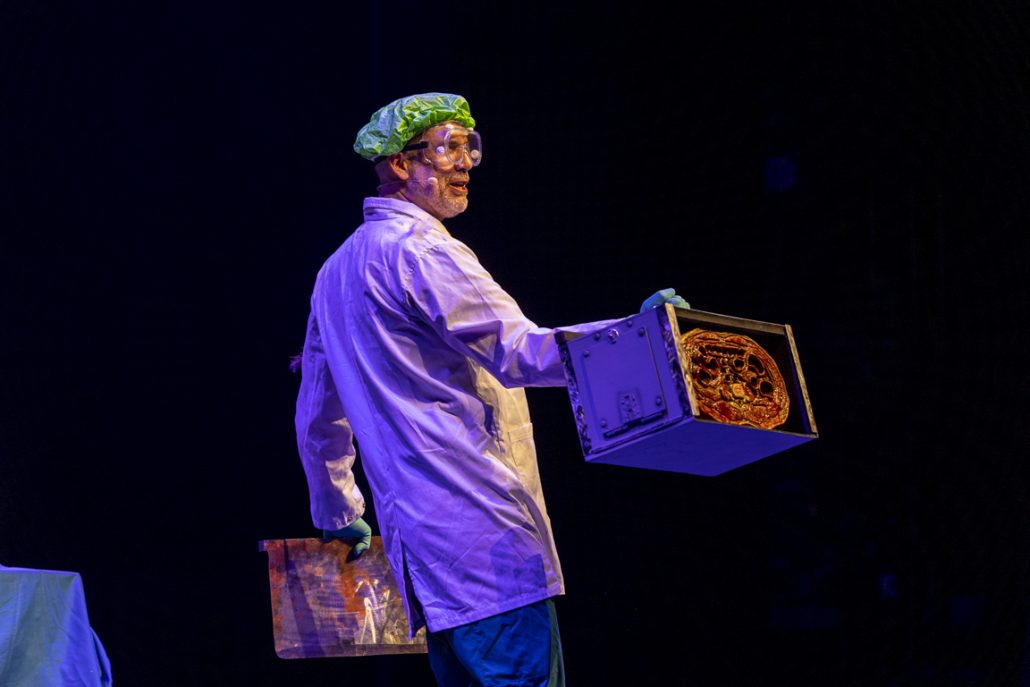
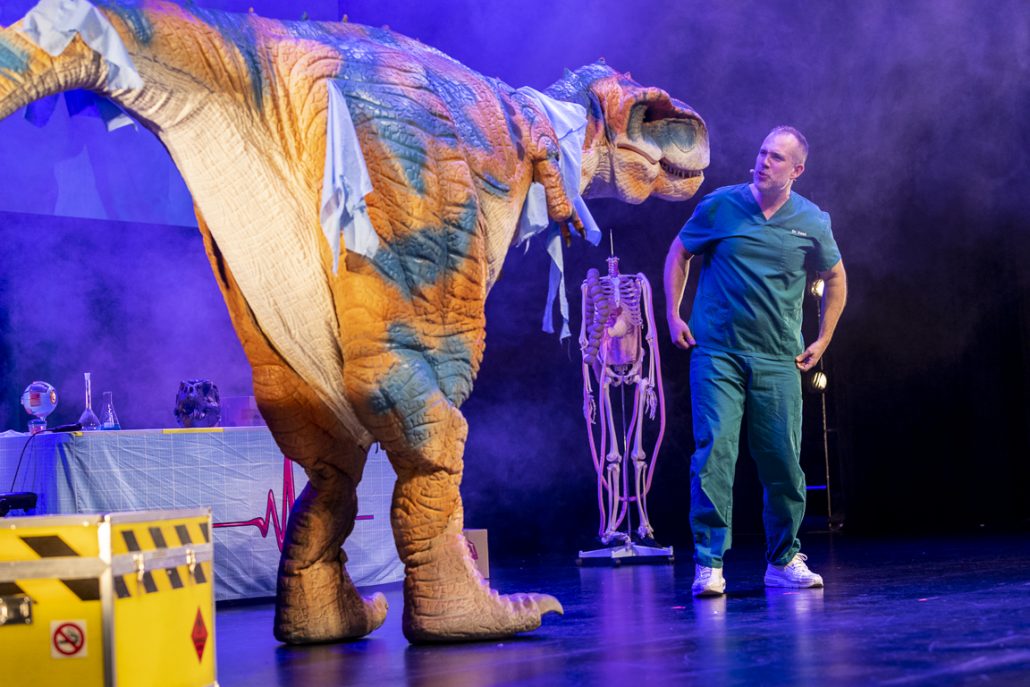
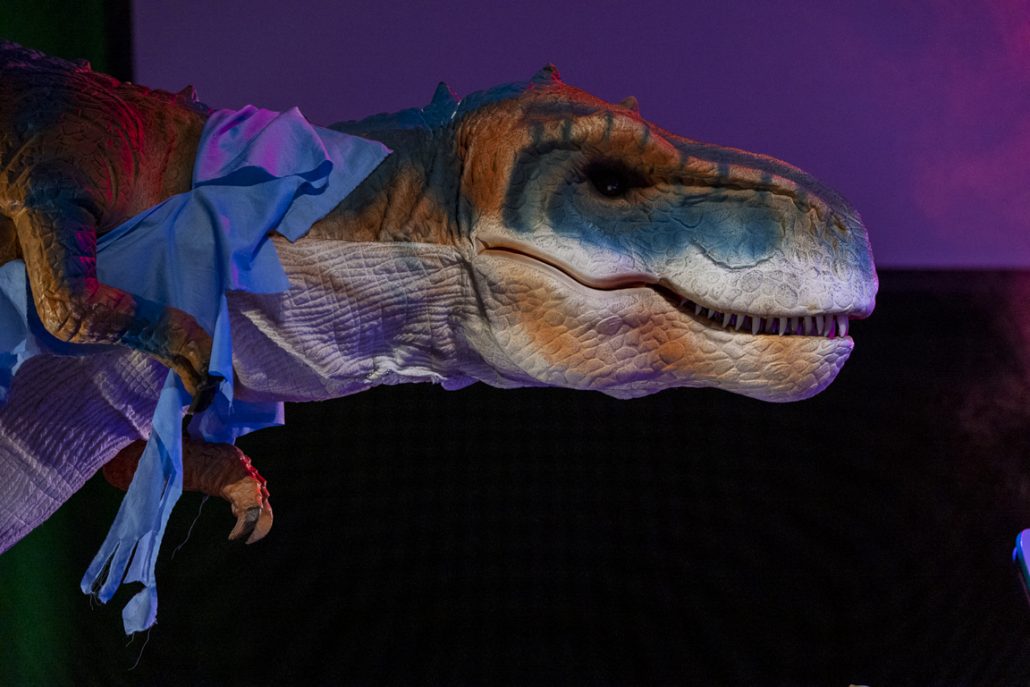
Travel back to the age of the dinosaurs as the doctors make you laugh-a-saurus and gross you out all at the same time through the fascinating world of science. It’s the perfect show for children aged 5 and above.
To enter, simply answer the question below in the comments:
Which of these dinosaurs lived in the Jurassic Period?
a) Diplodocus b) Tigerosaurus Rex c) Ankle-osaurus
Good luck!
Photo credit: Daniel Le
Terms and conditions: Competition closes at midnight on 15th December 2025. The prize is four tickets to Operation Ouch: Quest for the Jurassic Fart, which runs from 22nd December 2025 to 2nd January 2026 at the Royal Festival Hall, London. No additional expenses are included with this prize: the winner is responsible for their own travel and food arrangements. The winner will be contacted on Tuesday 16th December and must reply within 24 hours. The winner can select the performance of their choice, subject to availability. For full terms and conditions, see whizzpopbang.com/terms-and-conditions
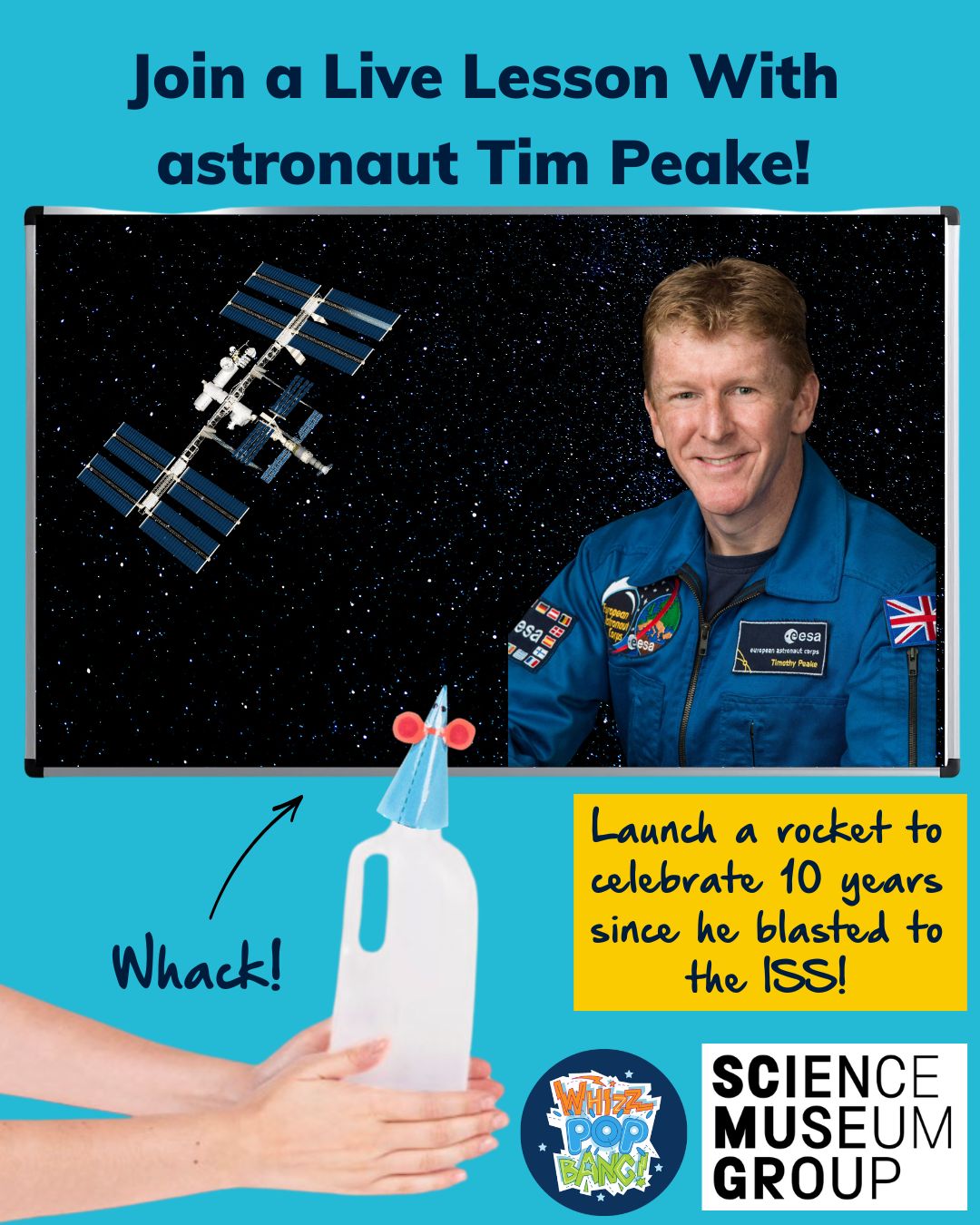
It’s 10 years since astronaut Tim Peake’s mission to the International Space Station launched…
To celebrate, kids across the UK are invited to join in a lesson with Tim. Broadcast live from the Science Museum at 10:20 am on the 15th of December, it will feature a mass paper rocket launch to mark the exact moment (at 11:03) that Tim blasted off into space a decade ago! Ask your teacher or parent to sign up here.
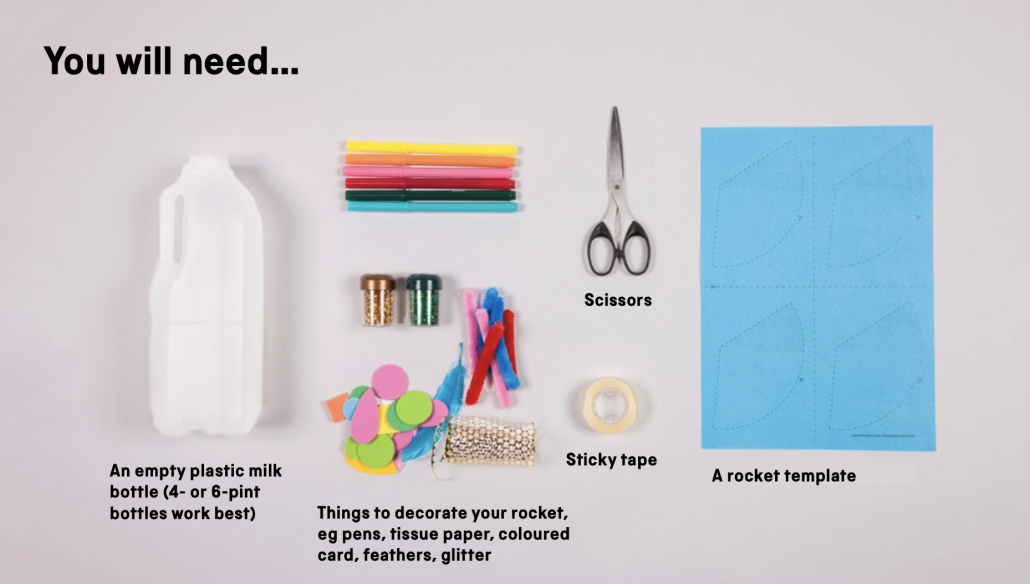
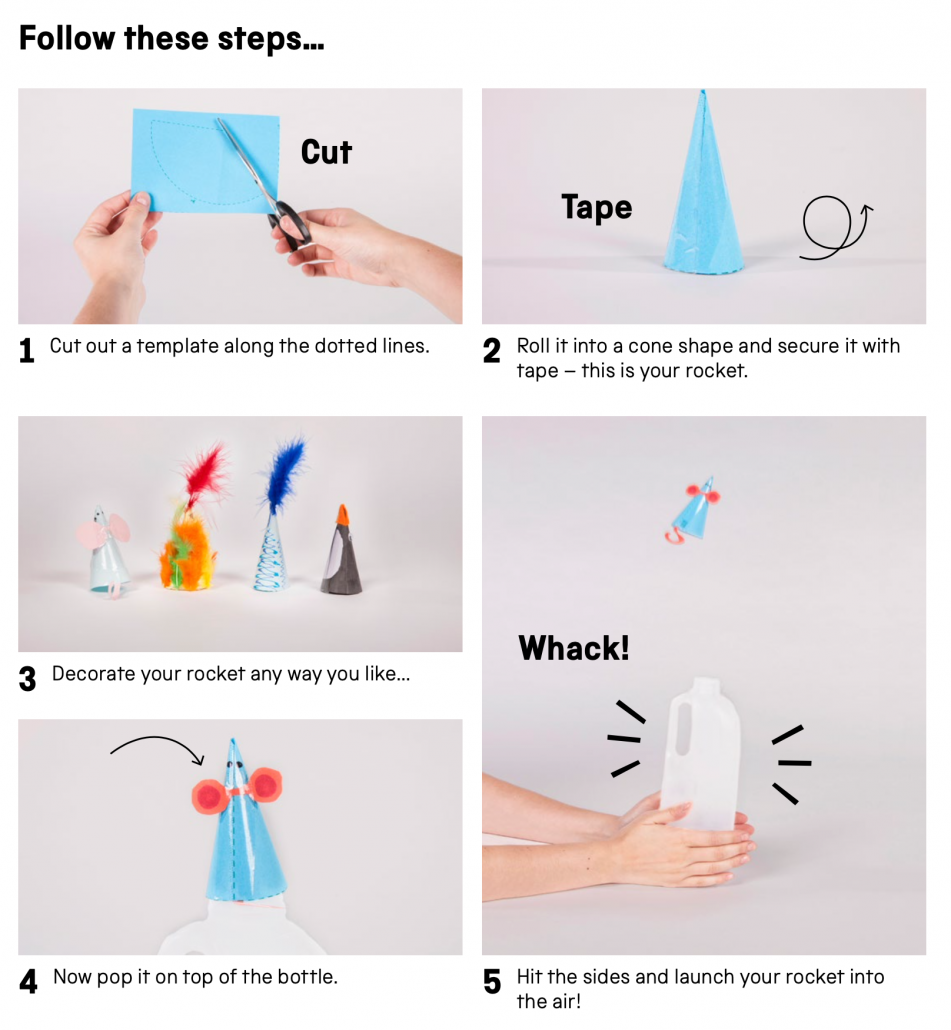
or read the information and instructions here, then download the templates only afterwards.
Overview for adults
There’s an old saying: what goes up must come down. This activity is a perfect chance to challenge that idea, shooting a rocket high into the air by rapidly squashing a plastic bottle launcher. You’ll never get this rocket into space – but some real rockets do go fast enough to prove the saying wrong.
What’s the science?
The bottle used as the rocket launcher is not really empty: there is air inside it. Air is elastic (squashy), and when you compress it, it pushes back and the pressure inside increases. In the activity, the sudden increase in air pressure inside the bottle pushes hard on the bottom of the rocket, sending it flying high into the air. There are also two other forces acting on the rocket: air resistance and gravity. Air resistance always pushes in the opposite direction to the rocket’s movement, and its strength depends on the rocket’s shape and its speed. Gravity always pulls downwards, slowing the rocket’s climb but speeding up its descent.
Science in your world
Just as increasing the air pressure in the bottle sends the rocket flying, you use air pressure when you squeeze shampoo or ketchup from a plastic bottle. It’s not usually as exciting as watching the rocket shoot into the air in the activity… unless you’re having a food fight!
Did you know…?
In order to keep going straight upwards and never fall down again, a rocket must reach a speed called escape velocity, which is 11.2 kilometres per second.
Think and talk about…
• What makes your rocket fly? • What makes it come down again? • How do you think a real rocket works?
Investigate…
• How could you make your rocket travel higher? • How could you make your rocket go more slowly? • Can you make your rocket spin as it falls?
Science in your world
Just as increasing the air pressure in the bottle sends the rocket flying, you use air pressure when you squeeze shampoo or ketchup from a plastic bottle.
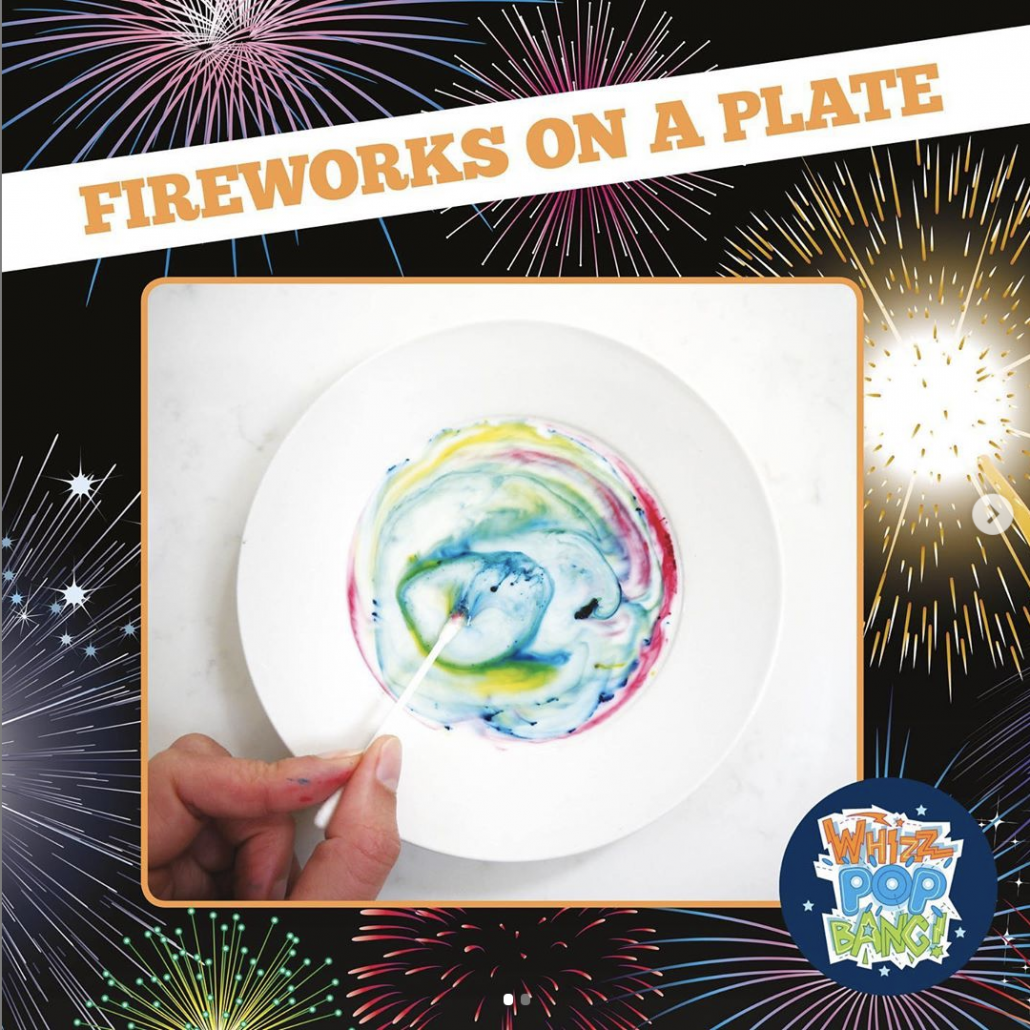
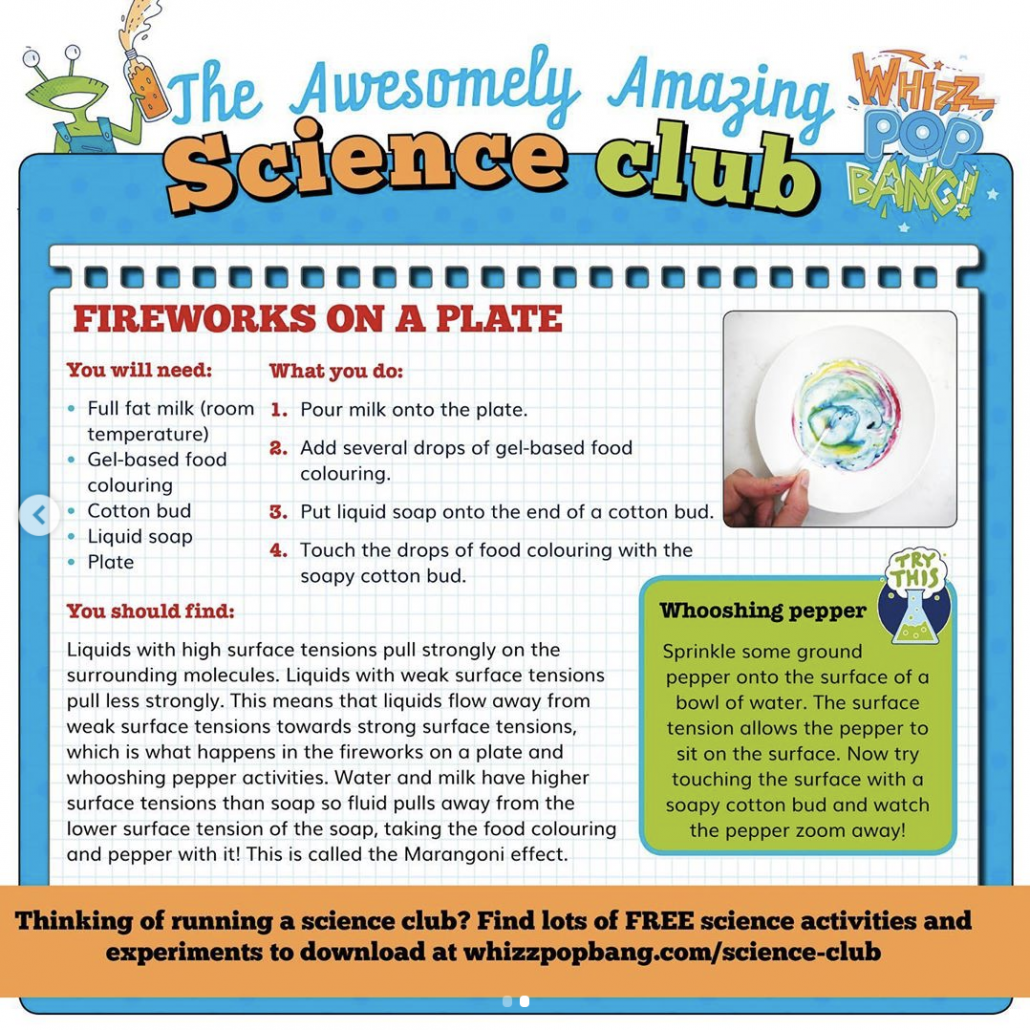
Hooray, it’s Bonfire Night! Here’s a super fun experiment you can do indoors with little ones!
To create your own indoor fireworks display (and investigate surface tension at the same time), you just need some full fat milk, gel-based food colouring, a cotton bud, some liquid soap and a plate. Oh, and a willing helper and Whizz Pop Bang’s ‘Fireworks on a plate’ instructions, of course! Here’s what you need to do – keep scrolling to download a PDF of this activity.
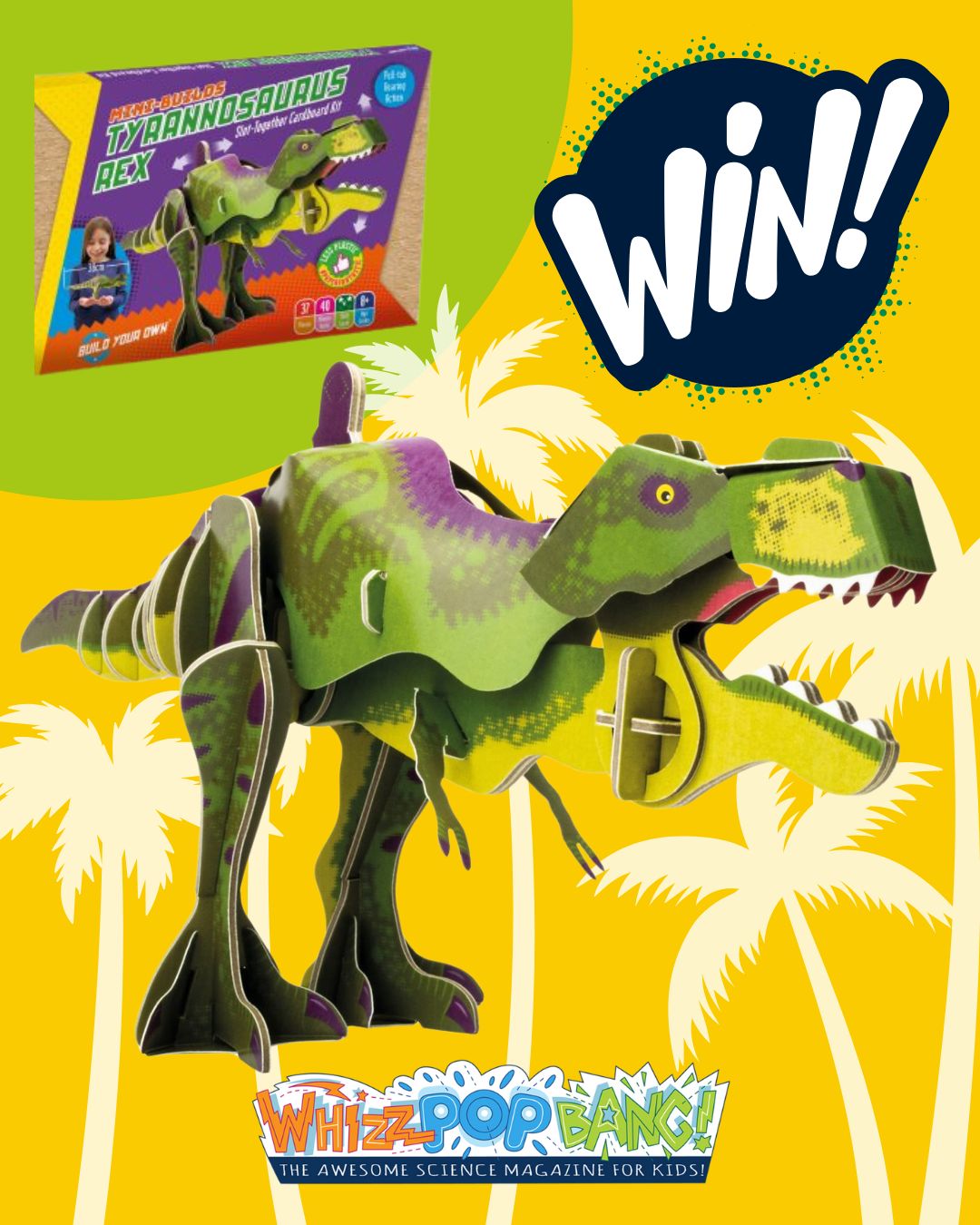
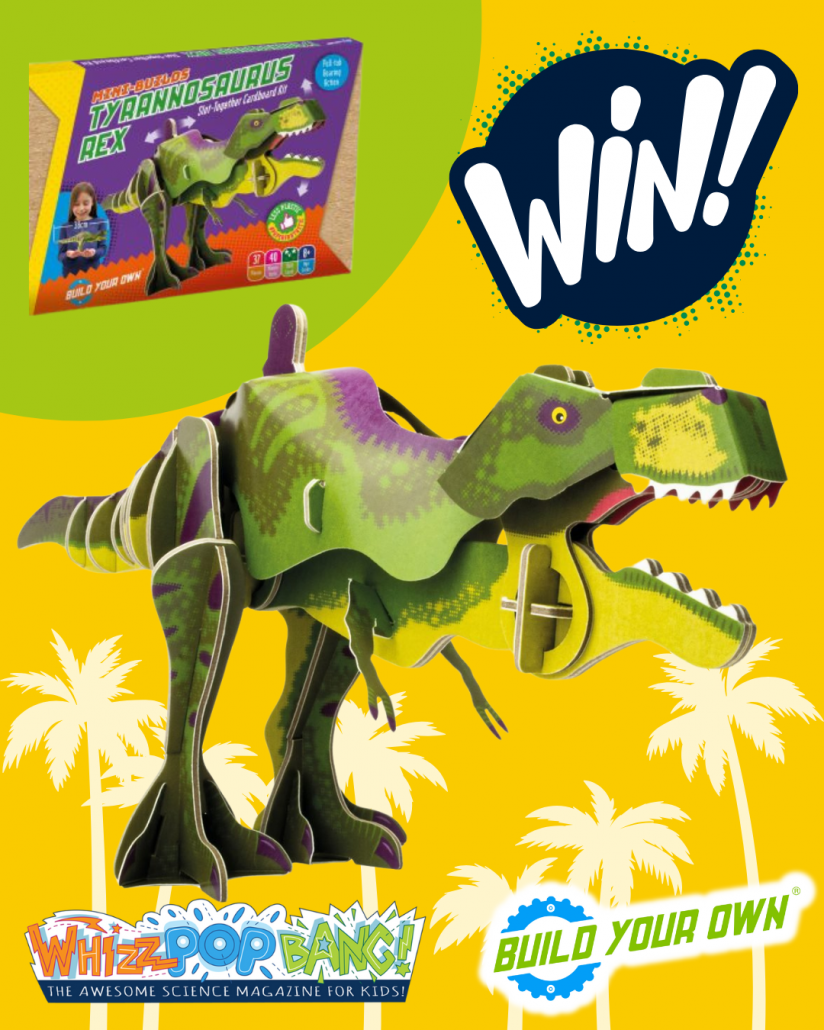
Ready for a roarsome adventure? Our friends at Build Your Own have given us FIVE incredible Tyrannosaurus Rex cardboard model kits for Whizz Pop Bang fans to win!
This stunningly designed 38cm-long T-Rex model is full of character and detail – from gnashing jaws to a swishing tail. Kids will love constructing it themselves using cleverly engineered slot-together pieces. No glue, no mess, just satisfying, hands-on building fun.
Made from sustainable cardboard with plastic-free packaging, this eco-friendly STEM toy is a brilliant way to explore engineering, dinosaurs and creativity all in one.
With 46 press-out parts and simple instructions, this kit is perfect for curious dino fans.
Simply answer the question in the comments below:
What does the name Tyrannosaurus Rex mean? A) Three-horned king B) Tyrant lizard king C) Fast-footed hunter