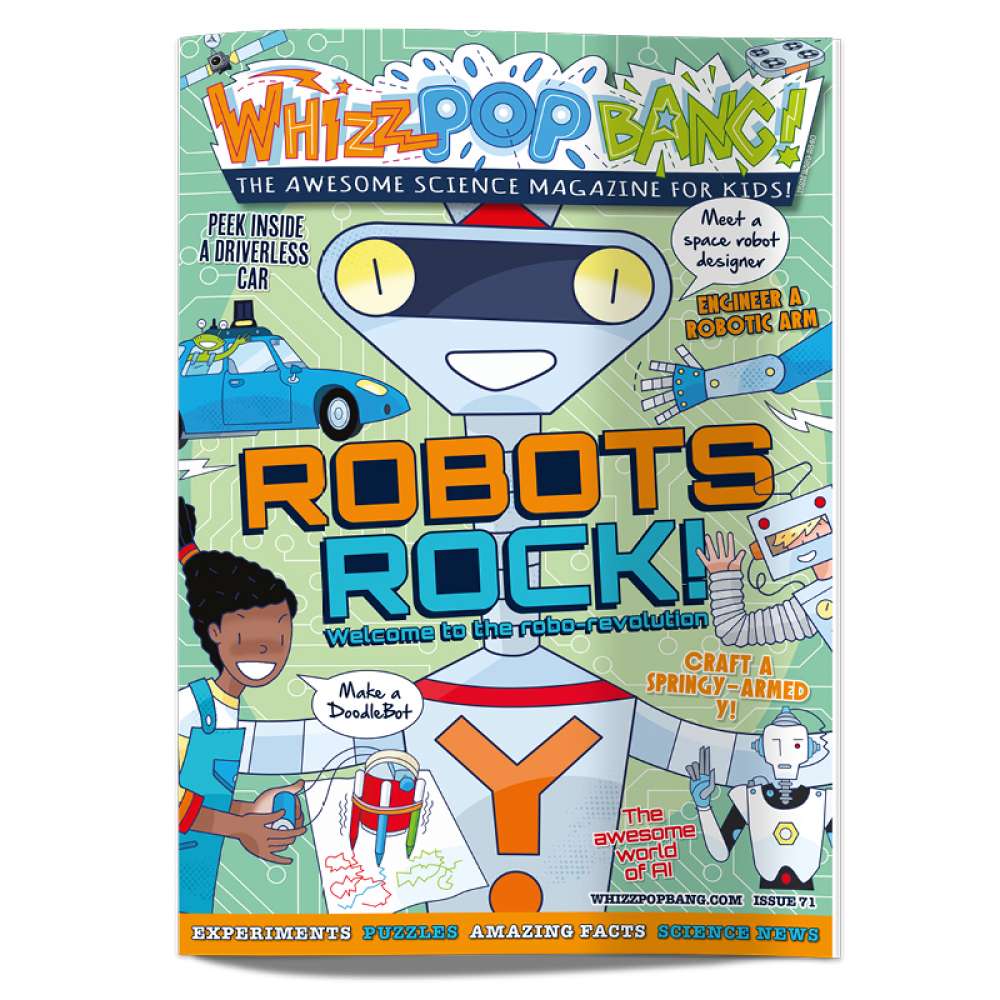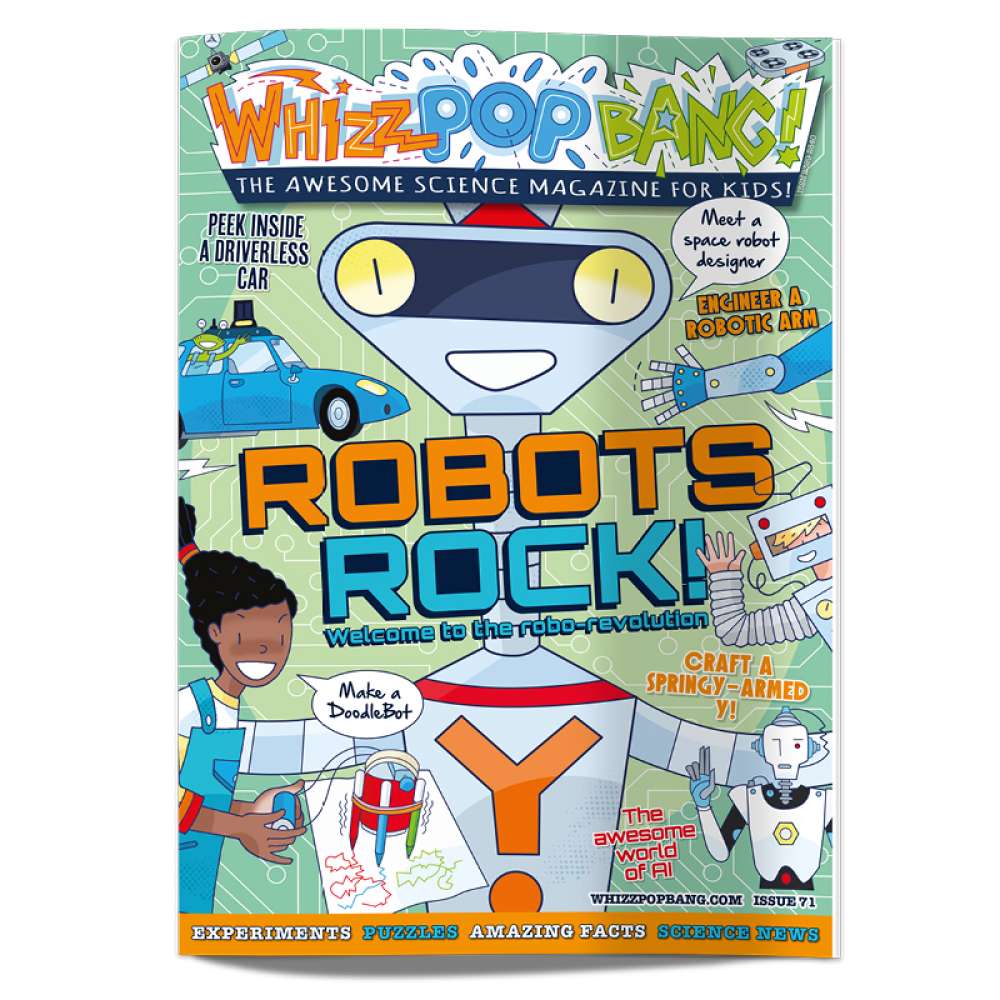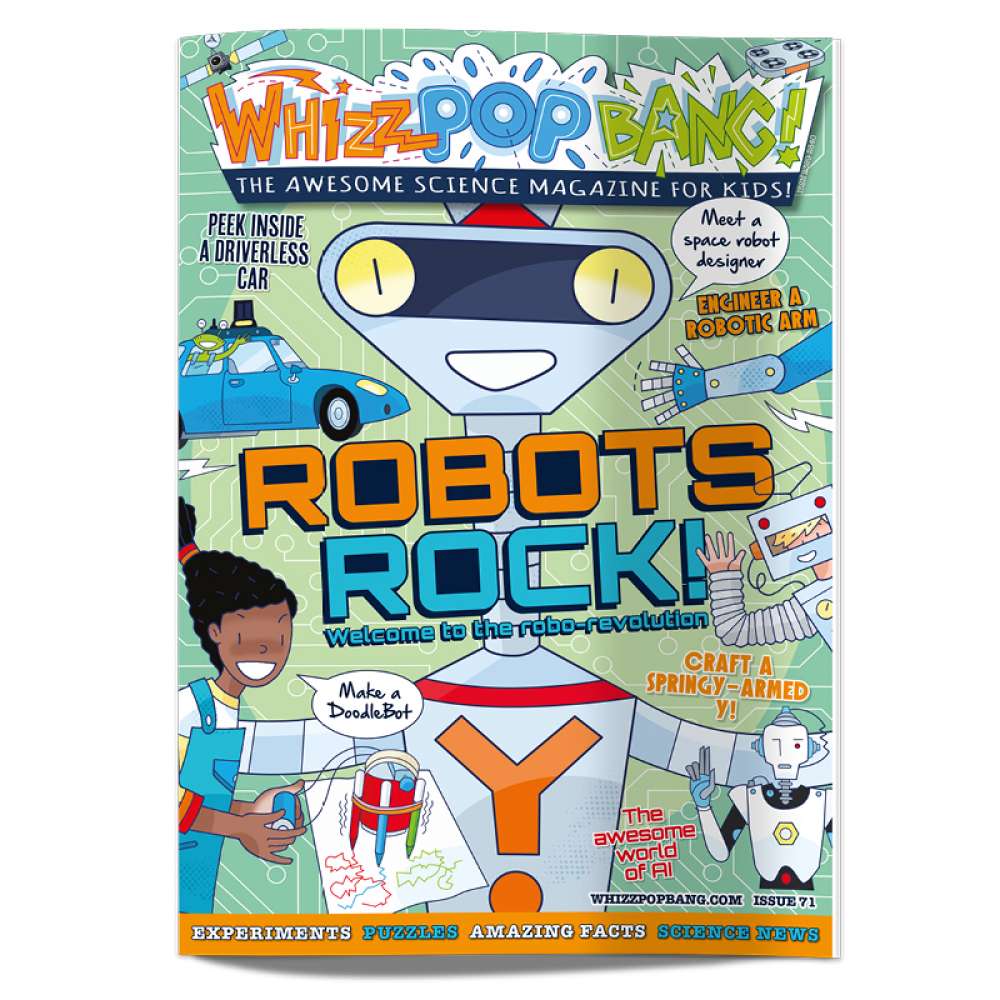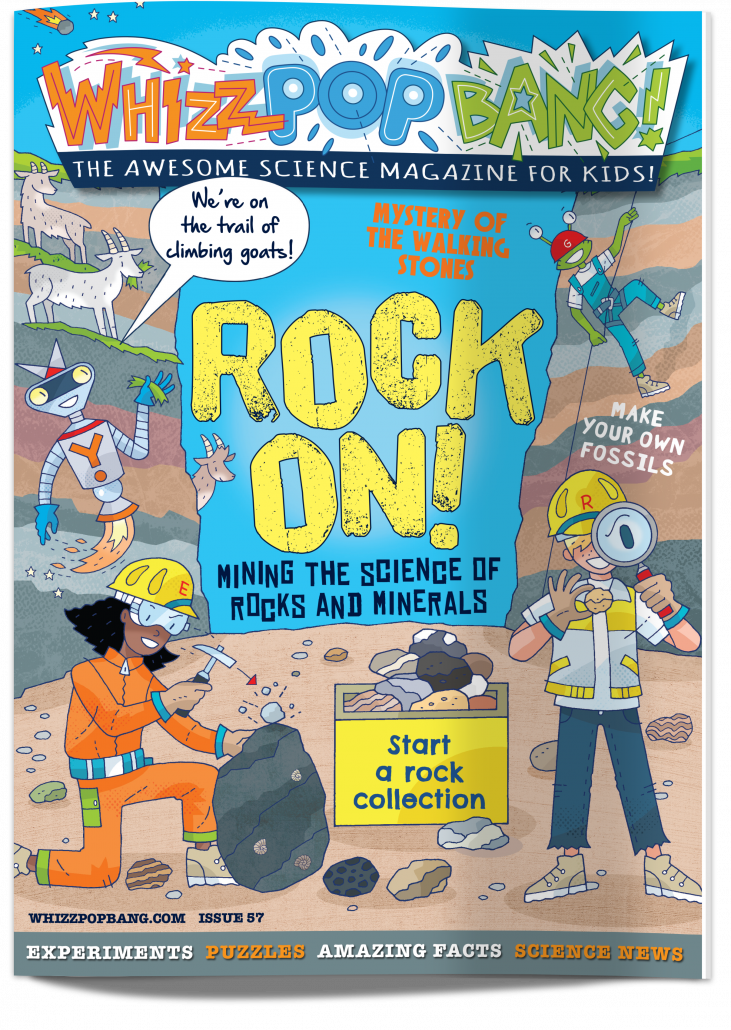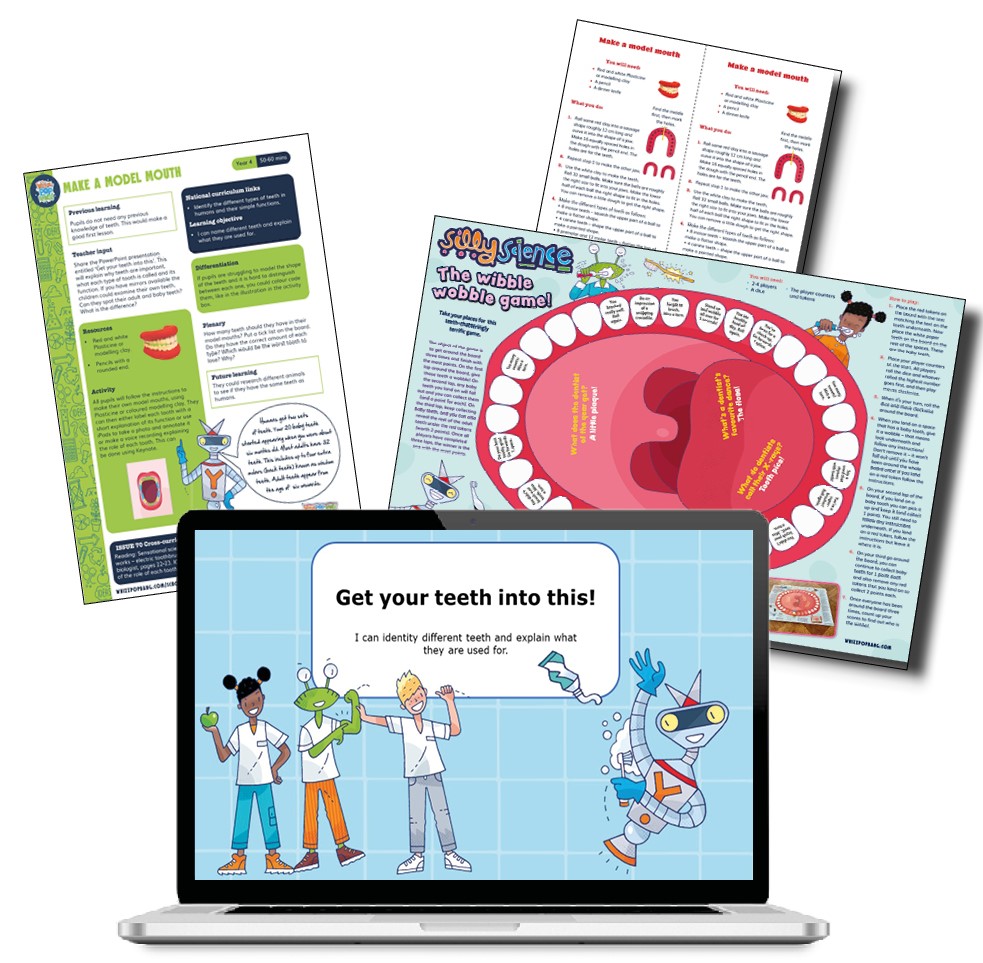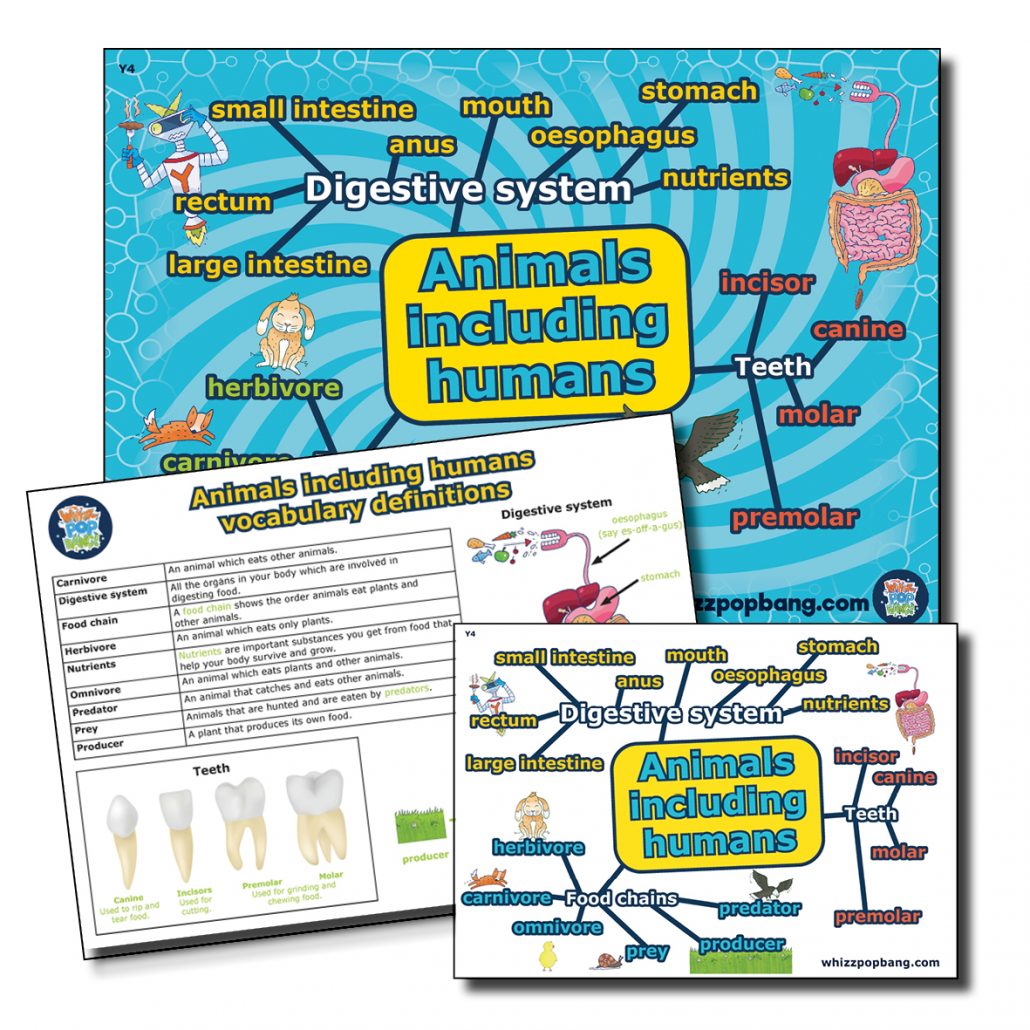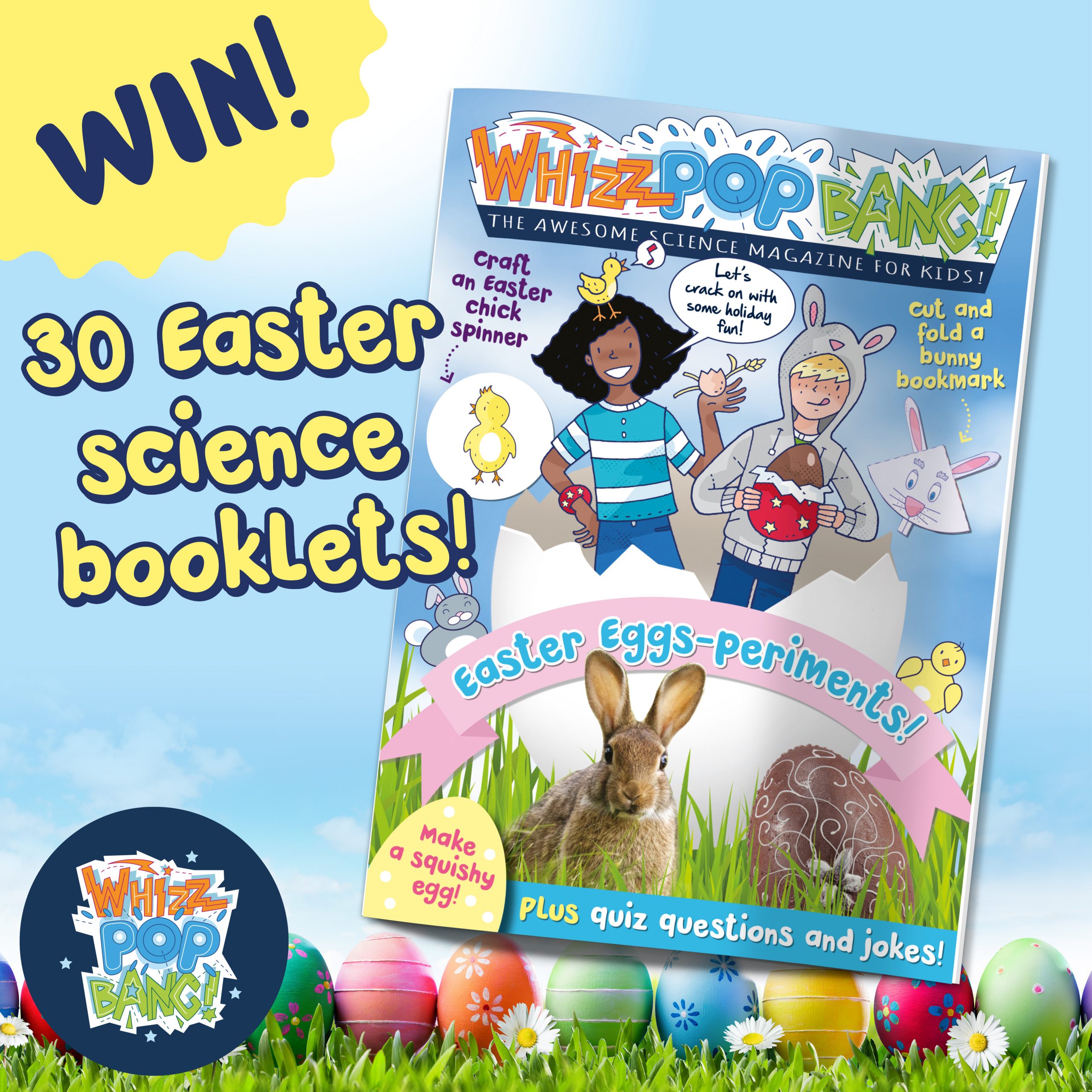
Whizz Pop Bang is a science magazine for kids, covering the key topics taught at school as part of the KS1 and KS2 primary science curriculum. To accompany the magazine, schools can subscribe to receive new science resources every month. These downloadable resources help teachers deliver accurate and engaging lessons, providing children with a deeper understanding of scientific concepts. All Whizz Pop Bang resources are tried and tested by science teachers, and kids!
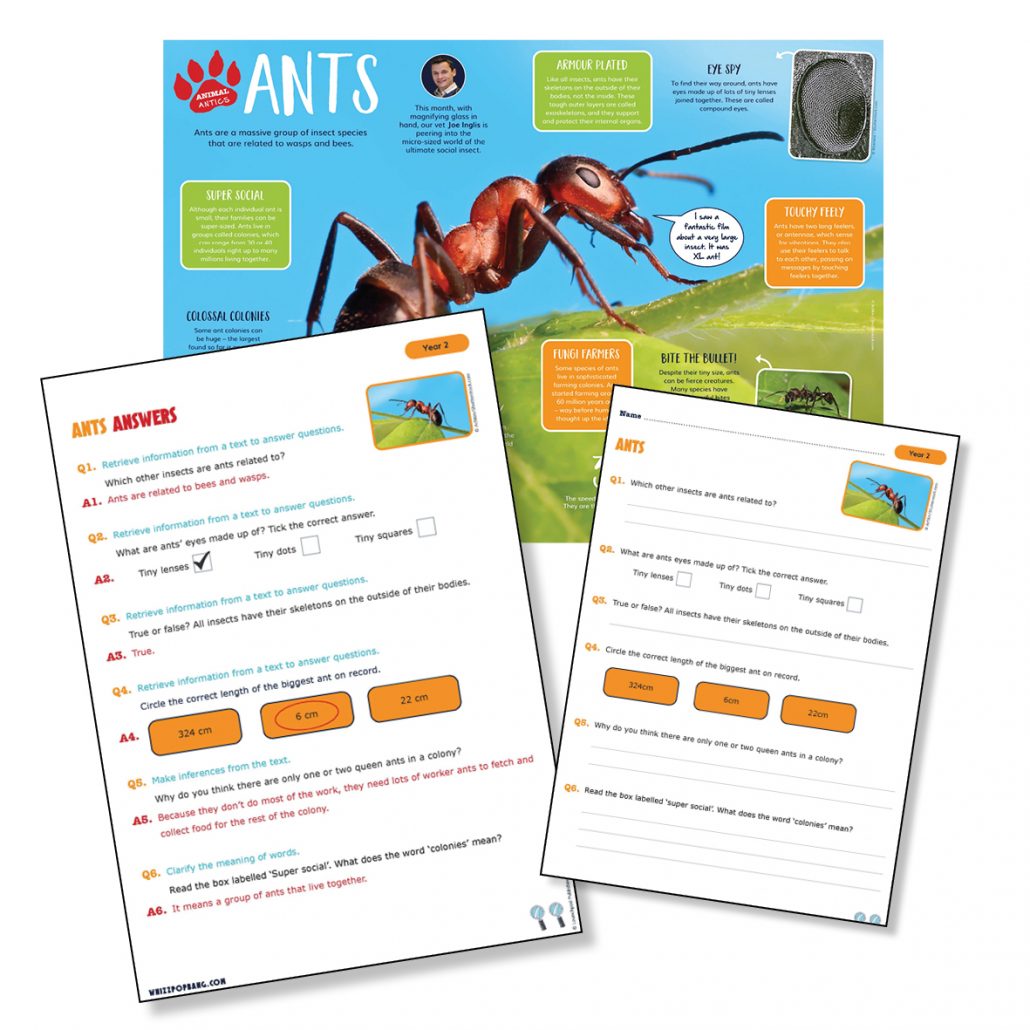
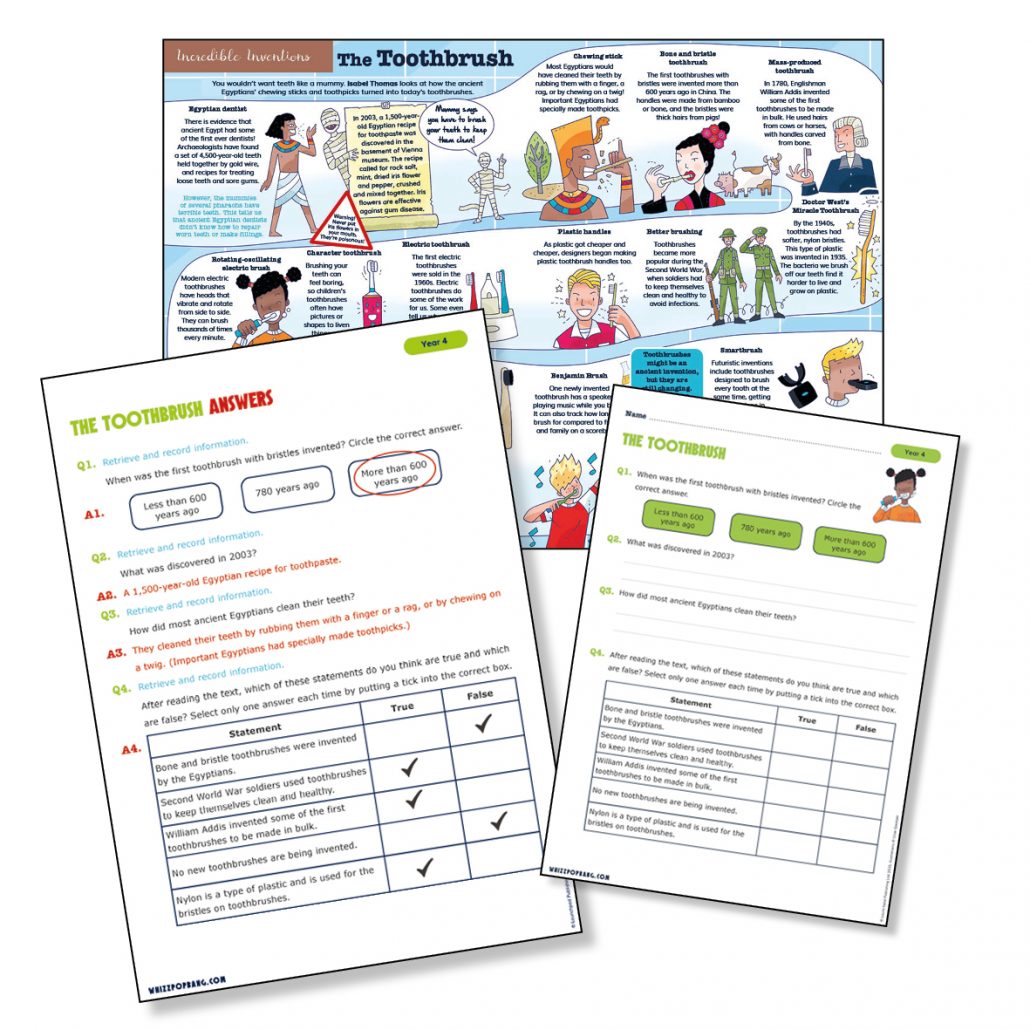
Primary school reading comprehension packs with question and answer sheets:
Jessica Watkins, NASA Astronaut
Read about fully trained astronaut Jessica Watkins who hopes to soon be able to fly to the Moon as part of the Artemis missions to the Moon! Includes the feature to print or to read on a tablet, as well as comprehension question and answer sheets. Ideal for Year 5 / P6.
Find out what it’s like to be an electrical engineering whizz with this inspirational interview with Nikita Hari. Includes the feature to print or to read on a tablet, as well as comprehension question and answer sheet. Ideal for Year 6 / P7
Read about sensational scientist Agnes Arber, whose career as a plant scientist started when she was just 13! Includes the feature to print or to read on a tablet, as well as comprehension question and answer sheets. Ideal for Year 3 / P4
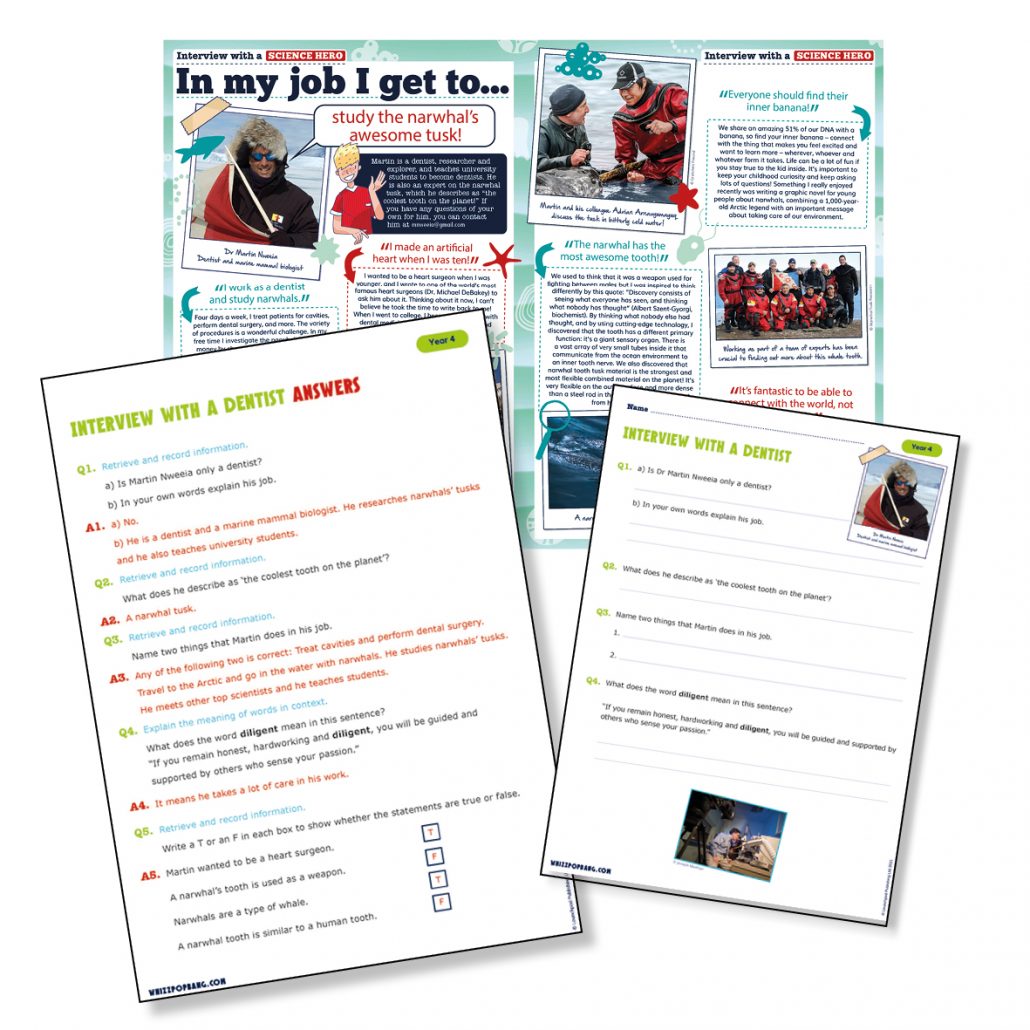
Find out why Kate Biberdorf loves to blow things up to inspire her students! Includes the feature to print or to read on a tablet, as well as comprehension question and answer sheets. Ideal for Year 4 / P3
If you think these could be useful in your classroom, you’ll love Whizz Pop Bang’s amazing science and reading resources for schools! Find out more here.
Resources linked to the science and reading curricula
A monthly magazine for broader understanding of key topics
Written by expert teachers and science writers
Gives teachers the confidence to deliver accurate science lessons
British Science Week (5th-14th March 2021) was always first in my calendar as a Primary Science Co-ordinator and I usually started with very grand ideas! Whilst a whole week of science is brilliant, this year it might be more realistic to consider just planning one day – it will be just as exciting, but manageable both in school and for any pupils isolating at home. Here are some FREE ideas and resources for creating a super exciting Fly High Friday!
Did you know that Whizz Pop Bang magazine also creates curriculum-linked science resources for primary schools? Scroll to the bottom to find a brilliant offer that’s running throughout March 2021!
Here’s everything you need to make planning your science day as simple as possible:
A whole-school challenge with suggestions for each year group
Science lesson plan with curriculum links
Downloadable, printable resources
FREE PowerPoint presentations to help teachers run the day
Theme – Flight, linking with the curriculum topic of Forces with a comparative/fair testing enquiry and for EYFS the characteristics of learning.
Challengethe whole school to work together on a flight investigation! The mission: who can make paper fly the farthest? Keep reading to find activities and resources for each year group…
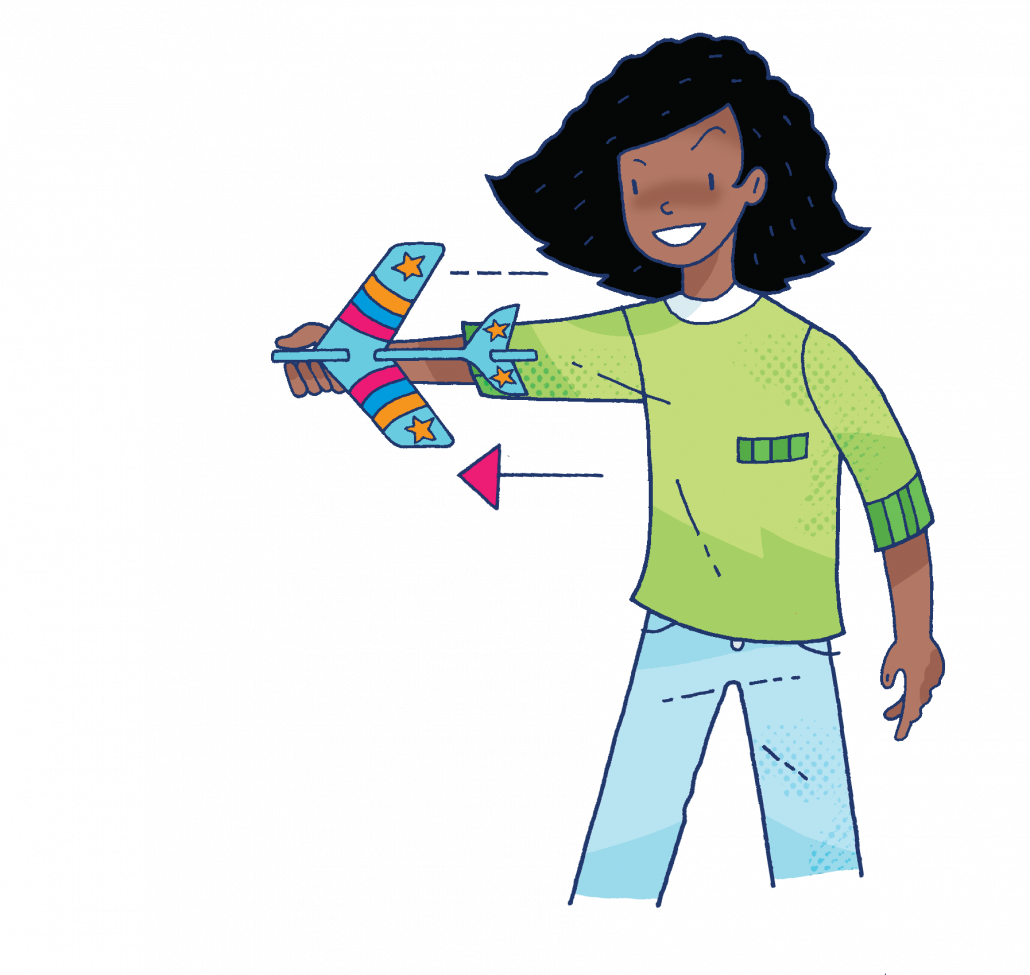
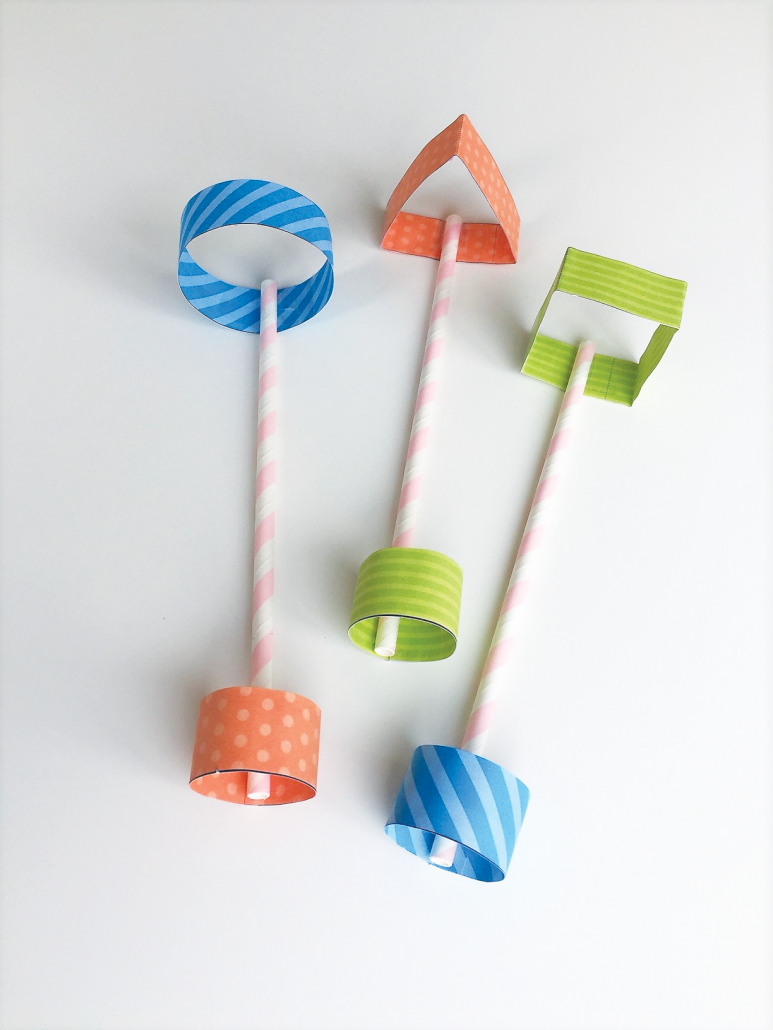
We all love to make a paper aeroplane but is that the only way to make paper fly? Here are some different ways:
For all these ideas you will only need paper, straws, sticky tape, glue and sticky tack – and some space, preferably outdoors! Each year group could have a go at making these different paper flying machines.
EYFS – Allow the children the time to explore how they can make paper fly. The teacher could demonstrate the air-powered rocket, then the children could make either the stunt planes or the straw planes. The children will choose the one they think will fly the farthest, try it and then the class teacher should record the result.
KS1 – Again allow the children the time to explore how they can make paper fly. Then the children should make each of the flying devices and choose the one they think flies the best, then test it. The teacher can collate all the results as a class.
Years 5 and 6 – children can test each design and then make their own flying machines. They should throw their final design five times and calculate the mean result. This will be their final result.
At the end of the day all classes should share their results. This might be by email or you could hold a virtual assembly! Don’t forget to ask for photographs so you can make a display or share them on your school’s social media platforms. We would love to see what you’ve been doing so please tag us @whizzpopbangmag
Whizz Pop Bang magazine and teaching resources are brilliant ways to enhance your school’s science teaching:
We provide downloadable science lesson plans, PowerPoint presentations, hands-on investigations and science reading comprehensions written by primary school teachers.
Whizz Pop Bang teaching resources link to the National Curriculum, ensuring correct coverage.
All of our resources are year group specific, ensuring progression between the years.
We make cross-curricular links to other subjects, such as English, Maths, History, Geography, Design and Technology and PSHE.
Prices from as little as £190 per year for whole-school access to our ever-growing library of downloadable teaching resources, with unlimited teacher logins, as well as a copy of Whizz Pop Bang magazine through the post each month. Plus, we have an amazing offer of a 20% discount until 31st March 2021. Just apply the code SCIWEEK21 at the checkout to receive the discount. (Only available on whole-school subscriptions to the magazines and resources.)
We’ve just launched a new individual membership option so teachers and home educators can access all of our amazing resources forjust £20 for the whole year.
“Using Whizz Pop Bang school resources has enabled investigations to be an integral part of my science planning. I now have investigations and experiments throughout my planning rather than just at the end. The lessons are easy to resource and the pack has everything I need to teach the lesson so it saves me time as well!” Louise Hampson, Year 3 teacher
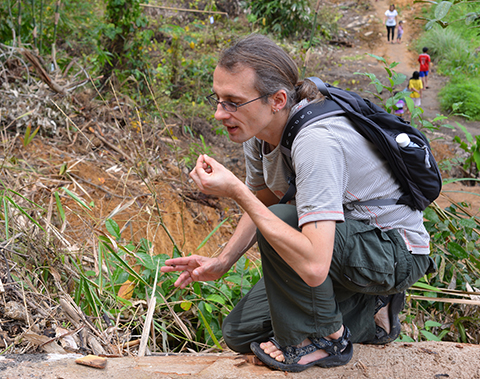
Half term is almost here and families far and wide are wondering how to fill a lockdown holiday with fun and excitement.
Why not take Whizz Pop Bang’s Seven Days of Science challenge? Every day, we’ll give you all the information and resources you need to complete a simple, satisfying and curiosity-awakening challenge from your home. Enter a science pancakes competition and try some kitchen science experiments, science papercraft, science quizzes for kids, nature activities. It’s also a great way to get children well and truly excited about NASA’s Perseverance planned landing on Mars on Thursday 18th February!
Discover some home chemistry experiments that involve things you’ve probably already got in your kitchen! Here are some you might like to try:
Make gloopy slime! Slime-obsessed children will love this gooey activity! They will make their own slime, then decide if it is a solid or a liquid. You will need: cornflour, water, mixing bowl, food colouring.
Make a volcano Print out a volcano template and create your very own miniature volcano using the harmless chemicals you find in your kitchen cupboards! You will need: the volcano printout below, a small container (e.g. a spice jar), bicarbonate of soda or baking powder, sticky tape, vinegar, red and yellow food colouring, uncoloured soap or washing up liquid, a tray.
Bubbling magma experiment Explore the difference between runny magma and viscous magma. You will need: two glasses, water, a viscous substance (like honey or golden syrup), two paper straws, safety goggles or sunglasses
We love this pancake recipe: BBC Good Food’s perfect pancakes but your science pancakes can be American style, vegan, savoury… whatever takes your fancy.
Next, decorate your pancakes with something inspired by space, nature, engineering or anything else linked to science! Here are a few ideas to get you started:
Today’s the day to get outside and do something to help nature! You could refill bird feeders and bird baths, plant some wildflower seeds or go on a litter pick. To make an upcycled bird feeder, you will need: An empty, clean and dry plastic bottle (e.g. milk bottle), a sharp knife, some sticks, strong glue or glue gun, 30 cm twine
If you want to do something inside instead, give these seed dispersal activities a go – it’s a great way to understand how plants and animals work together. To make a super-speed peashooter, you will need: Biro or gel pen, dried pea To make a model dandelion seed, you will need: A sheet of A4 paper, ruler, scissors, pencil, sticky tape
Thursday 18th February: Take the ‘Seven minutes of terror’ challenge!
Today’s an exciting day – NASA’s Perseverance rover is due to land on Mars! You can watch the landing at 8.55pm here (but you might have to wait until tomorrow morning – that’s pretty late!)
Meanwhile, take the 7 Minutes of Terror Challenge to discover the hair-raising journey a spacecraft takes as it travels through Mars’s atmosphere. Download the activity here:
Have you done lots of science activities and experiments this week? Or have you got a burning science question for our all-knowing robot, Y? Send messages, questions and pictures to y@whizzpopbang.co.uk and let us know all about your week of science!
Whizz Pop Bang is a top-quality, gender-neutral, advert-free science magazine for families everywhere. Each issue is packed with experiments, activities, amazing facts, puzzles, jokes, riddles and more. Find out more here!
A Build Your Own Mars Colony is an out-of-this-world way to keep astronauts-in-training busy while staying safe at home! This space-age set contains everything an interplanetary explorer needs to make a 20-piece Martian scene. Best of all? We’ve got three to give away!
Looking for ways to fill half term with science? Sign up midnight on 4th February to receive Whizz Pop Bang: MISSION TO MARS as the first issue of your subscription!
Are you wondering how on earth to manage home education now that schools are closed again? We want to help you to bring science to life on your kitchen table and have made loads of resources available for you right here. They include:
🧪 Activities from Whizz Pop Bang’s Awesomely Amazing Science ClubThese simple, fun, home science ideas using household objects were designed for school science clubs and youth groups, but work brilliantly for home school too! 🧪 Curriculum-linked science activities and reading comprehensions These hands-on science experiments and science reading comprehensions are linked to the National Curriculum for children in years 2 to 6. They’re ideal for use at home and each one includes a straightforward explanation of the science involved. 🧪 Virtual science quiz for kids More quizzes coming soon! 🧪 Collectible science badges to earn Your child can earn their Wildlife Watcher, Eco Hero and Super Scientist awards! 🧪 Super science-themed colouring pages and posters!
Keep reading to find out how our experts make home educating work…
The first attempt at home-educating was a culture shock for our editor Tammy back in March 2020. Tammy had a picture in her head of how home-schooling would be – a structured daily routine with children sitting neatly at the kitchen table, completing the work she’d set them, whilst she herself was working away on her laptop beside them. Needless to say, it didn’t work out that way! It didn’t help that Tammy had builders in repairing her roof that week, resulting in a ceiling collapsing! The whole family was in tears before the first morning was out.
And here we are again – schools have suddenly closed and many parents’ brains are exploding at the prospect of keeping their children engaged in education while juggling their own jobs and responsibilities. While many of us have already had one stint of homeschooling, things are different this time around – schools’ expectations have changed, and many of us haven’t quite shaken off the lazy Christmas holiday routine yet – so, we thought we’d ask for some advice from our lovely home-educating Whizz Pop Bang readers and gather some top tips. We hope you find them useful…
1. Learn through everyday activities Don’t underestimate the amount of learning there is in just being. As you chat, children will learn from the language you use. Look at the clock and notice which hands move faster. Get busy in the kitchen – cooking is an exciting new subject when children reach secondary school but can be done from a very young age at home and includes lots of learning potential of the maths of weights, measures, volumes and ratios, and also the science of chemistry and reactions. Do the laundry and feed animals together, and discuss what you’re doing. It’s all useful learning.
2. You don’t need to sit at the kitchen table for hours Practically none of the school day is 1-on-1 attention. Lots of it is crowd management, such as dealing with undesirable behaviour, changing for PE, queuing to leave the classroom, going to assemblies, etc. If you manage four half hour 1-on-1 bursts, that’s probably more than they do in primary school, so don’t stress. You really don’t need to sit them down at a desk for hours on end.
3. Let them build their own schedule In school all children follow the whole class timetable. Take this rare opportunity to let them set one or two things they would like to achieve for themselves in their day (tidy a shelf, read something, make something). And then see how they scheduled their day to achieve it. Failing is a useful learning experience. Was it too ambitious or did it need better time management?
4. Try not asking them to do anything Just leave interesting, educational things about and wait for your child to be inspired to want to learn more about something that interests them. Instead of setting work that you choose for them, experiment with exploring something that they find interesting that day, whether that’s a ladybird they’ve found on the windowsill or something they saw on TV that morning, and ask them to investigate that some more. They can find information from the internet, books or magazines and create a project by drawing, clay modelling, writing, acting or however they want to present their findings.
5. Go easy on yourselves It’s going to take time to find a system that works for you and your kids. The whole family will need lots of time to adapt, so try to ease yourselves into a style that works for you all. You might find it easier to wait a few days until they get bored of having nothing to do and are feeling more receptive to learning. Whatever you do, go easy on yourselves. Avoid setting yourselves up for failure. Go with the flow and remember not to worry if you feel you haven’t achieved anything that day – there’s learning in just playing in the garden!
After their disastrous first morning, our editor Tammy’s 8-year-old son said, “It’s a bit like the first pancake that never works very well.” And we think that’s a lovely philosophy that can get you through almost any less-than-ideal start. Keep flipping pancakes and you’ll soon be rewarded with success!
If you’re looking for a more structured approach, Whizz Pop Bang’s in-house teacher recommends getting some CGP books. Simply select your child’s year group and perhaps start with a maths, a reading and a SPAG book.
Finally, the home educating community would like to point out that self-isolating is not how they normally do things! The adults in the household aren’t working full-time jobs on top of attempting to teach. They play in the park, in the woods, at the beach, have other home ed kids over, and go to all kinds of clubs and activities. Being cooped up in the house is hard for them too.
And at the end of the day, if all else fails, take heart in the proposed schedule that’s currently doing the rounds on social media…
Have you been reading about DINO GIANTS in Whizz Pop Bang magazine? Then you probably want to watch a video of the biggest dinosaur poos ever discovered!
Fossilised animal poos are known as coprolites. They are full of clues about what dinosaurs and other prehistoric creatures liked to eat. The largest coprolite ever found was a Tyrannosaurus rex poo. It is full of crunched-up bones.
The largest collection of coprolites is owned by George Frandsen in the USA. In 2017, he had 1,277 fossilised dino poos, including the largest ever found! See him showing off the record-breaking dino poo here:
Find out more in Whizz Pop Bang # 65: DINO GIANTS!
In this mega edition of Whizz Pop Bang, we’re looking at some of the most awesome creatures ever to have set foot on this planet – discover gigantic dinosaurs that were taller than houses, humungous flying reptiles that ruled the skies and petrifying prehistoric predators that patrolled the seas!
There are loads of dino activities for you to try at home – craft a balancing stegosaurus, create your own eco-friendly fossil dig kits and cast a replica dinosaur tooth!
You can also cut out and make roar-some paper dinosaurs that walk down slopes and discover the biggest dinosaur ever known, Argentinosaurus, which laid eggs as big as coconuts! Find out how animatronic dinosaurs work, meet a palaeontologist who solves the mysteries of how dinosaurs lived and read about William Buckland and Mary Morland, who studied the first dinosaur fossils. You can even take our Silly Science quiz, ‘Which dinosaur are you?!’ to discover what your life could have been like in the Cretaceous period!
Get ready to race with this marble of engineering! Slot together the press-out parts to create three twisting neon tracks, just waiting for marbles to shoot, spin and whizz around.
This clever marble run kit from Build Your Own includes an ingenious lift and drop marble elevator and run switches to randomise the courses. It’s Build Your Own’s most challenging creation yet – with a build time of four hours, this kit is bound to keep the whole family busy during long weekends at home.
Designed in the UK and made from high-quality sustainable cardboard, this is one amazing piece of kit and we’ve got THREE to give away to lucky winners!
To be in with a chance of winning one of three Build Your Own marble run kits, simply answer this question in the comments:
Who is Mae Jemison?
A An engineer and NASA astronaut B A marbles champion C A botanist
Whizz Pop Bang is a top-quality, gender-neutral, advert-free science magazine for families everywhere. Each issue is packed with experiments, activities, amazing facts, puzzles, jokes, riddles and more. Find out more here!
Find out how to make this freaky fire snake using a fire lighter block, sugar and bicarbonate of soda inside FIRE FIRE (Issue 64 of Whizz Pop Bang magazine). Please remember that fire is extremely dangerous. Make sure you have a bucket of water close by and an adult to light the fire and supervise at all times.
Whizz Pop Bang is a top-quality, gender-neutral, advert-free science magazine for families everywhere. Each issue is packed with experiments, activities, amazing facts, puzzles, jokes, riddles and more. Find out more here!
The fantastic entries were out of this world! It was so hard to pick just three winners, but we eventually settled on Amelie, aged 8, Isabella, aged 9 and Isa, aged 8. Keep scrolling to read their Moon poems.
Silver sparkles, a bright light the moon shimmers every night If only I could go and see I wonder what there would be?
I lay in bed in my dark room When all of a sudden, a loud sonic boom! I looked outside and couldn’t believe my eyes A rocket in my garden! What a surprise.
Off I went, zoom zoom zoom, Before I knew it, I was on the moon! Could this be real? I rubbed my eyes Chocolate-filled craters and mountains of pies
What more could there be, I started to think Some delicious moon nectar for me to drink I leaned in close, to fill up my mug When all of a sudden I felt a warm hug
Oh no I thought, who could it be? An alien or monster? I just couldn’t see! ‘Wake up sleepy-head’, I heard her say I guess I’ll have to finish my adventure some other day.
Who holds the moon? by Amelie aged 8
Neither closer nor further in the night sky The alluring moon hangs there so high Landscapes of craters, mountains and seas Luminous, it’s beauty bathes the trees
Have you wondered what force holds it there For all to see, to dream and stare Is it a wire, a rope or some string No, there must be some invisible thing
Magnetism, is that what it could be The reason the moon can’t break free I struggle and ponder to find the theory Although it takes time, it’s never dreary
I ponder and think, I jump up and come down This is beyond me I say with a frown Who knows not I, let’s wait and see Ahh, maybe it’s the force of gravity
A Day Trip to the Moon by Isabella, aged 9
Gakk, Riley and Emmi, decided to go to the moon! Y tried to warn them, that it could all end in doom! Riley told them all, they should build a rocket, Ready for this moment, he pulled a blueprint from his pocket, Emmi tried to think, what else they needed to bring? Gakk ran off and returned, with spades and a rubber ring! “What on earth is that for?” Y shouted with glee, Gakk smiled and said loudly “We are going to the sea!” Riley laughed and shouted “ There aren’t any seas on the moon!” “Yes there is!”, Gakk replied “you’ll see very soon!” Emmi say to Y “We are going to need a ride” Y says “Don’t worry, I have my moon buggy outside!” Everything was assembled, Emmi climbed onto the first stair, Y then shouted suddenly “Wait!, we can’t go anywhere” “We haven’t got any rocket fuel and no money to pay!” Emmi said “Never mind, we can go another day!”
The moon is dusty and far away. It can be seen at night and sometimes day. Wolves howl at the moon, Bats swoop past the moon. Moths navigate by the light of the moon. Astronauts have stood on the moon. Dropping a hammer, dropping a feather. Testing the gravity. Checking the weather. The moon is bright on a dark night, But it’s just reflecting the sun’s light. With all that said, I bet it’s true, We still don’t know all about the moon.
Team Moon by Layton, aged 6
Man has walked on the Moon, NASA is going back really soon, I wish I could be part of their team, Being an Astronaut is my dream.
I love to stargaze with my mum, When we have said goodnight to the Sun, The stars all twinkle really bright, But nothing is better than the Moon at night.
The Moon by Anna, aged 10
The moon is a silver coin tossed up high, Glinting always in the dark black sky. Will it land on heads or tails? Will the moon landings succeed or fail?
The moon is a diamond, clear and bright, Sparkling and shining all through the night. Always staying in that same place, In the deep black mines of mysterious space.
The moon is a guardian circling forever, It and the Earth have always been together. The moon watches over all that we see, It watches you and it watches me.
The moon is a shapeshifter, changing shape and size, Each night something different appears before our eyes. Changing shape like cards shuffling, King, Queen, Ace, Full, quarter, crescent, new, all the way up in space.
But whatever the moon is, it’s there every night, Silver and glowing, clear and bright. The moon is with us until the end, And that’s why I say that the moon is my friend.
The Rhyming Moon by Louis, aged 6
Bright white Night light In space I see a face Made of cheese, if you believe
Wolves howl a tune At the silvery moon. Hey! Would you like to play on the moon tonight?
The Moon by Elijah, aged 11
Somewhere up in the clouds above, Where no creature or human lies, When the sun goes down and darkness thrives, Look! It’s the moon! Standing bright and alive. Where the stars eyes gaze onwards, All those miles away, up in the great black skies, the moon is there, to guide our way. Always watching onwards, Always one step ahead, The moon sits, Just waiting, Waiting for the sun to go down, For it is then that the moon can stand, Bright and alive.
Moon Poem by Nicholas, aged 11
Moon, Moon glowing bright, you are the queen of the night. You shine from dusk till dawn, but are faint when we wake in the morn.
Moon, Moon glowing bright, you are the queen of the night.
Moon, Moon glowing bright, centrepiece of our night. Your cycles wax and wane, you’re greater than the sun with its fiery mane.
Moon, Moon glowing bright, centrepiece of our night.
Moon, Moon glowing bright, you take the troubles from our night. You shine within our darkest hour, and give us your glory and power.
Moon, Moon glowing bright, you take the troubles from our night.
Moon, Moon can you hear me? You save ships tossed at sea, you guide sailors who have lost their way and when they’re safe they say:
Moon, Moon who gives us light, our beaming saviour of this night.
To help stop the spread of Covid-19, face coverings are now required in many countries. However, this is coming at a cost to the environment; a recent study estimated that the world is using a staggering 129 billion disposable masks each month during the pandemic.
Environmental charity Greenpeace is urging people to instead choose reusable masks wherever possible. Throwaway masks contain plastics, which clog up habitats and pose a threat to animals and nature. The World Health Organisation recommends that the public should wear suitable cloth coverings that can be washed and re-worn.